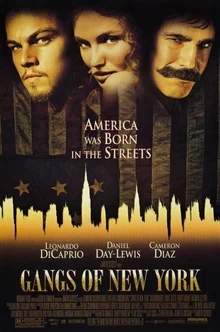
Martin Scorsese's Gangs of New York occupies a notable place in the canon of American cinema, emerging during the early 2000s as a potent exploration of themes such as violence, social inequality, and the immigrant experience. With its vivid portrayal of 19th-century New York City, the film aligns with Scorsese's longstanding interest in the darker corners of American life. It serves not only as a historical epic but also as a reflection on the formative struggles that would ultimately shape modern democracy in the United States. Despite its rich narrative tapestry, the film faced considerable challenges during production, from extensive delays to behind-the-scenes gossip, further magnifying its anticipated yet controversial release.
Critically, Gangs of New York received a mixed to positive consensus, often cited as a blood-soaked tale that lays bare the violent nature of urban life and the struggles of immigrants navigating a new world filled with hostilities and societal pressures. This portrayal of the so-called melting pot of America is both passionate and cynical, underscoring the sordid realities faced by those seeking protection and opportunity. Reviewers frequently remarked on the film's gothic aesthetics, which effectively capture the brutality that characterized the era, reinforcing a narrative rife with death and betrayal amidst the fight for power.
The film's star power, anchored by Leonardo DiCaprio, Daniel Day-Lewis, and Cameron Diaz, was another significant aspect driving audience interest and marketing strategies. As a part of a calculated effort to promote the film, the visibility of these stars contributed to the intense buzz surrounding its release. However, the celebrity appeal also invited critiques concerning the nature of the star system and its implications for storytelling, raising questions about whether the focus on star power detracted from the historical narratives being presented.
In examining the larger themes, Gangs of New York poignantly portrays the origins of American democracy through the lens of urban violence and social injustice. The film addresses the harsh realities of immigrant life, illustrating how systemic inequalities persisted even as nations claimed to uphold the ideals of freedom and opportunity. The brutality depicted throughout the film serves as a reminder of the violent conflicts that bolstered American growth, forcing viewers to grapple with a history that is both rich and deeply troubling. While it may have bombed at the box office by some measures, its cultural impact continues to resonate, reinforcing Scorsese's stature as a filmmaker unafraid to delve into the darker chapters of human experience.
Ultimately, Gangs of New York stands as a multilayered narrative that confronts audiences with the uncomfortable truths of American history. The film invites reflection on the sociopolitical forces at play within the urban landscape, effectively challenging notions of democracy and freedom through its vivid storytelling. Whether seen as a revelatory yet sordid tale or as a cynical retelling of history, it reveals just how deeply intertwined the past remains with contemporary issues of violence and inequality.