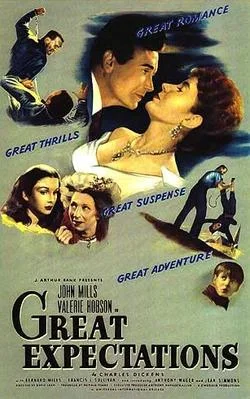
David Lean's Great Expectations (1946) stands as a pivotal moment in British cinema, reflecting not only the director’s impeccable craftsmanship but also his ability to adapt literary works into visual masterpieces. Following the success of his earlier works, Lean tackled Charles Dickens's beloved novel, translating its intricate themes into a cinematic language that resonates with viewers even today. In a time when British cinema was finding its voice, Lean’s adaptation became a touchstone, showcasing his talent for atmospheric storytelling and rich character development. This film is not just a narrative retelling but a masterful interpretation that elevates the source material to new heights.
The film intricately weaves together central themes of ambition, social class, love, and revenge, creating a complex tapestry that invites viewers to engage deeply with its characters. Pip’s journey from poverty to wealth, driven by his ambition and misguided notions of gentility, serves as a reflection of class struggles and personal aspirations. Reviews often highlight how Great Expectations masterfully captures the tension between social stratification and personal desire, illustrating Dickens’s critique of society through Lean's lens. The atmospheric visuals, paired with an authentic portrayal of Victorian England, enhance the film’s exploration of these themes, blending emotional depth with visual storytelling.
Critically, Great Expectations is often described as engaging and atmospheric, yet it also presents a tapestry of melancholic tones that echo the dismal realities faced by its characters. The portrayal of love, particularly Pip's infatuation with Estella, illustrates the complexities of human relationships overshadowed by social expectations and revenge, a theme that resonates in multiple character arcs, notably with Miss Havisham. The film dives into the pain and longing that stem from unrequited love, expertly capturing the dreary essence of characters trapped by their circumstances, thus reflecting Dickens’s often grim worldview.
While some critiques mention the film's occasional deviations from Dickens's original narrative as unfaithful, many argue that Lean’s artistic choices ultimately serve to enhance the emotional impact of the story. This stylized depiction maintains authenticity while allowing for a personal touch that broadens its appeal. By diving into the psychological dimensions of ambition and revenge, the film embraces a depth that captivates audiences, securing its status as a classic. Lean's direction and the stellar performances contribute to the film's enduring legacy, marking Great Expectations as a significant achievement in his directorial career and a masterpiece of cinematic adaptation.
In conclusion, Great Expectations is a film that balances authenticity with stylization, creating a memorable viewing experience steeped in the trials of ambition and the complexities of human relationships. Lean’s version doesn’t just retell a story; it reimagines it within a cinematic context that invites viewers to ponder the harsh realities of social class and personal desires. The film remains a crucial part of both Lean's oeuvre and the broader landscape of English cinema, inviting reflection on Dickens’s timeless themes while showcasing the art of adaptation.