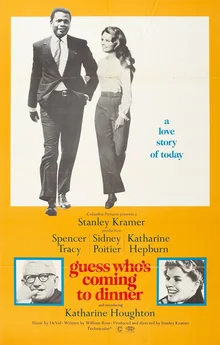
Guess Who's Coming to Dinner, directed by Stanley Kramer in 1967, stands as a landmark in cinema history, particularly within Kramer's oeuvre, which often tackled socially relevant themes. Emerging during a tumultuous period for civil rights in America, the film addresses the taboo of interracial marriage, a controversial subject that was inextricably tied to the evolving social landscape. With its bold premise and earnest performances, the film serves not only as entertainment but also as a cultural touchstone that reflects the era's anxieties and aspirations.
Central to Guess Who's Coming to Dinner are the dynamics of family and the generational conflicts that arise from shifting societal norms. The film follows the story of a liberal white couple, played by Katharine Hepburn and Spencer Tracy, who confront their deeply ingrained prejudices when their daughter brings home an African American fiancé. This encounter becomes a crucible for examining the complexities of racism, familial expectations, and the challenge of liberal ideals in practice. Critics have noted that while the film endeavors to portray a progressive view of interracial relationships, it occasionally veers into patronizing territory, reducing the experience to a melodramatic narrative that could be perceived as overly mannered and, at times, bland.
Indeed, the film has elicited a spectrum of responses, oscillating between being recognized as a barrier-breaking piece and criticized for its perceived shortcomings. Some reviews laud its ability to resonate with audiences grappling with similar issues, as it offers a blend of action, drama, and moments of levity through comedic undertones. However, this mix has led some to describe it as heady yet somewhat disengaged from the reality of everyday racial dynamics. The liberal lens through which the film operates engages viewers in an activist dialogue but can make the narrative feel superior or detached, distancing the film from the very complexities its characters face.
The cultural impact of Guess Who's Coming to Dinner cannot be overstated. It not only reflects a pivotal moment in American cinema but also engages in an important conversation about the role of love, acceptance, and familial loyalty in the face of societal prejudice. The film's release was not merely a cinematic event; it became part of a larger cultural movement advocating for civil rights and social change. In navigating the tensions inherent in interracial relationships, Guess Who's Coming to Dinner invites viewers to reflect critically on their own beliefs and the prevailing attitudes of their time.
Ultimately, Kramer's film remains a fascinating artifact of its time, one that continues to prompt discussion about interracial marriage, liberalism, and familial dynamics. Its legacy as both an entertaining drama and a thought-provoking commentary on race relations makes it a significant work within the American film canon. While it may not be free from criticisms of being overly simplistic or melodramatic, Guess Who's Coming to Dinner serves as a reminder of cinema's potential to challenge societal norms and inspire change.