Career Overview
Stanley Kramer occupies a distinctive space in midcentury American cinema, famously acting as a moral compass during an era of profound social transition. Operating as an independent producer before transitioning to directing, Kramer systematically tackled subjects that major studios actively avoided. His body of work reflects a deep commitment to liberal humanism and civic responsibility.
Emerging from the postwar studio system, Kramer initially found success producing lower budget independent films with prominent social themes. When he eventually moved into the director seat, he brought a pragmatic sensibility merged with an earnest desire to educate and provoke. He utilized the mainstream Hollywood apparatus to distribute challenging ideas to a global audience.
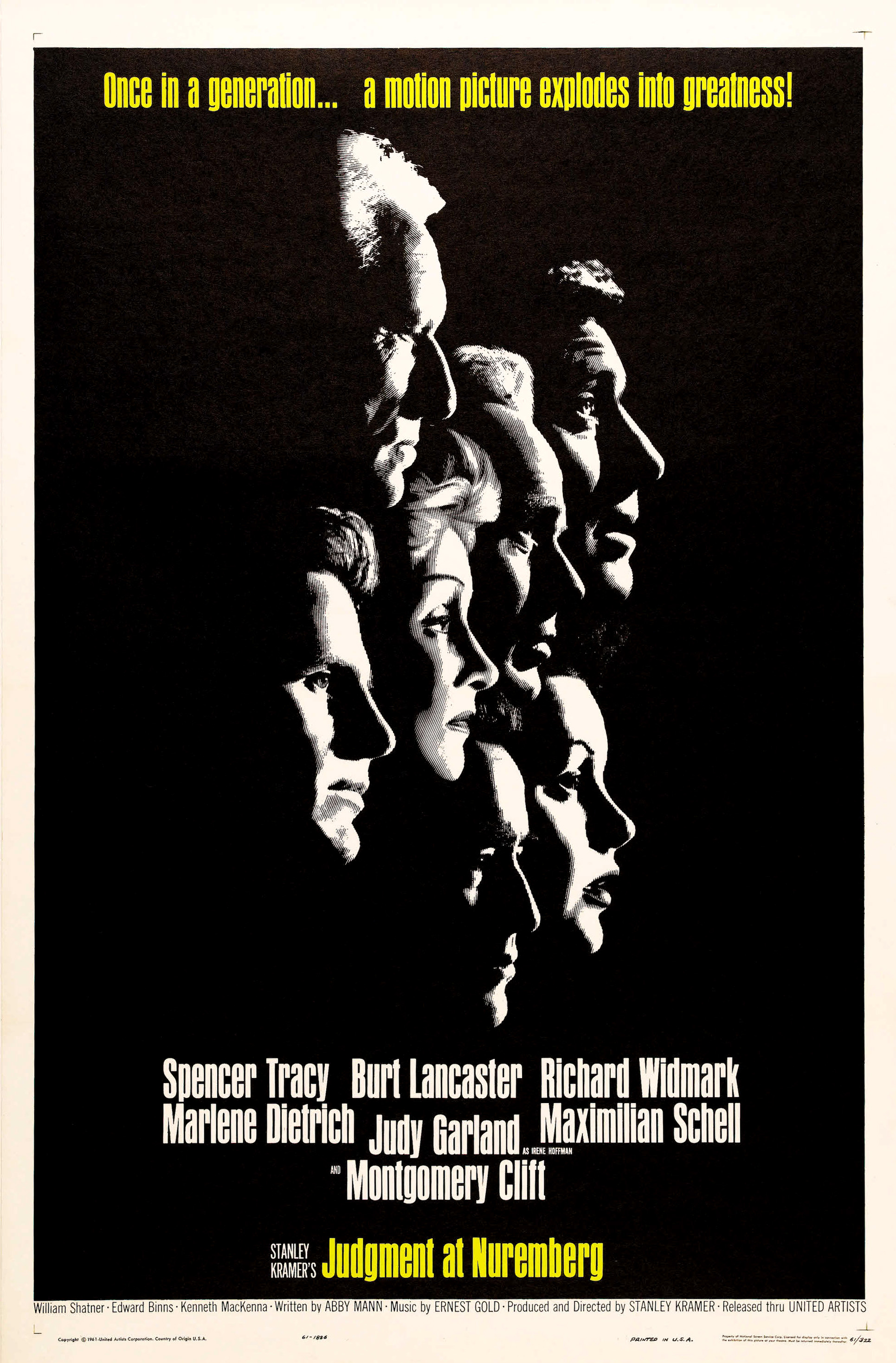
This trajectory culminated in monumental works like Judgment at Nuremberg, where Kramer demonstrated his ability to marshal massive international casts and complex historical transcripts into accessible cinema. By confronting recent and agonizing history, he cemented his legacy as a filmmaker who believed the medium could be an instrument for both historical education and societal reckoning.
Thematic Preoccupations
Kramer fundamentally preoccupies his cinema with the mechanisms of moral reckoning and the burdens of collective guilt. His narratives frequently orbit around legal and ethical frameworks, interrogating how societies heal, remember, or fail to process monumental atrocities. In Judgment at Nuremberg, this thematic obsession reaches its zenith through a meticulous examination of judicial accountability and the complicity of the supposedly civilized intellect in systemic evil.
The pursuit of historical justice forms another critical pillar of his thematic architecture. Kramer resists the temptation to present historical drama as mere costume pageantry. Instead, he positions the camera as a witness to complex moral and legal questions, demanding that the audience engage with the agonizing realities of postwar trauma. His focus on historical education ensures that the viewer is not just passively entertained but actively challenged by the weight of historical memory.
Furthermore, Kramer consistently explores the tension between individual responsibility and state apparatus. By utilizing actual court transcripts and leaning heavily into historical accuracy, he asks whether individuals can claim innocence when participating in a corrupt system. This exploration resists easy answers, leaving the viewer to navigate the disturbing atmosphere of complicity. It is this dedication to moral complexity that elevates his work beyond simple didacticism into profound societal critique.
Stylistic Signatures
Stylistically, Kramer favors a direct and unadorned visual language that prioritizes narrative clarity and thematic weight over ostentatious camera movement. His mise en scene is frequently stark and functional, designed to foreground the ideological conflicts at the heart of his scripts. In legal and historical dramas like Judgment at Nuremberg, the courtroom becomes an enclosed crucible, a claustrophobic space where the stark lighting and rigorous framing amplify the agonizing experience of the testimonies.
Kramer establishes editing rhythms that are dictated by the cadence of human speech and the unfolding of rhetorical arguments. He relies heavily on reaction shots to build a disturbing atmosphere, understanding that the impact of a revelation is best captured in the subtle shifting expressions of the listeners. This technique places a tremendous burden on his actors, requiring a hyper focused ensemble capable of sustaining an engaging narrative through long stretches of dialogue.
The sonic landscape of Kramer is similarly disciplined. He frequently employs long stretches of silence to punctuate moments of profound moral gravity. Contemporary critics noted that his premieres often ended with barely a sound from the audience, a testament to his ability to orchestrate an atmosphere of breathless contemplation. This methodical pacing and restrained acoustic design underline his status as a master of the serious and socially conscious drama.
Recurring Collaborators
While Kramer features a limited sample size in the specific database utilized here, his broader career is defined by strategic partnerships with prominent writers and an evolving roster of elite actors. Most notably, his collaboration with screenwriter Abby Mann on Judgment at Nuremberg proved essential in translating complex judicial proceedings into gripping cinema. The meticulous integration of actual court transcripts into the screenplay by Mann provided Kramer with the rigorous historical foundation necessary for his moral inquiries.
Kramer was renowned for assembling staggering ensemble casts, bringing together disparate Hollywood stars and acclaimed international actors to lend gravitas to his productions. Rather than relying on a fixed troupe of performers across his entire filmography, he cast actors based on the ideological weight they could bring to specific roles. This approach allowed him to leverage audience expectations, often casting beloved leading men in morally ambiguous or challenging parts to heighten the narrative impact.
Behind the camera, Kramer functioned as his own most essential collaborator, bridging the gap between producer and director. By maintaining tight control over the development and production phases, he ensured that his creative partnerships served the central message of the film. Whether working with specialized historical consultants or dedicated cinematographers, his collaborative ethos was always subordinated to the singular goal of delivering a unified and powerful social statement.
Critical Standing
The critical reception of Stanley Kramer has undergone significant evolution since his peak in the midcentury studio system. During his prime, he was frequently lauded for his courage in addressing taboo subjects, with epics like Judgment at Nuremberg routinely hailed as masterpiece cinema. Critics praised his work as an excellent primer on the fundamental moral questions of modern history, recognizing his films as vital tools for historical education.
Over time, some critical circles have debated the stylistic merits of his focused approach, occasionally viewing his directness as overly earnest. However, the lasting power of his most significant works has continuously reaffirmed his reputation. Modern reappraisals often position his historical dramas as fine, if disturbing, companions to later works like the Steven Spielberg directed Schindler's List, noting that Kramer laid the groundwork for mainstream cinema to engage with the Holocaust and systemic war crimes.
Today, Kramer occupies a respected place within critical discourse as a pioneer of the Hollywood social picture. Critics admire how his films paint a picture of societies agonizingly trying to come to grips with recent horrors. By consistently resisting easy answers and leaving viewers keen to think and know more, the filmography of Stanley Kramer holds up as a testament to the belief that commercial cinema can, and should, bear witness to the most difficult chapters of human history.