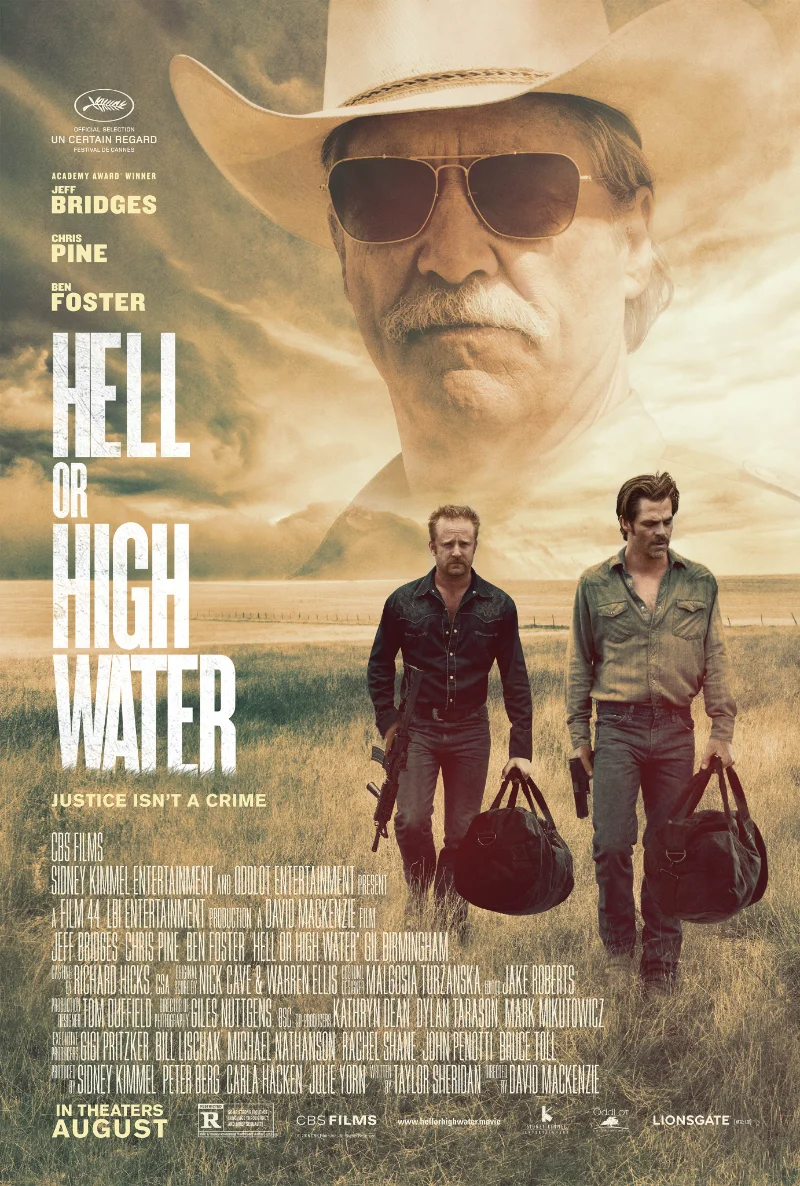
In the landscape of modern American cinema, Hell or High Water emerges as a gritty heist drama that marries the western genre's rugged, stoic spirit with contemporary social commentary. Directed by David Mackenzie, who has been known for his affinity for complex narratives and rich character development, this film dives deep into the psychological and social undercurrents of West Texas. Set against a gloomy yet stark backdrop, the film resonates with audiences while simultaneously engaging in dialogues surrounding poverty, desperation, and the contrasting realities of old versus new America. Mackenzie crafts a narrative that feels timeless, yet grounded firmly in the current socio-economic climate.
Critics have lauded Hell or High Water for its sharp plotting and compelling atmosphere. The story revolves around two brothers, Toby and Tanner, who embark on a series of calculated bank heists. These characters, reminiscent of Robin Hood figures, navigate a landscape marked by moral ambiguity and desperation, offering a satirical edge to their lawlessness. The film's effective use of its Texan setting amplifies the sense of desolation, capturing a hostile environment that reflects the existential struggles faced by its characters. This juxtaposition not only enriches the narrative but also serves as a critique of a society grappling with economic decay.
The character exploration in Hell or High Water offers a nuanced glimpse into the personal motivations that drive people to extremes. Mackenzie skillfully develops these characters, making audiences empathize with their plight, even as they engage in criminal activities. The film presents a complex moral landscape, asking viewers to ponder the ethics of actions taken out of desperation. This character drama is further enhanced by the film's southern-fried tale elements, balancing humor with a poignant examination of familial bonds and loyalty, all while operating within a framework that echoes classic Westerns.
Despite the film's triumph in its narrative and thematic construction, critiques often mention its ending as somewhat disappointing, falling short of the tension built throughout the story. This culmination may feel like an unlikely resolution after such a chaotic and lean build-up. However, this ambiguity can also be interpreted as a purposeful reflection of life's unpredictability in harsh environments. The muted conclusion leaves audiences contemplating the greater consequences of the characters' choices, thus cementing the film's status as a modern tale that speaks to deeply rooted social issues.
Ultimately, Hell or High Water is a meticulously crafted film that intertwines high-stakes drama with sharp commentary on the American landscape. It stands as a testament to David Mackenzie's directing prowess, showcasing his ability to blend character-driven storytelling with broader societal narratives. As a modern cinematic piece, it encapsulates the struggles of its time, offering a bleak yet compelling portrayal of the lengths to which people will go for survival, all while maintaining a critical lens directed toward an evolving America.