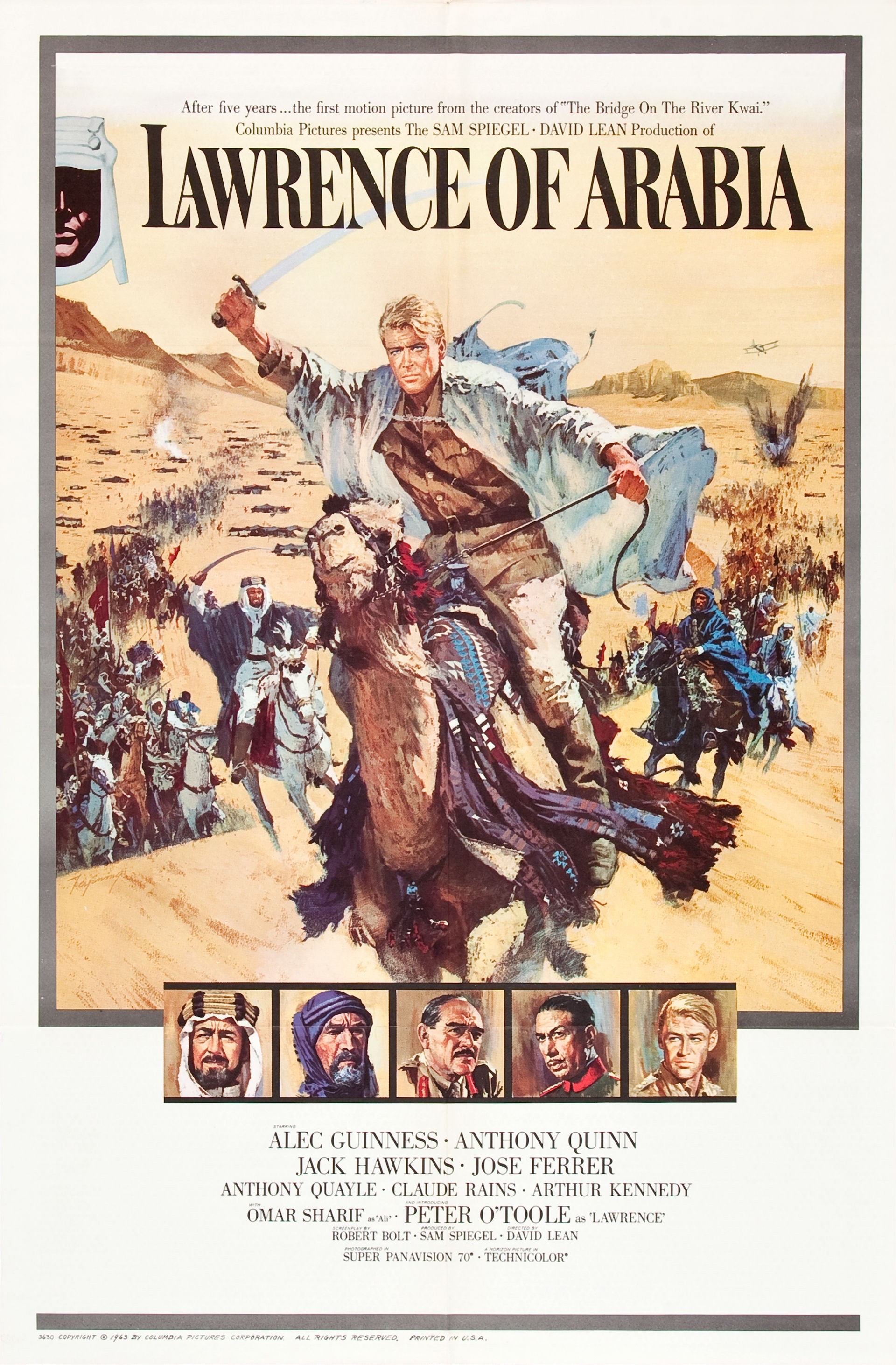
David Lean's Lawrence of Arabia (1962) stands as a monumental achievement in the annals of cinema, immortalizing both its director's cinematic mastery and the complex historical tale it depicts. Renowned for its grand storytelling and stunning visuals, the film captures the essence of T.E. Lawrence's journey, presenting not just a biographical narrative but a sweeping saga that reflects the tumultuous landscape of the Middle East during World War I. Lean constructs an epic panorama that envelops the audience, immersing them in Lawrence's exploits as he grapples with profound themes of identity, leadership, and the often painful realities of betrayal.
Critical consensus regards Lawrence of Arabia as a defining work not only of the 1960s but of cinema as a whole. Lean's meticulous direction, combined with David Puttnam's production, crafts a film that transcends mere historical recounting. The character of T.E. Lawrence, intricately portrayed by Peter O'Toole, embodies the struggle between personal ambition and the greater good, exploring how a singular figure can strive for heroism while facing the weighty burdens of leadership and the price of betrayal. Each scene unfolds like a breathtaking canvas, vibrant and visually spectacular, illustrating Lawrence's internal conflicts as much as the external chaos surrounding him.
The film's grand scope and immersive experience invite viewers to not only witness Lawrence's adventures but also to engage with the moral complexities inherent in his actions. As Lawrence maneuvers through the labyrinth of tribal politics and European imperial ambitions, audiences are prompted to reflect on the nature of identity itself, how it can be shaped, distorted, and even betrayed in the crucible of war. Lean's direction elevates these themes, encouraging a dialogue about the multifaceted aspects of heroism, as Lawrence's bravado often masks profound insecurities and ethical dilemmas that resonate far beyond his time.
In its unparalleled representation of the desert landscapes and its profound character study, Lawrence of Arabia establishes a benchmark for epic cinema that remains influential to this day. The film’s intricate cinematography, coupled with Maurice Jarre's haunting score, fortifies its timeless appeal, crafting an atmosphere that is both grand and intimate. It challenges viewers to confront the paradoxes of leadership and the futility of war, issues that remain relevant. Lean's grand vision, with the rich tapestry of human emotion woven through it, cements Lawrence of Arabia not merely as a film but as a cultural touchstone, echoing the ambiguities of heroism and identity that continue to resonate within the collective consciousness.
As we reflect on Lean's illustrious body of work, it is clear that Lawrence of Arabia is not just another entry in the cinematic canon; it is a landmark that exemplifies the best of what film can achieve. The director has crafted a world that is at once grand and utterly human, urging us to ponder the depths of our own identities and the legacies of those who have walked paths of such complexity and contradiction. In this light, Lawrence of Arabia persists as an evergreen masterpiece, a film that speaks to the core of our existential quests and the enduring search for meaning within the turbulent arena of history.