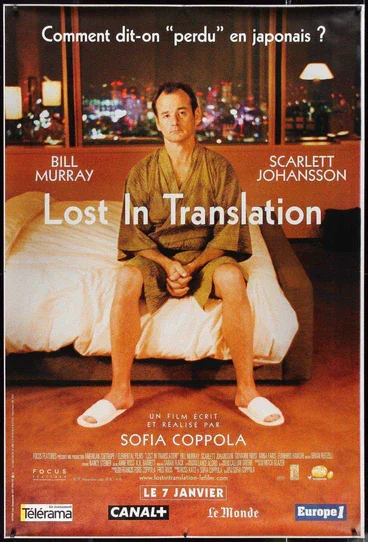
Lost in Translation, directed by Sofia Coppola, stands as a poignant exploration of the human experience amidst the vast complexities of modern life. Released in 2003, this film not only heralded Coppola's distinctive voice in cinema but also anchored her place within the New Hollywood movement. With her minimalist aesthetic and carefully crafted narrative, Lost in Translation unfolds in the vibrant yet disorienting surroundings of Tokyo, encapsulating a bittersweet journey of connection and self-discovery. It masterfully addresses themes of cultural displacement and loneliness, reflecting a broader disillusionment that resonates with audiences, especially those navigating the confusing waters of midlife crises.
Critics have widely lauded the film's ability to blend humor and heart against an almost ethereal backdrop. The emotional distance experienced by its protagonists, Bob and Charlotte, played by Bill Murray and Scarlett Johansson, serves as a lens through which the audience can examine intergenerational relationships and the transient nature of human connection. Their interactions are underscored by a delicate balance of sardonic humor and longing, making their bond a testament to how meaningful relationships can form even amidst the most unsuitable circumstances. This is a film that is both a romantic comedy and a voyage into the intricate layers of self-exploration.
At its core, Lost in Translation reflects the challenges of isolation in a fast-paced world. The cultural fray represented in Tokyo, laden with commercialism and overwhelming dislocation, becomes a character in itself, magnifying the protagonists' internal struggles. This immersive environment invites viewers to share in the characters' profound sense of being out of place, a fish-out-of-water narrative that perfectly captures the essence of personal crises. Through the lens of Coppola's visionary direction, we are led through a space where silence speaks volumes, and small gestures resonate deeply.
In a landscape often dominated by overt dramatics, the film's minimalist approach stands out as an assured and thoughtful choice. Each scene feels meticulously crafted, from the color-coded aesthetics of the visual palette to the elliptical nature of the storytelling, encouraging viewers to reflect on the unsaid. This deliberate restraint allows for an exploration of fidelity and the tug-of-war between aspiration and reality, inviting scrutiny into the characters' decisions and their implications. Coppola's deft handling of these complex themes highlights her literary ambition and reveals the intricacies of human emotion wrapped within humor and pathos.
As audiences reflect on Lost in Translation, they are left with a sense of wonder, an awareness of the fleeting nature of moments that define our lives. This film remains a touchstone not only in Coppola's oeuvre but also in the broader canon of 21st-century cinema. Its exploration of romantic ennui, cultural exploration, and the bittersweet nature of connection ultimately speaks to the universal desire for understanding, belonging, and self-discovery, securing its place in the hearts of those who have felt the pangs of loneliness and the profound joy of rare connections.