Career Overview
Sofia Coppola occupies a singular position in contemporary American cinema. Emerging from the shadow of a profound familial legacy, she has carved out a distinct auteurist identity defined by atmospheric introspection and meticulous restraint. Her trajectory from the periphery of the Hollywood establishment to the center of global art house discourse marks one of the most compelling career arcs of the twenty-first century. Rather than relying on the sweeping epics associated with her lineage, she favors intimate spaces and quiet observation.
Her development as a filmmaker reveals a consistent movement toward minimalist storytelling. Moving away from traditional narrative structures, she embraces an elliptical approach that prioritizes mood over plot. This evolution demonstrates a deliberate rejection of the cumbersome mechanics often found in mainstream American cinema. By stripping away extraneous exposition, she invites the audience into a deeply subjective experience of the world.
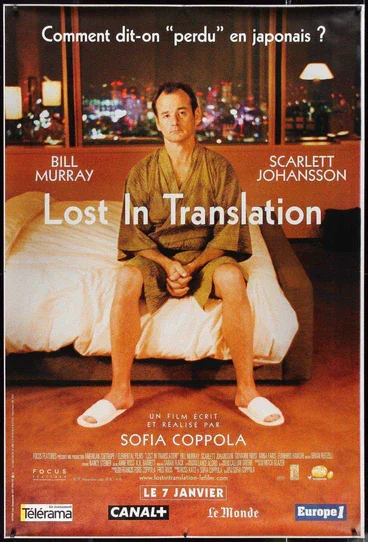
The release of Lost in Translation solidified her reputation as a formidable directorial voice. Critics noted the incredibly assured nature of her craft. She managed to juxtapose the sprawling, unmistakably American canvas of traditional Hollywood with an ethereal, delicate touch. This breakthrough established her not merely as an inheritor of cinematic privilege but as a visionary capable of translating complex internal states into resonant visual poetry.
Thematic Preoccupations
Coppola returns compulsively to the themes of cultural displacement and profound isolation. Her characters frequently find themselves alienated within foreign environments, a motif most explicitly realized in Lost in Translation. This fish-out-of-water dynamic is never played merely for laughs. Instead, it serves as a catalyst for rigorous self-discovery and philosophical inquiry into loneliness. The physical displacement mirrors an internal cultural fray, where individuals struggle to connect with their surroundings and themselves.
The exploration of the midlife crisis intersects heavily with intergenerational relationships in her work. By pairing individuals at opposite ends of adulthood, she dissects the shared nature of disillusionment. In her cinematic universe, an aging actor grappling with the vacuity of commercialism and a young graduate unsure of her future are united by a common existential drift. These interpersonal relationships defy conventional romantic comedy tropes, offering instead a bittersweet meditation on fleeting intimacy.
Despite the delicate surface of her films, there is a recurring undercurrent of aggressively impolite thinking and literary ambition. Her protagonists often harbor a quiet fury or a sardonic humor that undercuts the polite facades they must maintain in public. This tension between internal turbulence and external calm adds incredible depth to her thematic canvas, allowing audiences to explore the friction between how people present themselves and what they truly feel.
Ultimately, she is deeply concerned with fidelity, not just in the romantic sense, but in the commitment to one's own authentic self. The questions she poses revolve around how to maintain personal integrity in a world dominated by superficiality. Her characters are constantly searching for meaning in the sterile spaces of modern luxury, making her films essential texts on contemporary alienation.
Stylistic Signatures
The visual language Coppola employs is resolutely minimalist and highly evocative. She crafts frames that are ethereal and wondrous, utilizing natural light and deliberate pacing to create an immersive, dreamlike atmosphere. This stylistic restraint allows the internal lives of her characters to dictate the rhythm of the film. Her elliptical editing techniques further emphasize the fragmented, transient nature of human connection.
A hallmark of her mise en scene is the highly specific, color-coded production design. She lovingly evokes spiritual awakenings through a mod palette that ties her characters directly to their environments. By color-coding the spaces, she visually articulates the emotional isolation or sudden harmony experienced by her protagonists. This precise visual strategy ensures that every frame conveys narrative information without the need for excessive dialogue.
Sound design and music play a critical role in establishing the melancholic tone of her work. The ambient noise of a bustling metropolis or the quiet hum of a hotel room is carefully modulated to reflect the subjective experience of the characters. This acoustic environment is punctuated by sudden bursts of sardonic humor, balancing the heavier existential themes with moments of levity.
Her approach to performance is similarly controlled and nuanced. She creates spaces where actors can deliver their most delicate and understated work. By stripping away theatricality, she captures the subtle, often unspoken dynamics of interpersonal relationships, pulling at the heartstrings of the audience with remarkable precision.
Recurring Collaborators
While the database does not explicitly identify a repertory company of actors spanning multiple films, her partnership with specific performers on individual projects has defined her critical success. The collaboration with Bill Murray in Lost in Translation stands as a definitive moment in both of their careers. She recognized his capacity for profound melancholy beneath his established comedic persona, utilizing his unique screen presence to explore themes of aging and regret.
Murray's performance as Bob Harris exemplifies the specific register Coppola demands from her actors. She requires a willingness to dwell in silence and to convey complex emotional states through micro expressions. This partnership yielded what critics recognized as one of the best screen performances of the year, demonstrating her exceptional skill as a director of actors.
Scarlett Johansson, playing Charlotte in the same film, provided the necessary counterweight to Murray. The chemistry they developed under Coppola's direction allowed for an authentic exploration of an intergenerational relationship. Their dynamic avoided the pitfalls of unsuitable romance, achieving instead a resonant, platonic intimacy that anchored the emotional weight of the narrative.
Behind the camera, her reliance on a specific aesthetic necessitates close collaboration with cinematographers and production designers who understand her vision. The meticulous color-coding and mod palettes require a unified creative team. Together, they construct the ethereal, minimalist worlds that have become synonymous with her auteurist signature.
Critical Standing
The critical reputation of Sofia Coppola has grown exponentially, transitioning from initial curiosity to undeniable reverence. Reviewers have praised her assured directorial hand and her ability to evoke profound emotion without resorting to melodrama. Her work is frequently cited as a wondrous restoration of faith in the medium of film itself, proving that cinema can still explore delicate human interactions with incredible grace.
Her films are regularly placed in dialogue with some of the most revered works in international cinema. Critics have compared her exploration of interpersonal relationships to Ingmar Bergman's Scenes from a Marriage, highlighting her rigorous psychological insight. Simultaneously, the bittersweet romance of her narratives draws comparisons to the classic longing found in Brief Encounter and Richard Linklater's Before Sunrise, cementing her ability to balance romantic comedy elements with serious dramatic weight.
Interestingly, her delicate, elliptical approach is often contrasted with the more cumbersome, violently kinetic nature of traditional American cinema and literature. Where adaptations of dense works like The Human Stain struggle with their literary ambition and heavily plotted canvases, Coppola succeeds through subtraction. Critics note that she proves how a minimalist framework can carry the same thematic weight as a sprawling epic.
Today, her standing within critical discourse is that of a master chronicler of the modern existential condition. She is celebrated for her unique ability to blend sardonic humor with a delicate tug of the heartstrings. Her singular focus on the intersection of cultural displacement and self-discovery ensures her enduring place in the pantheon of great contemporary filmmakers.