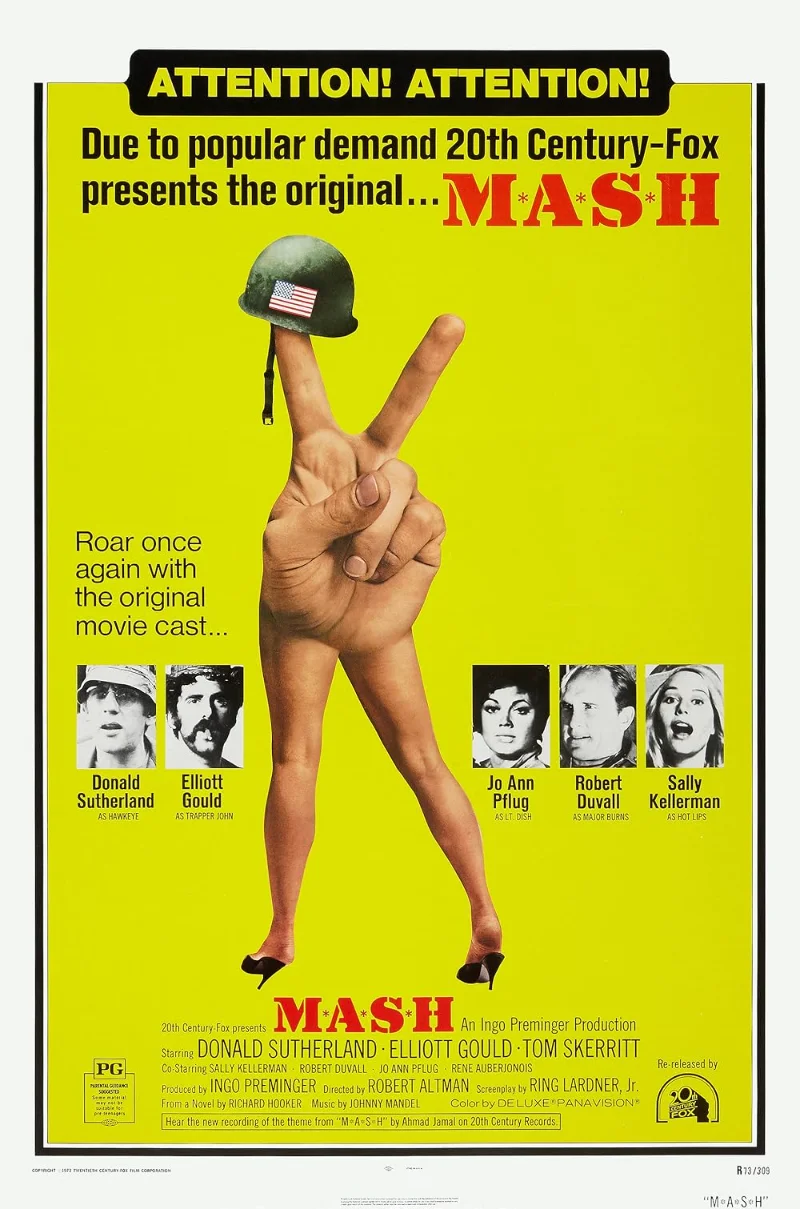
MASH, directed by Robert Altman in 1970, stands as a pivotal film in American cinema, perfectly encapsulating the countercultural movements of its time. Released at the height of the Vietnam War, this film coincided with a growing public disillusionment with military conflicts, and it deftly utilized satire to explore the absurdities of war. Altman's approach to storytelling, characterized by a loose, ensemble-driven format, revolutionized cinematic techniques and laid the groundwork for a new kind of American comedy that pushed the boundaries of conventional narrative structure. As such, MASH occupies a critical place not only in Altman's oeuvre, known for its irreverent take on societal norms, but also in the broader landscape of 1970s cinema, where anti-establishment sentiments flourished.
The film's narrative revolves around the misfit medical staff of a mobile army surgical hospital during the Korean War, spotlighting themes of camaraderie amidst chaos. The characters, from the wisecracking Hawkeye Pierce to the rebellious Trapper John, embody a collective resistance against authoritative structures and military bureaucracy. Their actions, often framed with dark humor and irreverence, serve as poignant satire, reflecting the film's broader anti-war sentiment. Critics have noted how these interactions foster a camaraderie that contrasts sharply with the harsh realities of war, emphasizing survival and human connection even in dire circumstances.
Critically, MASH* has been praised for its unique ability to blend comedy with serious reflections on the futility of war. This satirical outlook exposes the often grotesque nature of military life, marking it as distinctly anti-establishment. Critics have highlighted its use of dark humor as a vehicle for harsh truths, allowing audiences to confront uncomfortable realities with laughter. This approach acts as a form of rebellion, challenging not only the romanticized notions of war prevalent in earlier cinema but also inviting viewers to reconsider their own perspectives on authority and conflict.
The dialogue in MASH* is laced with playful banter and sharp wit, further establishing its standing as a countercultural artifact. The film's irreverence reframes the traditional war narrative, making it both a critique of the military-industrial complex and a celebration of the human spirit's endurance under pressure. Altman's pioneering style, characterized by overlapping dialogue and a documentary-like aesthetic, enhances the authenticity of the characters' experiences, drawing viewers into their world while simultaneously allowing for a critique of the very context they inhabit.
In summary, MASH* is more than just a film rooted in the specifics of a historical conflict; it is a timeless exploration of humanity's resilience in the face of adversity. Altman's irreverent lens uncovers the absurdities of war while revealing the profound bonds that emerge from shared suffering. As a result, the film continues to resonate, serving as a powerful reminder of the importance of friendship, laughter, and rebellion in times of turmoil.