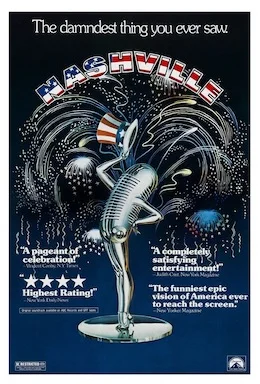
Robert Altman's Nashville stands as a landmark in American cinema, encapsulating the director's audacious style and penchant for ensemble storytelling. Released in 1975, during a turbulent period in the United States marked by political disillusionment and social upheaval, the film employs a sprawling narrative structure that interweaves the lives of 24 characters navigating the vibrant yet volatile country music scene in Nashville. This innovative approach not only reflects Altman's fascination with the complexities of American society but also marks his signature departure from traditional narrative techniques, showcasing his commitment to realism and intricate character studies.
Critics have heralded Nashville as a satirical exploration of the intersections between celebrity, politics, and the music industry, underscoring the ways in which personal aspirations intertwine with larger societal issues. The film's setting, a political rally for a fictional presidential candidate, serves as a microcosm of American life, illuminating the often troubling dynamics between art, commerce, and governance. The characters, including musicians, political figures, and everyday citizens, are portrayed in a tragicomic light, highlighting their vulnerabilities and ambitions as they navigate their intersecting lives amidst the backdrop of the country music industry, which itself serves as both a platform for dreams and a reflection of the culture's darker undercurrents.
The critical consensus praises Nashville for its dazzling cinematography and immersive sound design, which blends original music with the cacophony of urban life. The film's soundtrack, with its catchy yet poignant tunes, becomes a crucial narrative device, enhancing the emotional depth of the characters’ experiences. Furthermore, Altman’s use of overlapping dialogue not only reflects the chaos of American existence but also invites viewers to engage actively, creating a sense of intimacy and involvement in the characters' lives.
Nevertheless, the film is not without its controversies and critiques. Some argue that its sprawling cast can lead to moments of disengagement, while others see it as a purposeful reflection of the fragmented nature of contemporary society. Regardless, the film remains a powerful commentary on the glamorous yet often hollow pursuit of fame and fulfillment in America, capturing a state-of-the-nation sentiment that resonates even today. As such, Nashville occupies a crucial position in Altman's filmography and in the broader landscape of film; it not only reflects the intricacies of 1970s America but serves as a prescient warning about the obsessive nature of celebrity and the entanglements of politics and personal ambition.