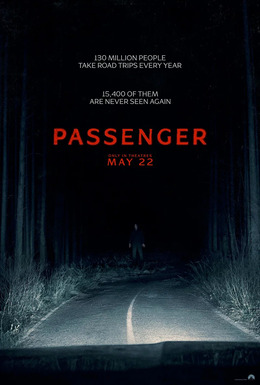
In Passenger, director André Øvredal's latest offering, audiences are taken on a chilling journey that intertwines the familiar comforts of a road trip with the unsettling unpredictability of supernatural horror. Øvredal, known for his deft handling of monstrous narratives in films like Trollhunter and The Autopsy of Jane Doe, returns to genre storytelling with a film that, while visually appealing, does not quite meet the expectations set by his past efforts. The film reflects the cinematic tradition of road trip horror, a subgenre that exploits the vulnerability of its characters as they venture into the unknown, both geographically and psychologically. Unfortunately, Passenger suffers from predictable scares that often undercut its potential as a fresh addition to this narrative style.
Critical reception of Passenger has pointed out that while the film employs solid genre craftwork, it fails to elevate beyond generic tropes predominantly found in contemporary horror. Reviewers have highlighted the formulaic nature of the scares, with jump scares that feel more contrived than organic, eliciting a response that is more eye-rolling than spine-tingling. As characters embark on their extended road trip, they encounter a supernatural menace that, alas, feels all too familiar. The menace lacks depth, feeling like a checklist of horror elements rather than a fully fleshed-out source of tension, leaving viewers craving a more nuanced exploration of terror.
Despite its shortcomings, Passenger does manage to tap into underlying themes of vulnerability and isolation on the open road, themes that have historically defined road trip horror. The film posits that the journey itself can be as significant as the destination, yet the depth of this idea is overshadowed by the mechanics of execution. The supernatural threat that looms large fails to create a sense of sustained anxiety, with tension dissipating as the viewer becomes aware of the predictable nature of the encounters. This predictability serves as a double-edged sword, offering comfort to some viewers while alienating those looking for genuine suspense.
With each scare that can be anticipated, Passenger walks a treacherous line between homage and redundancy. While it is capable of delivering moments that can engage an audience, it is simultaneously bogged down by an apparent lack of innovative ideas. The film exemplifies a missed opportunity to reinvigorate the genre, utilizing a road trip as a canvas for terror but ultimately choosing conformity over creativity. As the credits roll, one is left pondering whether audiences have witnessed a cautionary tale of horror filmmaking or merely a reiteration of familiar patterns.
As a piece of Øvredal's body of work, Passenger stands as a reminder that not all narratives travel smoothly. While it features a skilled director at the helm, the film's inability to forge new paths in storytelling tends to overshadow its technical achievements. In a landscape rife with horror's perpetual evolution, Passenger may be viewed as a cautionary tale against the comforts of predictability, safely following paved roads when the wild terrain by the wayside beckons with untold possibilities.