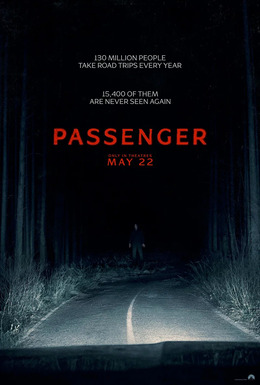
Career Overview
André Øvredal occupies a fascinating, often contradictory position within contemporary horror cinema, navigating the fraught space between international auteur and studio craftsman. His career arc demonstrates a familiar Hollywood trajectory, wherein early recognition for culturally specific, folkloric narratives translates into opportunities within the North American studio system. This transition has yielded a filmography defined by both technical proficiency and commercial compromise, situating him as a capable interpreter of established genre tropes. Rather than reinventing the cinematic wheel, he has largely focused on executing recognizable formulas with a workmanlike precision that draws both praise and frustration from the critical establishment.
His earlier successes with projects like The Autopsy of Jane Doe and Scary Stories to Tell in the Dark established him as a director capable of generating dread within confined spaces and adapting campfire tales for modern audiences. However, his later output reflects a pivot toward broader, more formulaic studio assignments. The release of Passenger highlights this shift, presenting a narrative heavily reliant on recognizable tropes and generic horror elements. As his career has progressed, the idiosyncratic touches that defined his initial emergence have occasionally been smoothed over by the demands of mainstream scheduling and tagline driven pitches.
Today, Øvredal is widely regarded as a reliable journeyman within the studio system, a director who understands the mechanics of suspense even if he occasionally struggles to sustain it across an entire feature. His standing in cinema history is currently that of a transitional figure. He represents the modern working director who must constantly negotiate between his foundational genre sensibilities and the restrictive, often predictable mandates of contemporary Hollywood horror production. This ongoing tension makes his body of work a compelling subject for students of cinematic adaptation and studio assimilation.
Thematic Preoccupations
A defining thematic preoccupation in Øvredal's work is the vulnerability inherent in transit, most explicitly realized through the lens of road trip horror. He frequently explores the American highway as a space of both liberation and inescapable peril, where the promise of a van life adventure inevitably collapses into a fight for survival. In Passenger, the open road transforms from a symbol of freedom into a geographical trap, stalked by a relentless supernatural menace. The vast, isolating landscapes of his films serve to amplify the helplessness of his protagonists, stripping away the safety nets of civilization and exposing them to primordial, inexplicable forces.
Beyond geographical isolation, his narratives consistently interrogate the intersection of mundane reality and supernatural determinism. His characters often stumble into cosmic punishment following a seemingly random or unavoidable event, such as witnessing a fatal accident. This catalyst introduces a demonic entity that functions less as a psychological manifestation and more as an unstoppable, literal force of nature. Øvredal returns to these adaptations of scary stories to examine how ordinary people respond when confronted by threats that defy rational explanation, though he often undercuts the mystery by succumbing to an instinct to overexplain the mechanics of the horror.
The recurring motif of the relentless pursuer evokes deeply rooted anxieties about fate and inescapable consequences. The cinematic universe Øvredal constructs is one where past traumas or accidental transgressions conjure literal monsters that cannot be reasoned with or outrun. Despite relying on a predictable narrative structure, this thematic obsession with the inescapable nature of doom anchors his filmography. He repeatedly asks how human agency can endure when locked in a continuous, moving conflict against a supernatural threat, even if the thematic depth is occasionally compromised by generic execution.
Stylistic Signatures
Øvredal’s visual language is characterized by a commitment to solid genre craftwork, prioritizing functional clarity over atmospheric ambiguity. His cinematographic approach often contrasts the claustrophobia of confined spaces, such as the interior of a traveling vehicle, with the vast, imposing exterior landscapes of the American highway. This juxtaposition visually reinforces the inescapable nature of the threat. In films like Passenger, he employs methodical framing to capture the bleakness of the road, establishing a visual rhythm that emphasizes continuous forward motion while trapping his subjects within the frame.
In terms of editing rhythms and the generation of suspense, the director frequently relies on established mechanical techniques, including the strategic deployment of jump scares. While critics often note a lacking tension in the connective tissue of his narratives, his set pieces are constructed with a precise, albeit predictable, tempo. He utilizes sudden auditory spikes and jarring visual cuts to create moments of unexpected terror. This approach reveals a stylistic allegiance to traditional studio horror, where the pacing of shocks takes precedence over the slow, creeping dread favored by contemporary art house genre filmmakers.
His mise-en-scene tendencies often lean heavily into recognizable formulas, occasionally resulting in environments that feel constructed specifically for a tagline first pitch rather than organic storytelling. Furthermore, his use of sound design and driving musical scores serves to telegraph incoming threats, mirroring the relentless pursuit of the antagonist. While this ensures a ruthless effectiveness in isolated sequences, it also contributes to the predictable scares that characterize his later work, as the auditory cues frequently warn the audience of the impending supernatural menace long before it arrives on screen.
Recurring Collaborators
Unlike many auteurs who rely on a dedicated repertory company to flesh out their cinematic universes, Øvredal's casting strategy is largely transient, reflecting the nomadic nature of his narratives. There are no notable recurring cast members across his filmography, a deliberate choice that emphasizes the isolation of his protagonists. By constantly introducing new, often unfamiliar faces into his harrowing scenarios, he ensures that the characters remain vulnerable blank slates. In Passenger, the young couple operates as universal avatars for the audience, their lack of prior association with the director's body of work amplifying the sense that this terror could happen to anyone on a simple road trip.
Behind the camera, his crucial partnerships have historically been with studio executives and genre producers who shape the commercial packaging of his films. Working under the umbrella of major distributors like Paramount, his creative collaborations are often dictated by the necessity of delivering marketable, high concept horror. This dynamic heavily influences the final product, resulting in films that are meticulously polished but occasionally hindered by studio mandated predictability. The influence of these producing partners is evident in the reliance on recognizable horror tropes and formulaic structures designed to satisfy broad audience expectations.
This rotating ensemble of actors and reliance on studio driven production teams highlight Øvredal’s position as a practical craftsman rather than a protective auteur. His willingness to work with diverse casts and conform to the demands of commercial producers demonstrates a collaborative flexibility. However, it also explains why his recent projects sometimes feel like generic schedule fillers. The absence of a consistent creative family in front of the lens forces his films to rely entirely on the strength of their concepts and the execution of their supernatural set pieces, rather than on established character dynamics.
Critical Standing
The critical standing of André Øvredal has undergone a noticeable evolution, shifting from the enthusiastic reception of his early international and elevated genre works to a more polarized, often cynical appraisal of his contemporary studio outputs. Early in his career, he garnered significant goodwill for his inventive adaptations and confined thrillers. However, recent releases have prompted a reassessment of his place within critical discourse. Reviews for films like Passenger frequently employ terms like generic, predictable, and lacking tension, framing his current trajectory as a retreat into the safety of recognizable formulas and studio mandated copypasta.
Within the specific subgenre of road trip horror, critics consistently place his work in dialogue with seminal classics, drawing comparisons to Duel, The Hitcher, and Jeepers Creepers. While these comparisons acknowledge his ambition to tackle the psycho killer motif and the backrooms theme of endless, inescapable spaces, they also serve to highlight his shortcomings. Reviewers often note that his films struggle to achieve the sustained, suffocating dread of those predecessors, pointing out that an instinct to overexplain the supernatural threat frequently dilutes the mystery, leaving the scares feeling predictable and mechanically assembled.
Despite the accusations of producing generic schedule fillers, a counter narrative exists among critics who appreciate his unpretentious approach to cinematic thrills. Publications like RogerEbert.com have defended his output as fairly solid genre craftwork, arguing that his films remain ruthlessly effective at delivering straightforward scares despite their desultory release strategies. Ultimately, Øvredal is situated as a highly capable but commercially compromised filmmaker in current critical debates, a director whose undeniable technical proficiency is frequently overshadowed by his adherence to the predictable rhythms of mainstream horror.