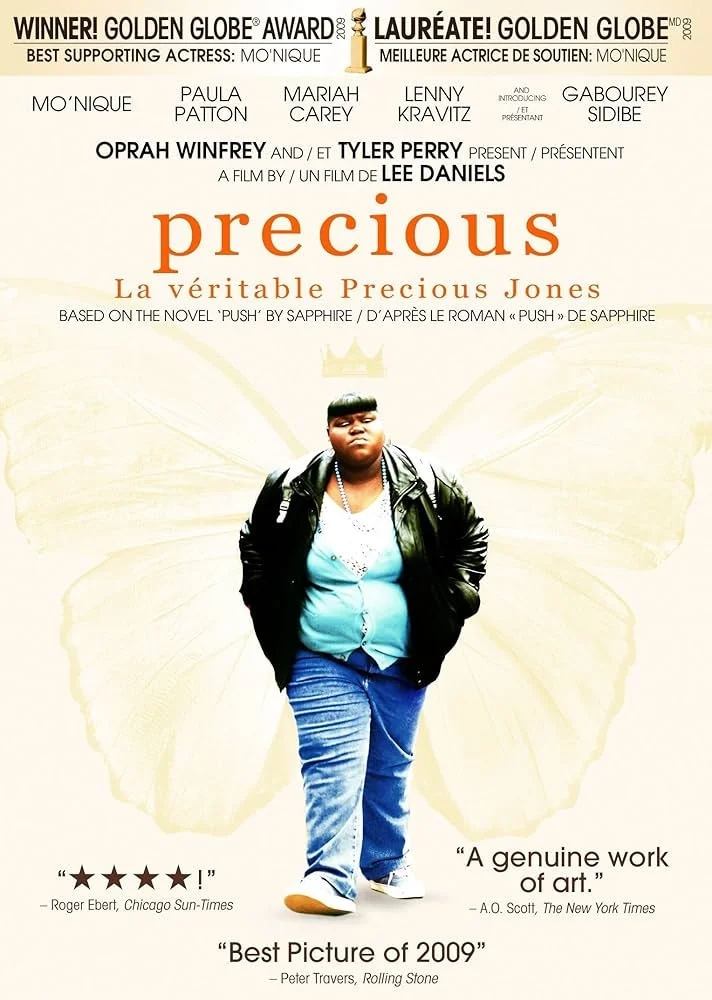
Released in 2009, Lee Daniels’s Precious stands as a pinnacle of American cinema that confronts the brutal realities of abuse, poverty, and resilience. Adapted from Sapphire’s novel, the film provides a raw and uncompromising look at the life of Claireece "Precious" Jones, an illiterate African American teenager enduring a harrowing existence filled with visceral suffering from her abusive family. Daniels, known for his bold storytelling and complex character portrayals, embraces themes of empowerment and self-acceptance, creating a narrative that is as heart-rending as it is thought-provoking. In a cinematic landscape often marked by escapism, Precious emerges as a powerful and challenging work that demands attention and reflection.
Critical consensus surrounding Precious lauds its ability to navigate the deeply rooted social issues of abuse and poverty with both authenticity and sensitivity. Reviewers engage with the film’s portrayal of resilience, noting how Precious, played with extraordinary nuance by Gabourey Sidibe, transforms her traumatic experiences into a source of strength and hope. The gripping narrative, underscored by powerful performances, including Mo'Nique's harrowing turn as Precious’s mother, evokes a complex emotional response, oscillating between disturbing and uplifting moments. Such depth not only captivates audiences but also fosters a meaningful dialogue about the societal structures that perpetuate suffering.
The film does not shy away from its heavy subjects; instead, it presents them through an imaginative lens that challenges viewers to confront their own perceptions. Critics have pointed out its divisive nature, with some arguing that the film’s portrayal of poverty and abuse can teeter on the edge of condescension, while others find it a compelling mirror reflecting the harsh realities faced by many. This tension within the film’s reception illustrates its role as a catalyst for conversation, provoking thoughts on issues of race, gender, and socioeconomic status in a society that often turns a blind eye.
Daniels’s direction is remarkable, marked by an uncompromising vision that encourages resilience amid despair. The film’s authenticity resonates through its stylistic choices, blending heart-wrenching moments with instances of hope that are neither sugar-coated nor unrealistic. The auditory and visual storytelling encapsulates Precious's interior life, making her journey relatable and elevating her character’s experience from merely tragic to inspirational. Viewers find themselves enraptured by her growth from a victim to a young woman determined to reclaim her narrative.
Ultimately, Precious stands not only as a critical piece in Daniels’s filmography but as a significant work that confronts uncomfortable truths while advocating for empowerment and self-acceptance. Its ability to evoke emotions while tackling important themes positions it as a vital piece of modern cinema that reflects societal struggles. Though the film may not present easy answers, its legacy lies in its courage to provoke thought, encourage dialogue, and inspire those wrestling with their own challenges. In a world rife with social issues, Precious remains a testament to the enduring human spirit's capacity for resilience and hope.