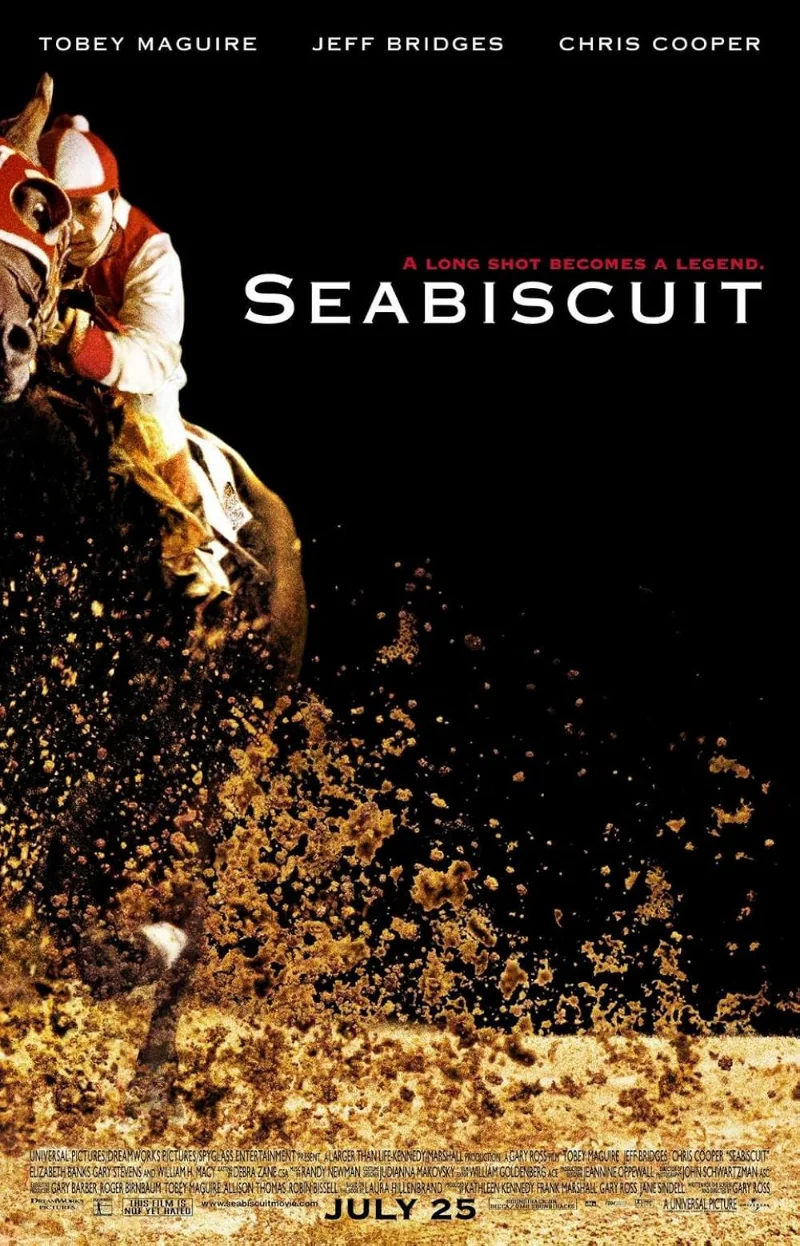
Seabiscuit, directed by Gary Ross and released in 2003, stands out in the landscape of early 21st-century cinema, illuminating the underdog spirit that is both uniquely American and profoundly universal. Set against the backdrop of Depression-era America, the film not only depicts the struggles of its titular racehorse but also the broader societal challenges of an era marred by economic despair. Ross, known for his adeptness in creating emotionally resonant narratives, crafts a film that artfully balances hope and hardship, positioning Seabiscuit as not merely a sports film, but a rich tapestry of personal and collective resilience.
Critics have widely lauded Seabiscuit for its authentic portrayal of the human-animal bond that transcends mere sporting competition. The connection between the horse and his human counterparts, trainer Tom Smith, jockey Red Pollard, and owner Charles Howard, is depicted with heartfelt nuance, highlighting how they each grow and evolve through this relationship. The film's ability to showcase their individual struggles and triumphs ultimately serves as a microcosm for the larger American experience during a tumultuous period, resonating deeply with audiences and lending a sense of realism that many sports films lack.
However, while Seabiscuit is undoubtedly inspiring and engaging, it has faced critique regarding its depth. Some reviewers noted that certain character arcs feel somewhat superficial, diluting the exploration of the complex emotional landscapes these characters navigate. This has led to perceptions of a film that, albeit rich in symbolism and themes of authenticity, occasionally opts for a more ready-made, palatable narrative structure. The film purports to capture a heroic journey but occasionally skirts deeper engagement with its characters' psyches, resulting in a narrative that can feel naïve or ham-fisted at times.
Despite these critiques, Seabiscuit has made a significant cultural impact, garnering a strong following and influencing how sports stories are told in cinema. The film deftly combines a compelling adaptation of Laura Hillenbrand's book with emotionally charged performances, particularly from Tobey Maguire, Jeff Bridges, and Chris Cooper. While the adaptation may streamline some complexities for broader accessibility, it ultimately captures the spirit of its source material, allowing viewers to connect with the themes of perseverance and hope.
In the context of Gary Ross’s oeuvre, the film fits seamlessly with his focus on narratives that embody resilience and the fight against the odds. Anchored by a historical narrative, Seabiscuit becomes a timeless story of triumph over adversity, echoing the societal sentiments of its era while still speaking to contemporary audiences. In recounting the journey of this unlikely champion, Ross not only revitalizes interest in a significant chapter of American sports history but also celebrates the enduring power of hope, making Seabiscuit a standout film that continues to resonate today.