Career Overview
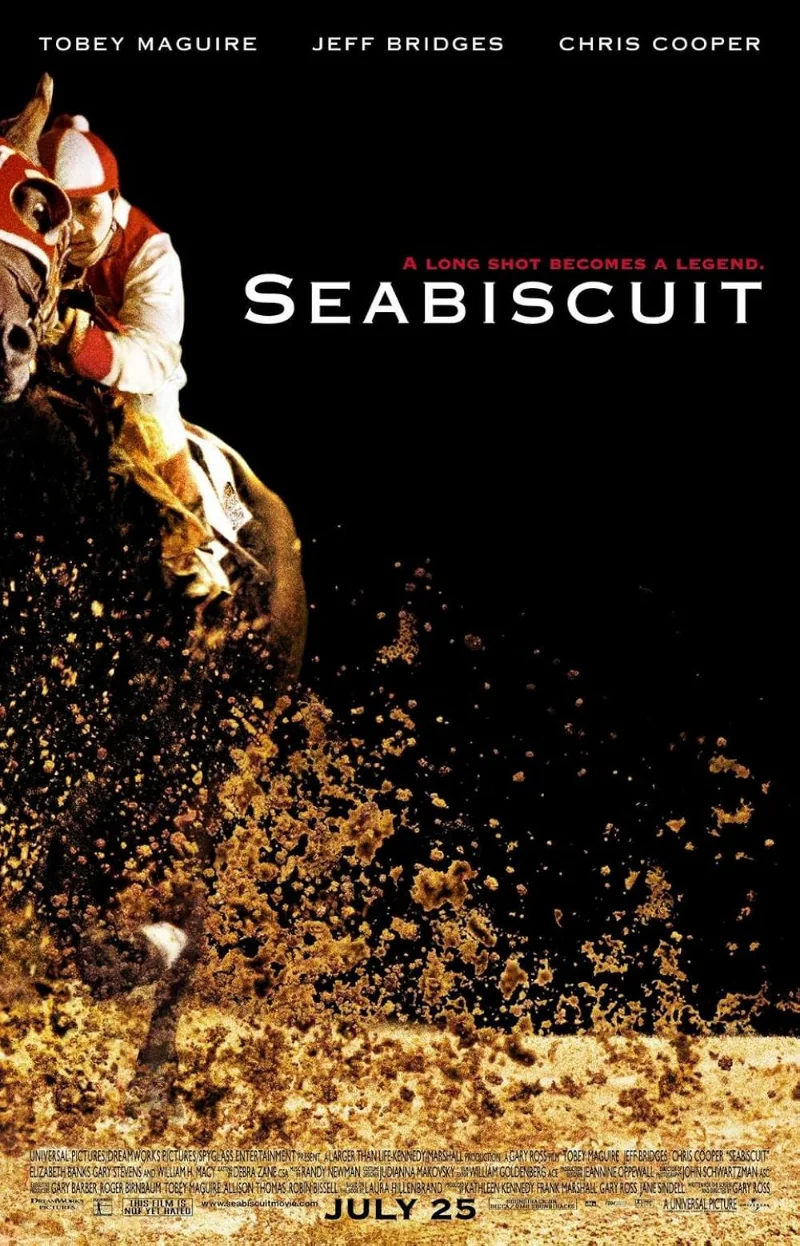
Gary Ross emerged as a filmmaker who traffics in deeply American narratives, often looking at history to reflect contemporary resonance. His background as a writer heavily informs his directorial approach, prioritizing classical Hollywood storytelling structures over radical formal experimentation. Ross established his cinematic footprint by engaging with quintessential American mythologies. Although his directorial output is relatively sparse compared to some of his contemporaries, his position in cinema history is marked by a commitment to the adaptation of sprawling, culturally significant texts. His transition from a highly sought after screenwriter to a director allowed him to fully realize the nostalgic yet hard-hitting realism he often scripts. Seabiscuit stands as a defining moment in this trajectory, showcasing his ability to marshal massive period details into a singular emotional focal point.
The evolution of Ross as a director reveals a filmmaker deeply interested in the intersection of personal struggle and a broad historical canvas. By focusing heavily on Depression-era America, he aligns himself with classical Hollywood traditions that favor the heroic underdog triumph. This approach positions him less as a subversive auteur and more as a custodian of the prestige studio picture. His work often seeks to capture a ready-made story and elevate it through rigorous attention to detail, aiming to secure authentic character development amidst sweeping historical events.
In the broader context of twenty-first-century cinema, Ross occupies a space that bridges the gap between old-fashioned populist entertainment and prestige historical drama. His methodology relies heavily on translating the phenomenal film experiences of his source material into engaging story elements for the screen. While many modern filmmakers lean into cynical deconstruction, Ross remains steadfast in his pursuit of sincerity, using the cultural impact of his subjects to forge a deep, emotional engagement with the audience.
Thematic Preoccupations
A central preoccupation in the filmography of Gary Ross is the concept of the heroic underdog triumph, often situated within periods of immense national hardship. By exploring Depression-era America, Ross uses the historical backdrop not merely as window dressing but as a thematic crucible. The economic and social despair of the era amplifies the necessity of hope, transforming his protagonists from mere historical figures into vital symbols of resilience. This thematic foundation allows him to explore how collective cultural trauma can be alleviated, however briefly, by singular acts of perseverance and unity.
The human-animal bond emerges as another profound philosophical concern, serving as a conduit for healing damaged psyches. In Seabiscuit, Ross explicitly draws parallels between the untamed beasts of the racetrack and the angry, displaced adolescents of a broken society. This symbolism in storytelling extends to broader industrial critiques, where he contrasts the obsolescence of horses in an age of automobiles with the enduring spiritual necessity of the natural world. The animal becomes a mirror for human vulnerability and endurance, reflecting rich character arcs that might otherwise remain entirely internalized by his stoic protagonists.
Furthermore, Ross continuously investigates the cultural impact of communal spectacles. He questions how authentic sports narratives function as a unifying force for a fragmented populace. His narratives are fundamentally concerned with how individuals project their own struggles onto the public narratives of famous figures or athletic events. Through this lens, his films ask enduring questions about the nature of inspiration and the societal need for mythmaking, suggesting that these shared cinematic or athletic experiences are essential mechanisms for societal survival and emotional cohesion.
Stylistic Signatures
Visually, Ross employs a style that merges classical Hollywood gloss with moments of hard-hitting realism. His cinematographic approach is characterized by an immersive kinetic energy, particularly during sequences of physical exertion or athletic competition. By placing the camera directly within the action, such as putting the audience among the horses as if they are jockeys, he forces a visceral, physical connection to the narrative. This technique eschews passive observation in favor of an aggressively subjective point of view, making the thrilling sequences feel immediate and dangerously authentic.
The mise-en-scène in the work of Ross reflects a meticulous dedication to period authenticity. He constructs highly detailed environments that capture the texture of historical eras down to the dirt on the racetrack. However, this dedication to visual accuracy is occasionally counterbalanced by a tendency toward naïve portrayals of complex social issues. His visual language often leans into the symbolic, utilizing warm, glowing lighting to underscore moments of triumph or profound emotional connection, which serves to amplify the inspirational tone of the material rather than interrogate its darker historical realities.
In terms of editing rhythms and sound design, Ross favors a muscular, escalating momentum. The pacing of his films often mirrors the trajectory of a race, starting with methodical exposition and building toward a breathless, triumphant climax. The soundscape is equally crucial, utilizing the thunderous, tactile noises of the physical world to ground the emotional swells of the musical score. This careful orchestration of sound and image ensures that the emotional engagement of the audience is constantly stimulated, even when the narrative architecture relies on familiar, ready-made story beats.
Recurring Collaborators
While the available critical database does not identify a stable troupe of recurring cast members across multiple films, the nature of the casting process employed by Ross reveals a deliberate strategy in his creative partnerships. He consistently seeks out performers who can convey a lived-in authenticity, grounding his sweeping historical narratives in rich human casting. This reliance on seasoned character actors to populate the margins of his films ensures that even the most archetypal roles possess a degree of psychological weight and emotional texture, preventing the historical pageant from feeling artificial.
His collaborative ethos extends heavily into his relationships with craftspeople and technical departments. To achieve the hard-hitting realism and authentic sports narratives praised by critics, Ross requires production designers and cinematographers capable of translating exhaustive historical research into dynamic visual cinema. The success of a film like Seabiscuit relies fundamentally on these unseen partnerships, where the extreme accuracy of the period details provides a solid foundation for the more stylized, subjective camera techniques he employs during the intense action sequences.
Furthermore, the adaptation process itself represents a crucial collaboration between the director and his source material. Ross frequently partners with the foundational texts of celebrated authors, engaging in a dialogue with the original prose. Reviewers often note that his cinematic interpretations retain the bristling reality of the original characters and dialogue, such as the widely praised portrayal of the trainer Tom Smith. By collaborating so closely with the rhythm and tone of the original literature, Ross ensures that the adaptation quality remains high, even when he streamlines the narrative for the screen to achieve a classic Hollywood ending.
Critical Standing
The critical reputation of Gary Ross is marked by a pronounced dichotomy. On one hand, populist critics and mainstream audiences frequently champion his work as a source of phenomenal film experiences. Reviewers often align his films with the most revered entries in the sports drama canon, drawing frequent and favorable comparisons to classics like Rocky, The Black Stallion, and Secretariat. In this context, Ross is celebrated as a master of the heroic underdog triumph, a filmmaker who knows exactly how to manipulate the cinematic apparatus to generate profound emotional engagement and thrilling spectacles.
Conversely, his standing within more rigorous academic and high-art critical circles is often subjected to a stringent critique of depth. Detractors frequently argue that his reliance on ready-made stories results in ham-fisted adaptations that favor sentimentality over structural complexity. In these circles, his work is sometimes dismissed as superficial and naïve, accused of glossing over the darker, more contradictory elements of the historical realities he depicts. The very classical Hollywood ending that delights mainstream audiences is often cited by his severe detractors as evidence of a filmmaker unwilling to challenge the boundaries of conventional storytelling.
Ultimately, Ross occupies a unique, highly debated space within contemporary critical discourse. His films serve as a fascinating litmus test for the enduring viability of the classical American inspirational drama. While he may not be universally hailed as a boundary-pushing auteur, his undeniable skill at crafting engaging story elements and authentic, kinetic action sequences commands respect. His legacy remains tied to his ability to resurrect the sincere, unironic prestige picture, proving that there is still a potent, if critically contested, cultural impact in well-executed cinematic mythmaking.