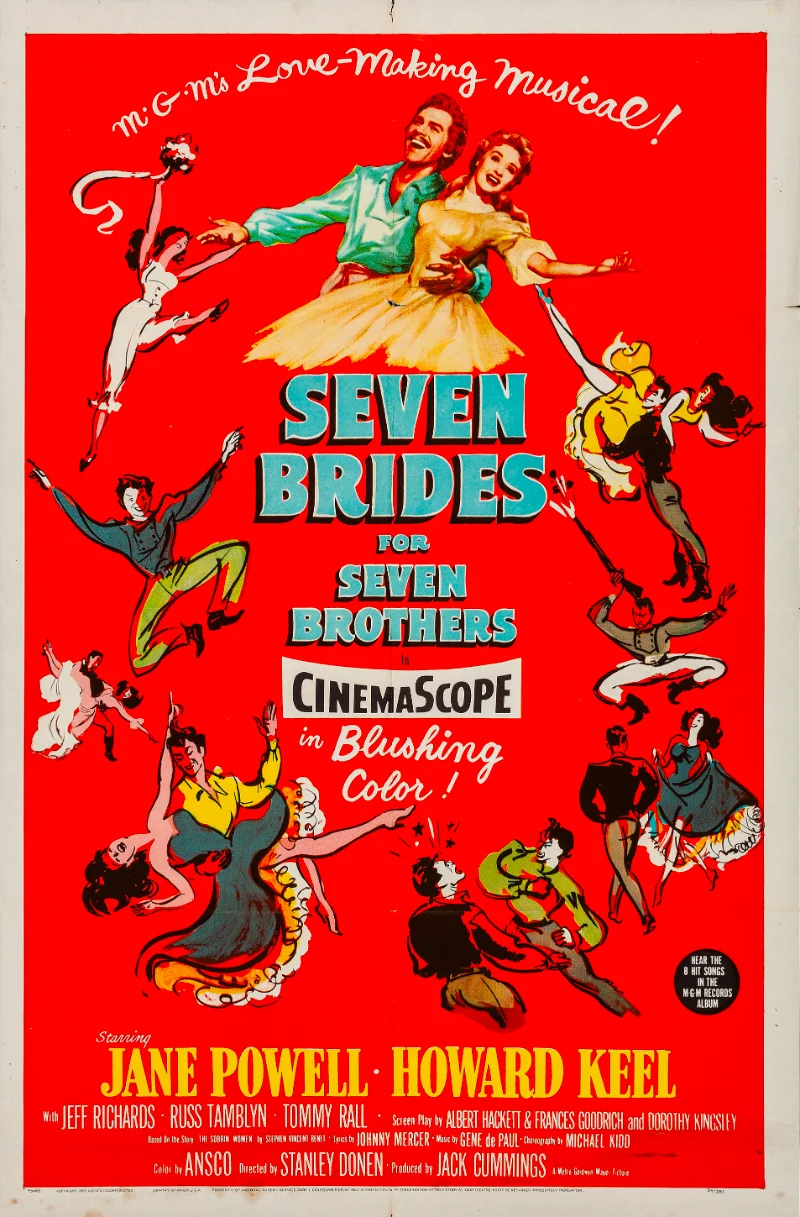
In the rich tapestry of Hollywood musicals, Seven Brides for Seven Brothers, directed by Stanley Donen in 1954, stands out as a vibrant and exuberant exploration of frontier life, romance, and the raw energy of dance. This film is a lively adaptation of Stephen Vincent Benét's story, which captures the quintessential American spirit, blending humor, music, and a uniquely cheerful take on the pursuit of love amidst a rugged landscape. Donen, who is revered for his innovative direction in the musical genre, pushes boundaries with this film, showcasing his ability to combine athletic dance sequences with a tuneful score, a hallmark of his celebrated career.
Critical reception of Seven Brides for Seven Brothers highlights its infectious energy and colorful aesthetic. The film is often described as glorious and vigorous, featuring performances that are both comic and surprisingly nuanced. The narrative tackles themes of courtship and sibling rivalry in a manner that feels fresh and relatable, even today. Critics laud the film for its barmy charm, with well-staged musical numbers that are nothing short of exhilarating. These moments not only showcase the talent of the cast but also serve as expressions of the characters’ deeper emotions and aspirations, thereby reinforcing the romantic narrative.
The film’s dance sequences are particularly noteworthy, as they transcend traditional choreography to create an athletic ballet that captures the spirit of the frontier. Each movement feels imbued with a sense of purpose, and the synchronization of the dancers is pitch-perfect, solidifying Seven Brides for Seven Brothers as a significant piece of theater production. The vigorous nature of the performances reflects a robust enthusiasm that resonates well with audiences, making the film a timeless classic that marries musicality with the trials and tribulations of love.
Despite its many accolades, Seven Brides for Seven Brothers is not without its critiques, with some viewing the film’s romantic dynamics as simplified or frustrating in their treatment of women. However, this criticism often fades when considering the glorious exuberance that defines the film’s spirit. The delightful scenes of the brothers' antics and their clumsy yet earnest attempts at romance contribute to a narrative that feels both timeless and yet poignantly reflective of its era.
Ultimately, Seven Brides for Seven Brothers encapsulates the best of mid-century musical filmmaking. Its infectious spirit, colorful production design, and top-notch performances ensure it remains a cherished work within the genre. As part of Donen's legacy and the broader spectrum of American cinema, it continues to be a vibrant reminder of the joys and complexities of love, family, and the human experience, rendered uniquely through the lens of musical comedy.