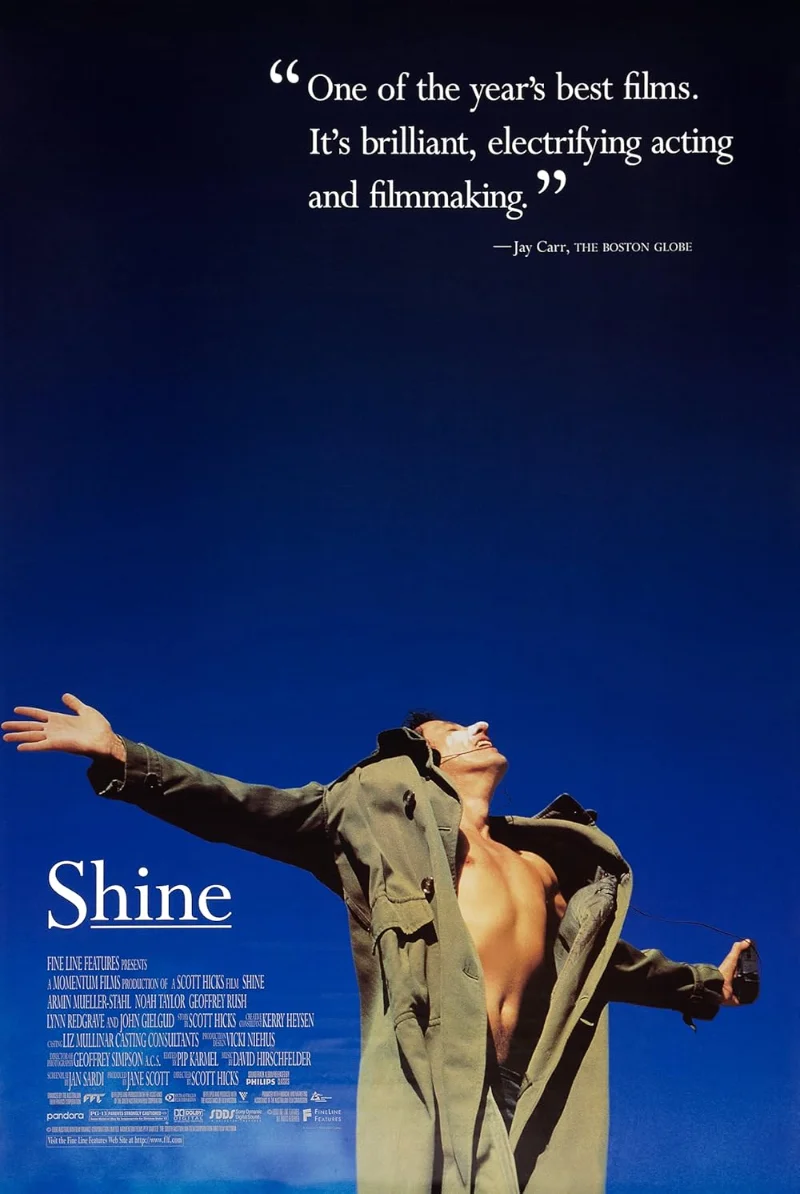
Shine, directed by Scott Hicks, stands as a poignant exploration of the intersection between genius and mental illness. Released in 1996, this biographical drama captivated audiences and critics alike, earning a place in cinematic history for its powerful storytelling and compelling performances. The film chronicles the life of David Helfgott, a gifted pianist whose prodigious talent is tempered by profound personal struggles and complex family dynamics. Hicks, through his sensitive direction, masterfully captures the essence of an artist grappling with the conflicting forces of brilliance and insanity, echoing themes that resonate deeply within the realm of creative expression.
Critical consensus highlights Shine as an emotionally charged narrative that delves into the tumultuous relationship between mental health and familial expectations. Helfgott's journey is marked by the intense conflicts with his father, whose authoritarian demeanor ultimately contributes to David's psychological unraveling. This narrative thread serves as a focal point, emphasizing how family dynamics can both enrich and complicate the lives of those with extraordinary talents. The weight of expectation and the burden of unfulfilled dreams create a gripping atmosphere where viewers are drawn into David's world, oscillating between moments of sheer brilliance and despair.
The film's portrayal of musical genius is richly layered, as it not only showcases Helfgott's extraordinary skills but also highlights the emotional toll of such talent. Through mesmerizing piano performances, Shine conveys the cathartic power of music, positioning it as both a sanctuary and a source of conflict for the protagonist. The juxtaposition of exhilarating creativity and debilitating mental illness serves as a reminder of the fragile nature of genius, a theme that resonates widely, inspiring discussions about the artistic process and the personal struggles that often accompany it.
Ultimately, Shine stands as a testament to personal redemption and resilience in the face of adversity. David Helfgott’s return to the concert stage after years of turmoil becomes a powerful metaphor for overcoming the demons that can threaten artistic fulfillment. The film’s emotionally charged conclusion invites viewers to reflect not only on the triumph of the human spirit but also on the complexities of personal recovery. Hicks’ direction, coupled with Geoffrey Rush's outstanding portrayal of Helfgott, creates a visceral experience that is both moving and inspiring.
In summary, Shine remains a significant entry within Scott Hicks’ body of work and a compelling piece in the landscape of 90s cinema. It challenges audiences to confront the dualities inherent in creative expression, examining how personal struggles can inform and shape artistic genius. The film's enduring impact is felt through its heartfelt exploration of themes that are as relevant today as they were at its release, inviting continued dialogue about mental health, familial bonds, and the cost of brilliance.