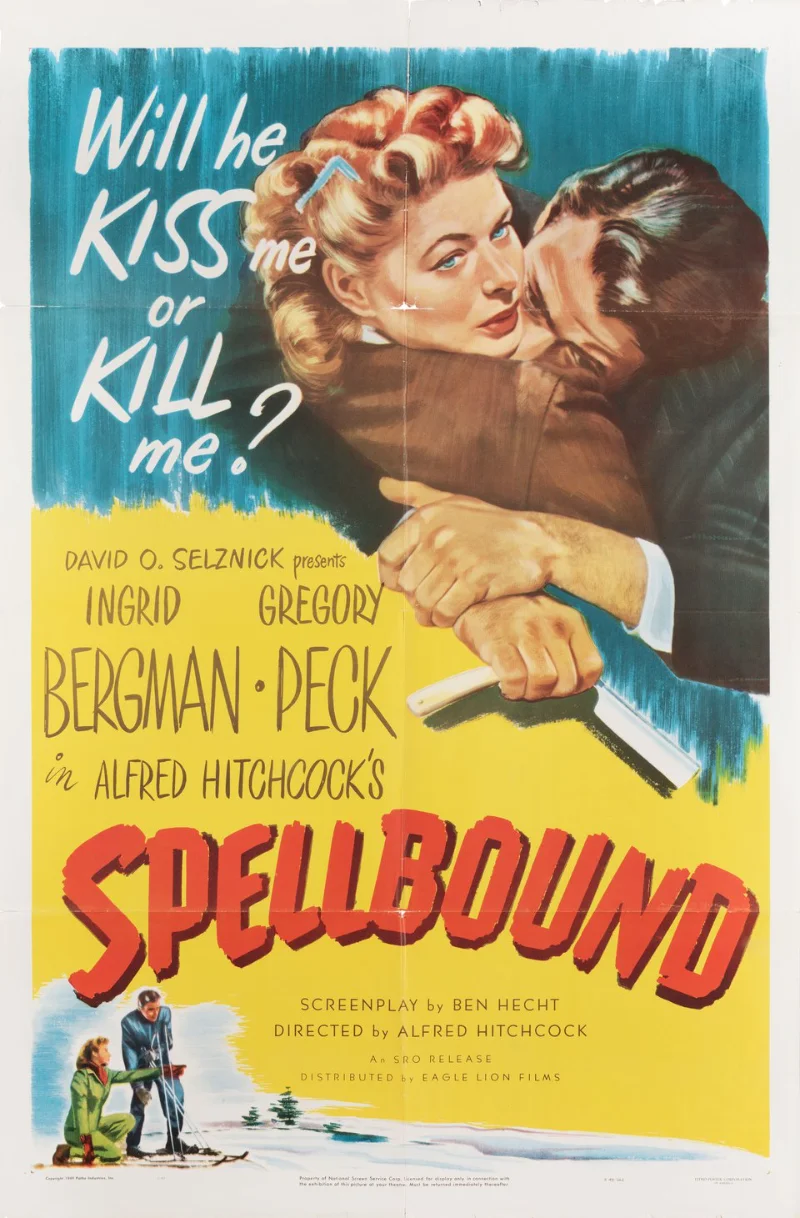
Alfred Hitchcock's Spellbound, released in 1945, stands as a seminal work in the director's illustrious career, merging his signature suspense with the complexities of psychoanalysis. At a time when Hollywood was becoming increasingly experimental, Hitchcock delved into the subconscious, attempting to capture the intricate dynamics of mental health through the lens of Freudian theory. This exploration was not only innovative for its time but laid the groundwork for future psychological thrillers, showcasing how trauma and repressed memories can manifest in behavior and relationships.
The film tells the story of Dr. Constance Petersen, a psychiatrist played by Ingrid Bergman, who becomes romantically involved with a patient, Dr. Anthony Edwardes, portrayed by Gregory Peck. As the plot unfolds, the themes of family dynamics, mental illness, and the impact of divorce emerge, culminating in a narrative that teeters between romantic comedy and psychological thriller. Critics have noted the film's unique combination of supernatural elements, such as dream sequences that utilize groundbreaking animation techniques to illustrate the characters' inner turmoil. These sequences, while visually striking, have also been described as derivative by some, who argue that they detract from the film's depth.
In terms of critical reception, Spellbound has generated a mixed consensus. While some praise its clever use of Freudian symbolism and its engagement with psychological themes, others find it manipulative and shallow. The film's competition between romantic ideals and the stark realities of mental health challenges leaves audiences contemplating the relationships it presents, but this complexity often leads to feelings of disappointment. Many reviewers highlight that the film sometimes feels exploitative of its subject matter, prioritizing suspense over substantial character development.
Despite these criticisms, Spellbound remains an engaging viewing experience, distinguished by its historical significance in cinematic history and Hitchcock's oeuvre. The film blends elements of fantasy with psychological realism, challenging viewers to navigate the complexities of love and trauma. This duality not only entertains but encourages reflection on the broader themes of family dynamics, dating, and the pressures of competition inherent in both personal and professional relationships.
Ultimately, Spellbound occupies a unique position in Hitchcock's catalog. It is both a product of its time and ahead of its era, attempting to bridge the gap between popular entertainment and serious artistic inquiry. As we continue to explore the intersections of mental health and interpersonal relationships on screen, Hitchcock's ambitious endeavor invites us to look deeper into the psyche, reminding us that the struggles we face are often layered and multifaceted.