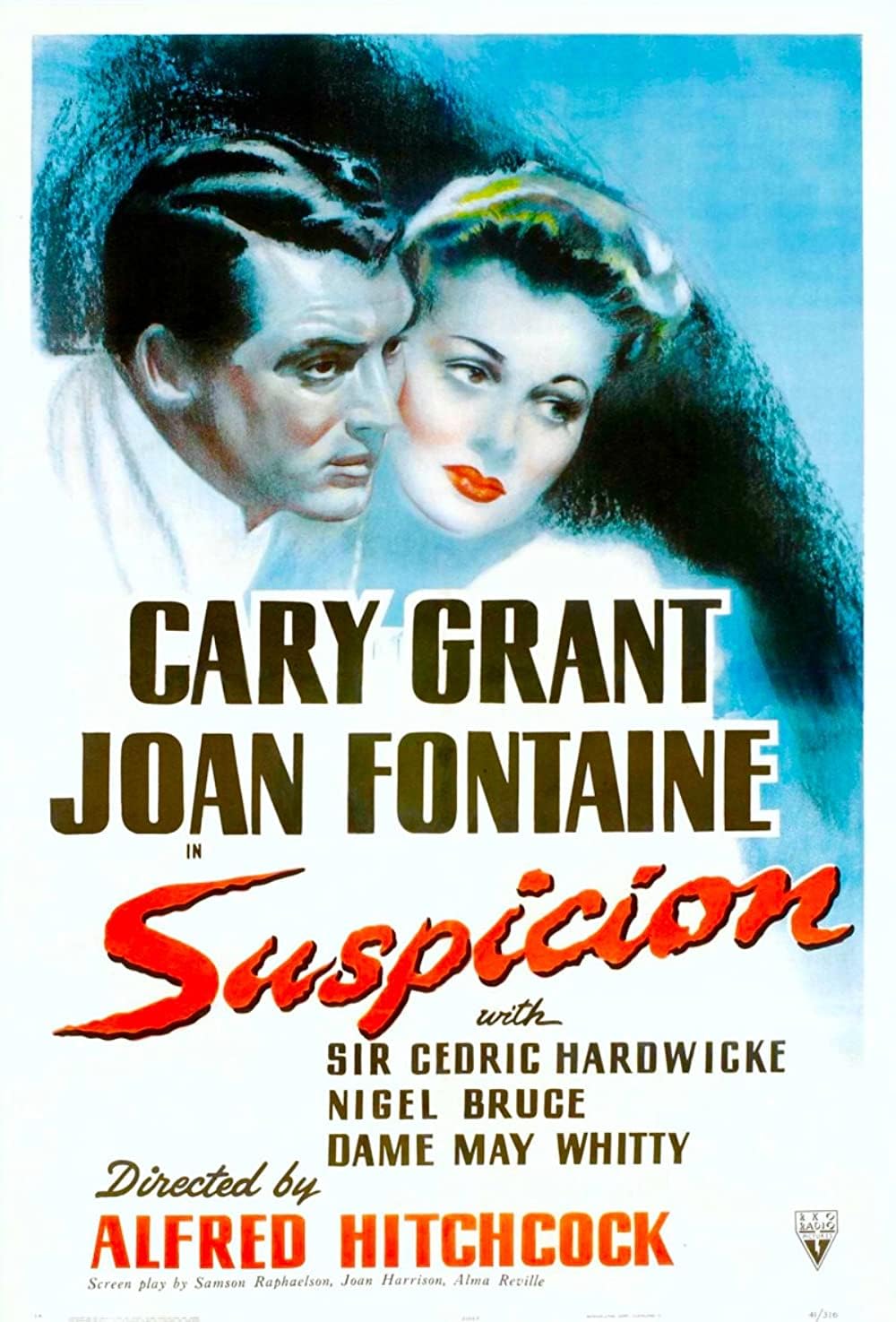
As one of Alfred Hitchcock's earlier endeavors into the realm of psychological thrillers, Suspicion (1941) occupies a noteworthy position in both the director's canon and the broader landscape of classic Hollywood cinema. Coming on the heels of the more straightforward romantic comedies and melodramas of the era, this film encapsulates Hitchcock's burgeoning mastery in crafting tension and suspense, skillfully blending elements of romance with the intricacies of moral ambiguity and paranoia. It represents a pivotal moment in Hitchcock's career, where he began to explore darker themes, providing a glimpse into the complexities of human relationships, specifically, the vulnerability of trust within marriage.
At its core, Suspicion delves into the themes of suspicion and trust, beautifully embodied in the relationship between the protagonist, Lina McLaidlaw, played by Joan Fontaine, and her husband Johnnie Aysgarth, portrayed by Cary Grant. The film's intricate examination of marriage dynamics presents a fascinating, albeit unsettling, perspective on how love can be shadowed by doubt. Critics have noted that the film engages with the concept of the "wrong man" narrative, a motif frequently revisited in Hitchcock's works, as Lina becomes increasingly convinced that her charming yet dubious husband is plotting her demise. This psychological tension creates a thick atmosphere of suspense that resonates through the film, holding the viewer in a state of anxious anticipation.
While many reviewers have praised Hitchcock's deft direction and Grant's charismatic performance, there are points of contention regarding the film's pacing and narrative execution. Some critics argue that the film occasionally succumbs to a slow and lackluster rhythm, where the suspenseful build-up feels stretched, leading to moments of disengagement. Despite the intriguing plot, the pacing issues sometimes hinder the overall impact, leaving audiences craving a more engaging experience. Though the film culminates in a revealing climax, certain aspects of the storytelling may leave viewers feeling that the journey itself did not entirely meet the compelling promise of its premise.
Despite its criticisms, Suspicion remains a classic emblem of suspense craftsmanship, showcasing Hitchcock's distinct ability to create an atmosphere steeped in tension and intrigue. The film's exploration of betrayal and deception evokes a haunting portrayal of love trapped in a web of uncertainty. Fontaine's portrayal of a woman torn between affection and fear serves as a powerful exploration of self-doubt, making the film both psychologically engaging and artistically rich. Although it may not reach the heights of some of Hitchcock's later masterpieces, its blend of suspense and moral ambiguity secures its place in the cinematic lexicon.
Ultimately, the legacy of Suspicion is marked not only by its star-studded performances and atmospheric tension but also by its thematic depth, encapsulating the multifaceted nature of trust within relationships. Hitchcock's skillful direction and the film’s narrative complexities ensure that it is remembered as a significant, if occasionally uneven, exploration of the darker side of romantic entanglements. As viewers delve into its prepossessing world of suspense, Suspicion remains a compelling entry in the annals of suspenseful storytelling, inviting ongoing discourse about trust, love, and the human psyche.