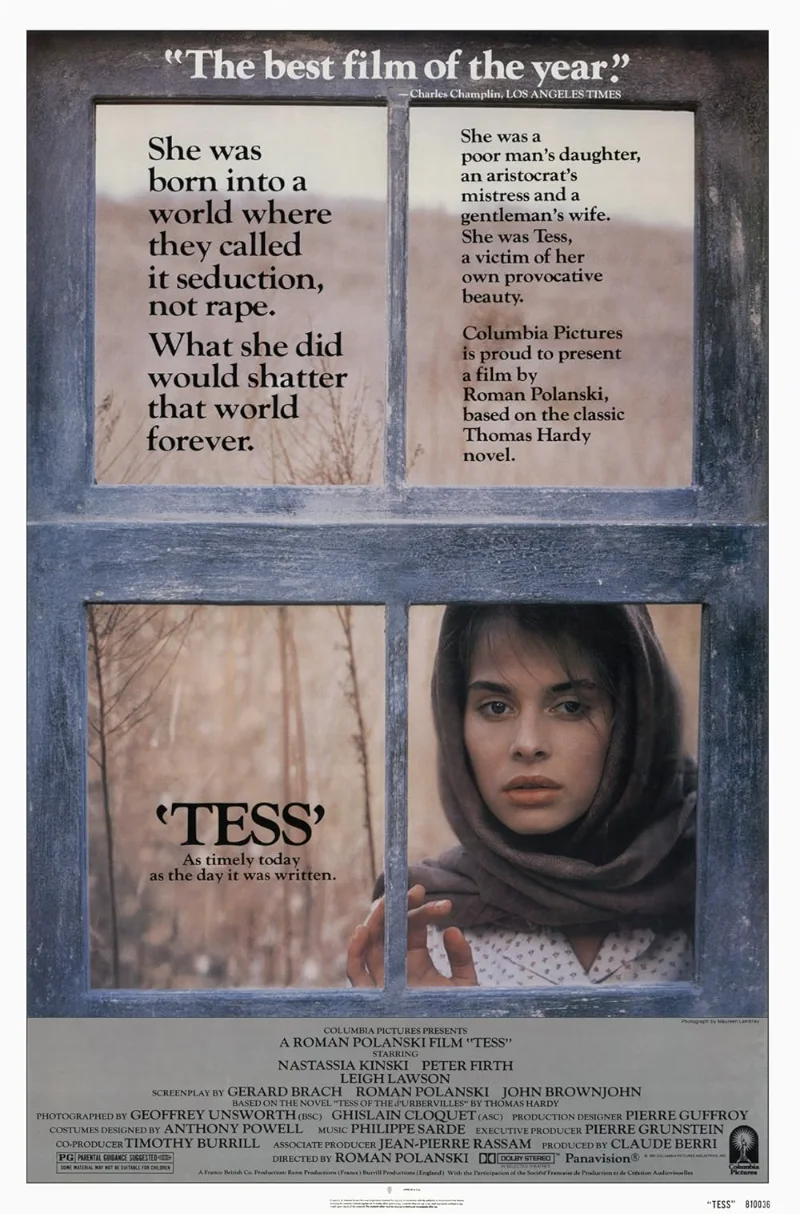
Tess, released in 1979 and directed by Roman Polanski, holds a significant place both in cinema history and within the director's diverse oeuvre. Drawing from Thomas Hardy's novel Tess of the d'Urbervilles, the film represents Polanski's return to a more contemplative style, characterized by lush visuals and a focus on character-driven narratives. This adaptation reflects Polanski's interest in themes of alienation and social injustice, resonating with audiences through its exploration of a Victorian society marked by rigid sexuality and moral complexity.
At the heart of Tess is its tragic love story, a narrative steeped in the loss of innocence and the social exploitation prevalent in the period. Tess Durbeyfield, portrayed with remarkable sensitivity, embodies the struggle between personal desires and societal expectations. Her relationships with Alec d'Urberville and Angel Clare present a poignant love triangle that emphasizes the broader themes of betrayal and fidelity. Critics have noted how Polanski’s meticulous direction and the film's ravishing cinematography elevate Tess’s journey from naïveté to despair, encapsulating the emotional turmoil of her existence in a deeply moving manner.
Critical responses to Tess often highlight its elegant yet exhaustive storytelling, with some reviewers deeming it insufferably long, despite acknowledging its artistic merits. The pacing allows for a thorough exploration of Tess’s internal struggles, though it may test the patience of viewers unaccustomed to the film's deliberate tempo. Nonetheless, the emotional weight carried by the excellent supporting cast enriches the narrative, providing a visually and thematically engaging backdrop that illustrates the harsh realities faced by women of that era. Polanski’s faithfulness to the source material is evident throughout, maintaining the essence of Hardy's critique of social structures while imbuing the film with a cinematic eloquence.
Moreover, Tess serves as a reflection on Victorian sexuality, portraying both the constraints imposed on individuals and the passionate desires that simmer beneath the surface. The film effectively juxtaposes Tess's innocence with the corrupting influences of the men in her life, ultimately crafting a tragic romance that resonates even today. In approaching the film, viewers are compelled to reflect on not only the characters' fates but also the pervasive social injustices that continue to unfold in contemporary life.
In sum, Tess stands as a hallmark of Polanski's cinematic journey, showcasing his ability to meld lush visuals with profound emotional narratives. The tragic love, the exploration of innocence lost, and the social critique woven throughout the story make it a work that transcends its period setting. It invites audiences to engage with complex moral themes while challenging them to consider the societal issues that persist beyond the screen. As such, the film remains a vital touchstone within the landscape of cinema, emblematic of both Hardy's literary legacy and Polanski's artistic vision.