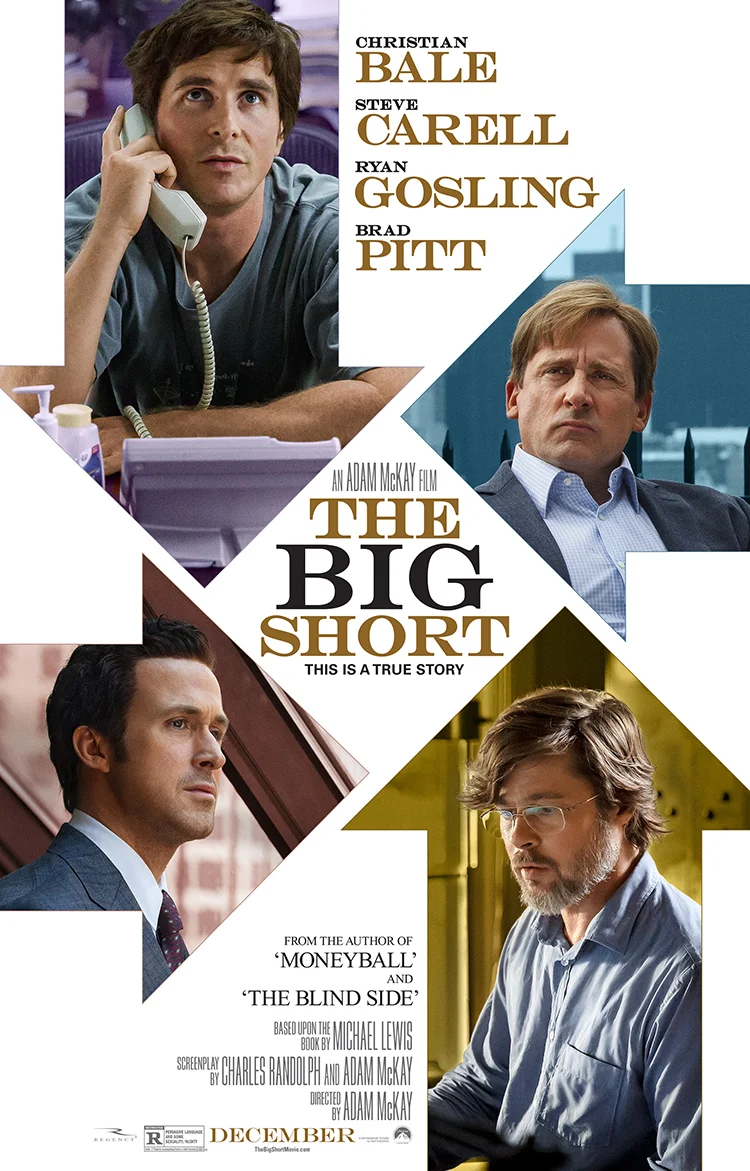
In the landscape of contemporary cinema, The Big Short, directed by Adam McKay, occupies a unique niche that blends sharp social commentary with an anarchic comedic style. Released in 2015, the film not only tackles the complexities surrounding the 2008 housing market collapse but also serves as a sardonic critique of an entire financial ecosystem that contributes to societal instability. McKay, known for his work in satirical filmmaking, successfully adapts Michael Lewis's non-fiction book into a narrative that is both educational and outrageously entertaining, layering humor atop a deeply serious subject matter.
At its core, The Big Short dissects the 2008 financial crisis with an absurdist lens, using a clever, fourth-wall-breaking narration that invites the audience to interrogate the nature of financial systems and the actors behind them. Critics have noted that, while the film aims to inform, it also risks condescension, opting for a breezy approach that may simplify the complexities of derivatives and mortgage-backed securities into digestible morsels. This tension between entertainment and preachiness contributes to an evolving conversation about financial literacy in a society increasingly driven by celebrity culture, as the film draws in well-known actors to embody real-life financiers and economists.
The critical consensus surrounding The Big Short highlights its anarchic and funny qualities, which stand in stark contrast to the dire realities of its subject. Many praise McKay's ability to leverage humor in sua critique, creating a film that feels both urgent and relevant, while also entertaining. However, some reviewers express concern that such an approach may risk being too facile, potentially reducing the weight of the economic disaster to mere jokes. Audiences are left grappling with this duality, being informed through humor yet sometimes feeling patronized by the film's efforts to simplify the financial jargon.
What makes The Big Short particularly significant in McKay's oeuvre is its experimentation with style and form. The film is an adaptation that challenges traditional storytelling within the context of a biopic or ensemble drama. Each character’s arc circles back to a central dilemma, illustrating how individual decisions contribute to larger systemic failures. This methodology mirrors broader trends in cinema, where educational content is increasingly intertwined with entertainment, reflecting a shift towards a more engaged viewer.
In sum, The Big Short emerges not just as a film about financial collapse but as a cultural artifact that captures the zeitgeist of a post-crisis America. Its anarchic humor cuts through the dense subject matter, while its earnest attempts at financial education provoke a necessary dialogue about accountability and awareness. As viewers leave the theater, they are not only entertained but are left to ponder the implications of recklessness in an interconnected world, one laugh at a time.