Career Overview
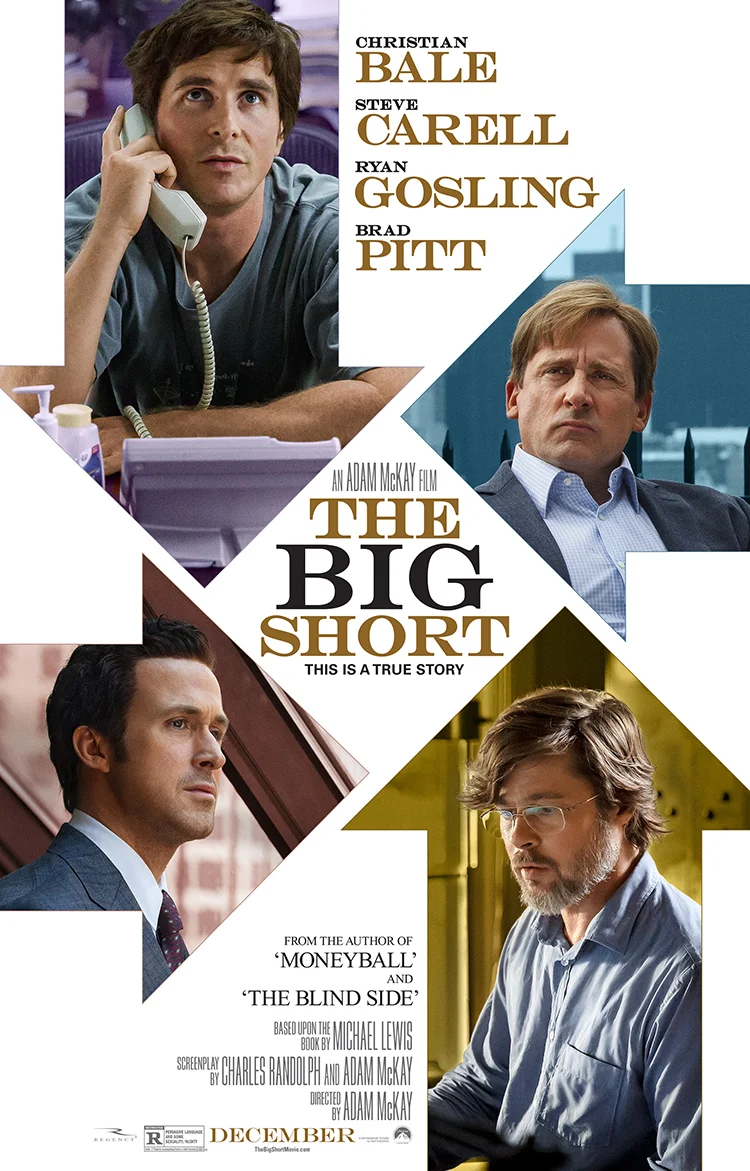
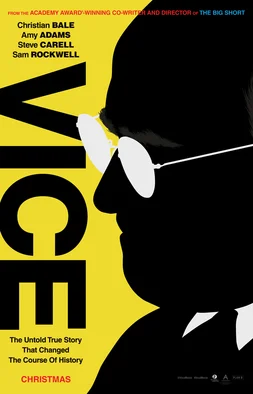
Adam McKay represents one of contemporary cinema's most unexpected and fascinating career evolutions. Transitioning from a background deeply rooted in absurdist studio comedies, he reinvented himself in the 2010s as a purveyor of aggressively topical, politically charged biographical dramas. This pivot cemented his status as a polarizing but undeniable force in modern American filmmaking, dedicating his lens to exposing the systemic rot of late-stage capitalism and neoconservative statecraft. His ascendance as a serious filmmaker began in earnest with The Big Short, a film that tackled the convoluted architecture of the 2008 housing market collapse. Critics noted the sheer unlikeliness of translating such dense financial catastrophes into anarchic comedy, yet the film marked his definitive shift toward ambitious, culturally urgent storytelling. By diagnosing the financial crisis through a lens of biting political satire, he established a new authorial voice that favored financial education through highly stylized entertainment. With Vice, McKay deepened his focus on American politics, offering a sweeping biographical portrait of Vice President Dick Cheney. Reviewers frequently compared the scope of the film to Oliver Stone's cinematic interrogations of American power, particularly noting a shared penchant for sprawling narratives and ideological critique. Ultimately, his career arc underscores a singular commitment to translating the labyrinthine mechanisms of systemic corruption into widely accessible, mainstream cinema.
Thematic Preoccupations
At the core of his recent filmography lies a profound obsession with the mechanics of political power and institutional corruption. McKay operates as a cynical observer of modern American history, dissecting the foundational failures that define the 21st century. Whether exploring the predatory lending practices in The Big Short or the unchecked executive overreach in Vice, he repeatedly interrogates how opaque bureaucratic systems are weaponized against an unsuspecting public. A recurring philosophical concern in his work is the tension between public ignorance and elite exploitation. His narratives often grapple with the digestibility of dense, consequential information, utilizing the trappings of a celebrity driven mass culture to force audiences into confronting their own complacency. This thematic approach frequently manifests as an anarchic comedy that belies a deeply nihilistic perspective on civic engagement, suggesting that the average citizen is woefully unequipped to comprehend the invisible forces governing their daily lives. Furthermore, his films constantly orbit the concept of historical accountability. By functioning as both biographical drama and political satire, his scripts attempt to assign direct culpability for diffuse historical tragedies. While some critics view this as a necessary demystification of recent history, others identify a contradictory element in his work, where the earnest desire to provide accessible political context occasionally crosses the line into audience condescension and preachy moralizing.
Stylistic Signatures
The visual and narrative language of Adam McKay is characterized by a frantic, stylized presentation that intentionally disrupts traditional cinematic immersion. His most recognizable stylistic signature is the aggressive breaking of the fourth wall, a technique used to directly address the audience and distill complex socioeconomic realities. In The Big Short, this manifests through breezy, arch narration that pauses the diegetic action to deliver rudimentary explanations of financial instruments, creating a distinctive hybrid of narrative feature and didactic documentary. Editorially, his films are defined by a noisy, rapid fire execution that mirrors the chaotic media landscapes he seeks to critique. He employs an audacious approach to montage, splicing together pop culture ephemera, archival news footage, and scripted dramatizations to create an overwhelming sensory experience. This frenetic pacing reflects the overwhelming nature of the modern information age, forcing the viewer to synthesize contradictory elements at breakneck speed. Tonally, his stylistic choices frequently hover between brainy commentary and absurdist humor. Even when dealing with genuinely grim subject matter, such as the ideological descent of the American right wing in Vice, he utilizes overt comedic beats to structure his historical arguments. The result is an opinionated, highly subjective cinematic style that prioritizes polemical impact over classical storytelling refinement, yielding a distinct and instantly recognizable authorial signature.
Recurring Collaborators
A crucial component of his cinematic project is his reliance on an ensemble of highly skilled, chameleonic performers who can navigate his erratic shifts between broad comedy and grave historical drama. Christian Bale stands out as his most vital onscreen collaborator, appearing in both The Big Short and Vice. Bale brings a rigorous, transformational intensity to his roles, most notably undertaking a profound physical and psychological evolution to portray Dick Cheney, anchoring the director's sprawling narratives with grounded, meticulously observed performances. Steve Carell serves as another foundational pillar in his repertory company, perfectly embodying the contradictory tones of his political satires. Carell excels at externalizing the neurotic energy and moral outrage that course through these scripts, acting as an avatar for both the cynical outlook of the filmmaker and the deeply felt frustration of the audience. His ongoing presence bridges the gap between the director's earlier comedic endeavors and his current, more ambitious sociopolitical critiques. Additionally, the director frequently populates his ensembles with renowned A-list talent, leveraging their star wattage to make dense academic material more palatable. Performers like Amy Adams and Ryan Gosling are utilized not just for their formidable dramatic capabilities but as recognizable signifiers within a media saturated culture. Gosling's arch narration and Adams's steel willed political maneuvering demonstrate how his casts are consistently instructed to push their performances to the edge of caricature without losing the underlying thematic gravitas.
Critical Standing
The critical reception of his work reveals a deeply fractured consensus, positioning him as one of the most hotly debated auteurs in contemporary political cinema. For his advocates, his films are celebrated as a necessary tonic for troubled times, widely praised for their ambitious vision and brainy commentary. Supporters argue that his anarchic approach provides a much needed jolt to the traditional biographical drama genre, viewing his willingness to tackle recent historical catastrophes as both courageous and vital to the cinematic landscape. Conversely, his detractors frequently characterize his execution as noisy, mediocre, and fundamentally lacking in genuine cinematic insight. Many prominent critics take issue with his opinionated narrative structures, arguing that his films often devolve into preachy, one sided arguments rather than nuanced explorations of complex historical issues. Reviews from major publications have pointed out that his reliance on clever stylistic tricks and literal explanations can feel less like rigorous historical commentary and more like an exercise in facile audience condescension. Within the broader critical discourse, his films are frequently compared to other touchstones of political and financial cinema, such as The Wolf of Wall Street and Margin Call. However, he is perhaps most often likened to Oliver Stone, particularly regarding the sprawling, hyper kinetic nature of films like Nixon. Ultimately, his standing remains that of a highly polarizing provocateur, an ambitious filmmaker whose audacious attempts to merge absurdist comedy with dense political education ensure that his work is consistently the subject of intense, passionate critical scrutiny.