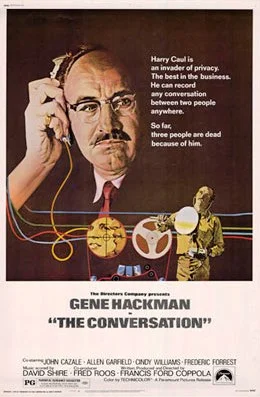
Francis Ford Coppola's The Conversation epitomizes the psychological thriller genre and stands as a significant work within his diverse filmography. Released in 1974, this film emerges during a period marked by profound societal and political anxieties in the United States, particularly in the wake of the Watergate scandal. The film's atmospheric tension and cerebral interrogation of surveillance resonate with contemporary concerns regarding privacy and the ethical implications of technology. Coppola's trajectory toward such themes can be traced from his previous films, yet The Conversation uniquely encapsulates the paranoia and isolation that accompanies the act of listening, both literally and metaphorically.
At its core, The Conversation confronts the intricate dynamics of surveillance and personal conscience through the lens of its protagonist, Harry Caul, portrayed masterfully by Gene Hackman. Caul is a sound designer haunted by his own moral dilemmas as he investigates a couple’s private conversation, unaware of the potential catastrophic consequences of his work. The film is imbued with a pervasive sense of paranoia, an introspective exploration into the ethics of eavesdropping, and the heavy burden that comes with the knowledge of other people's secrets. Critics have often noted how Coppola adeptly utilizes sound design itself as a character, amplifying the film's suspenseful atmosphere and enhancing the psychological tension that envelops Caul’s existence.
Critically, The Conversation has garnered acclaim for its intricate storytelling and subdued style, which showcases Coppola's skillful direction. Reviewers frequently highlight the film's ability to evoke tension without relying heavily on conventional thriller tropes. The way in which it meticulously builds suspense and captures Caul’s descent into existential dread serves as a testament to Coppola's advanced narrative techniques. This is a film that ultimately does not reveal itself immediately; rather, it asks the audience to engage deeply with its themes of isolation and the pervasive nature of surveillance, compelling viewers to reflect on their own relationship with technology.
Moreover, the film's reflective narrative invites discussions about the impact of technology on human relationships and the ethical dimensions surrounding privacy. In the context of an increasingly digital world, audiences can draw parallels between Caul's experiences and the contemporary issues of data collection and unauthorized surveillance that have become part of modern life. The themes of conspiracy and isolation resonate even more strongly today, as individuals grapple with the implications of living under the constant watch of technology, making The Conversation both a timely and timeless piece.
In conclusion, The Conversation is more than a mere thriller; it is a profound examination of the human condition in the face of technological encroachment. Coppola's ability to weave a narrative laden with psychological and ethical implications ensures that the film remains a relevant commentary on the balance between privacy and the voyeuristic tendencies fostered by modern society. Its enduring legacy lies not only in its suspenseful storytelling but also in its ability to provoke thought regarding the nature of conscience and the cost of secrets.