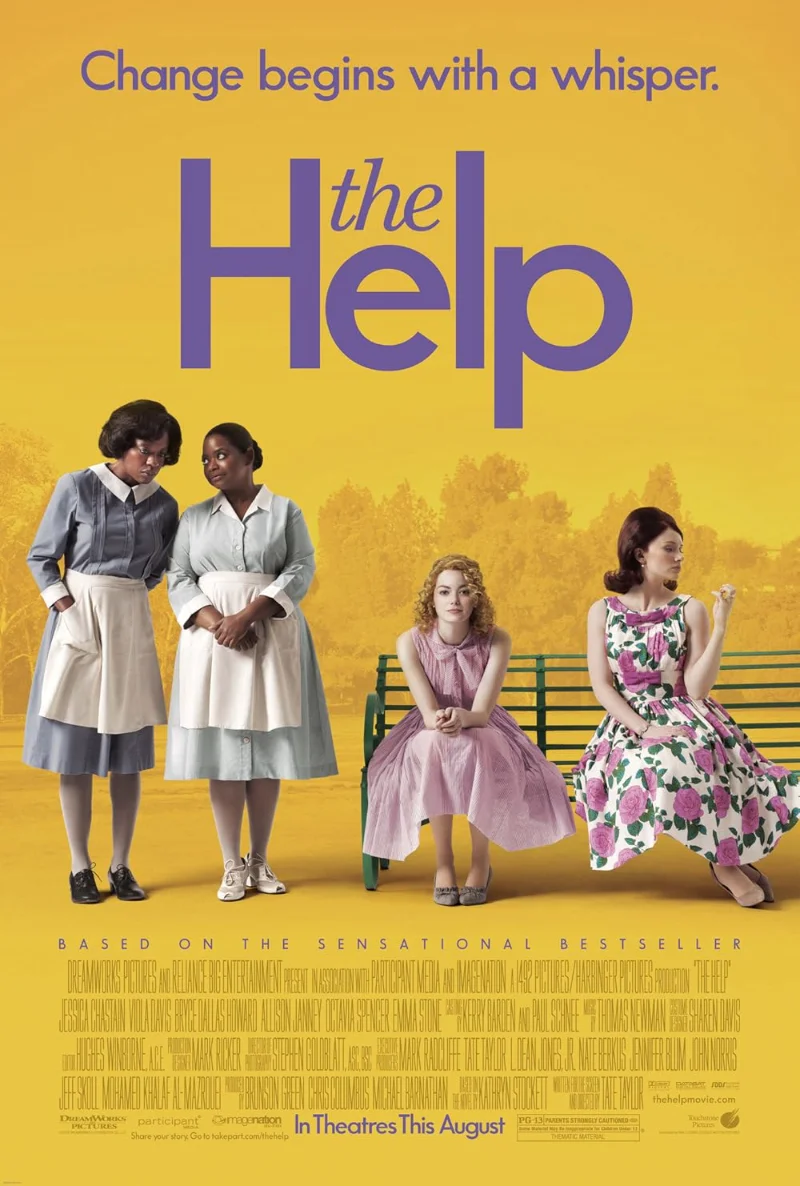
The Help, directed by Tate Taylor and released in 2011, emerges as a complex entry within the canon of cinematic portrayals of racial issues and social justice, particularly in the Southern United States. Set against the backdrop of 1960s Mississippi, the film intricately weaves the lives of Black maids and their White employers, shedding light on the deeply entrenched racial inequality of the time. Taylor, known for his ability to blend humor with insightful storytelling, takes on a weighty subject matter, transforming personal narratives into a broader commentary about societal change. Although The Help has left an indelible mark on popular consciousness, its interpretations veer significantly between upliftment and oversimplification, prompting audiences to grapple with its layered messages.
Critical reception broadly aligns with a consensus that appreciates the film's rousing spirit and indomitable characters who embody resilience amidst adversity. Central to The Help is the empowering bond between the maids, especially Aibileen and Minny, whose friendship evolves into a powerful collective voice against systemic injustice. This theme of empowerment resonates strongly with viewers, offering a sentiment of reassurance through the depiction of courageous actions in the face of volatility. However, many critiques have zeroed in on the film's tendency toward an airbrushed fairytale narrative, which, while entertaining and filled with laughter, risks trivializing the authentic pain experienced by those within the historical context.
The tonality of The Help oscillates between feel-good fable and sentimentality, often drawing ire for its crude portrayal of complex issues. While the film purports to tell a significant story of empowerment, its delivery has been described as facile and at times patronizing. Critics have noted how this results in an incomplete depiction of the racial dynamics at play, glossing over the more profound struggles in favor of a palatable narrative. Yet, despite this, many find its emotional pull and stirring performances create a worthwhile, if flawed, engagement with history, fostering conversations around the themes of racial equality and societal change.
In the broader context of cinema history, The Help serves as both a reflection and a critique of contemporary narratives about race and privilege, redefining how stories of the downtrodden are told in mainstream film. While it illuminates the courage of its protagonists, it also invites discourse about representation and authenticity. The film may exemplify an intention to uplift and empower, but the reception delineates a clear divide between audience sentiment and critical scrutiny. As viewers continue to explore the complexities of race relations, The Help stands as a notable, albeit controversial, chapter in the ongoing discussion of equality and justice, prompting us to consider the balance between entertainment and the responsibility of storytelling.