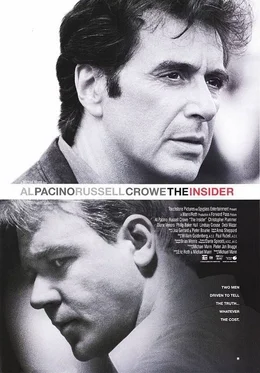
The Insider stands as a prominent entry in the body of work created by director Michael Mann, known for his cinematic exploration of the murky intersections of power, morality, and integrity. Shot at the tail end of the 1990s, this film reflects not only the immediate ethical dilemmas of corporate America but also the broader sociopolitical climate of its time, a period ripe with skepticism about authoritative institutions. Mann's expertise in crafting gripping narratives is on full display here, presenting a story that is as thrilling as it is thought-provoking, inviting audiences to engage with the complications of investigative journalism.
The film centers on Jeffrey Wigand, played by Russell Crowe, a whistleblower from the tobacco industry, who unexpectedly ignites a fierce conflict between media integrity and corporate deception. As he reveals the complicity of his former employer in the manipulation of public health, The Insider examines the moral complexities inherent in the act of whistleblowing. The tension escalates, not merely as a personal struggle for Wigand but as a broader commentary on corporate malfeasance and the lengths to which corporations will go to protect their interests. This exploration speaks to a fundamental question: how can the pursuit of truth withstand the pressures of corporate power?
Critics have hailed the film for its intense narrative and realistic portrayal of the ethical dilemmas faced by journalists trying to uphold the integrity of their craft in the face of corporate corruption. The film’s portrayal of the media, particularly the powerful segment led by reporter Lowell Bergman, played by Al Pacino, is particularly sobering, painting a picture of a media landscape fraught with challenges. The ethical dilemmas resonate deeply, raising the stakes not just for Wigand, but also for the journalists who commit to bringing the truth to light, often at great personal cost. Driven by a pulsating urgency, Mann manages to maintain a gripping pace while delving into such heavy themes as accountability and moral courage.
At its core, The Insider is not merely a thriller; it serves as a cautionary tale about the consequences of corporate greed and the ethical responsibilities of journalists. Mann's treatment is both grand-scale and intimate, crafting a narrative that is as much about personal sacrifice as it is about the overarching issues of public health and corporate deception. The film’s power lies in its ability to provoke thought long after the credits roll, challenging viewers to consider the ramifications of silence in the face of wrongdoing.
In a contemporary context, where debates around media ethics and corporate integrity persist, The Insider remains an exceptional cinematic achievement. Its ability to weave together themes of integrity, deception, and courage marks it as a significant cultural artifact, reflecting an era of burgeoning distrust in institutions. As a gripping portrayal of the stakes involved in whistleblowing and investigative journalism, the film encourages audiences to confront their own beliefs about responsibility and accountability in a world often shadowed by corporate interests. Thus, Mann solidifies his legacy not only as a filmmaker but also as a storyteller who unflinchingly holds a mirror to society.