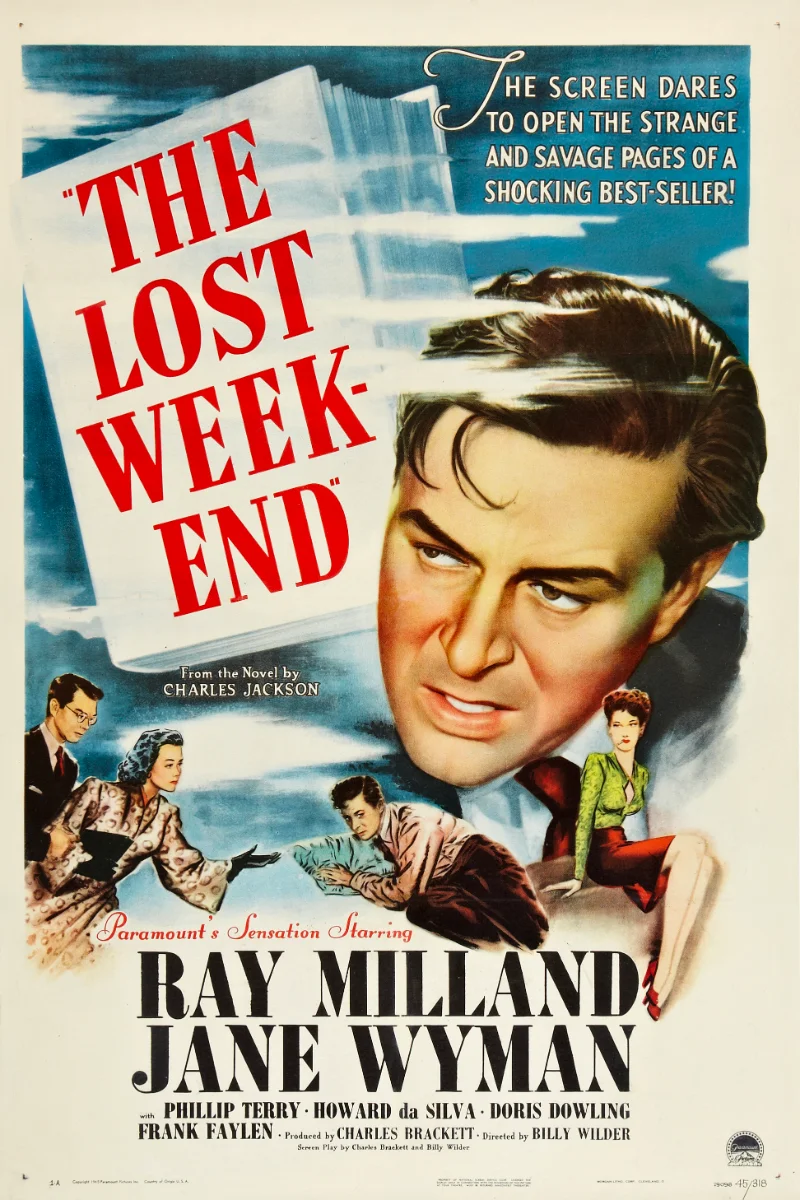
Billy Wilder's The Lost Weekend, released in 1945, stands as a watershed moment in both the director's illustrious career and the history of American cinema. Known primarily for blending genres with an innate flair for dark humor and social commentary, Wilder ventured into the harrowing world of addiction in this film. At a time when Hollywood often shied away from such gritty themes, The Lost Weekend emerged as an uncompromising portrayal of alcoholism, effectively challenging the societal norms that glossed over the sufferings of individuals ensnared by addiction. This was not merely a cinematic endeavor but a significant contribution to film noir, pushing the boundaries of narrative and stylistic approaches in a conventional landscape of 1940s filmmaking.
Critics widely recognize The Lost Weekend for its haunting authenticity and its refusal to shy away from the grim realities of life for those battling addiction. The film's protagonist, Don Birnam, is portrayed with a raw vulnerability that encapsulates the theme of degradation associated with alcoholism. Wilder's use of dark comedy is particularly poignant here; he treads a fine line between the absurdities of addiction and the sobering truth it imparts. This juxtaposition resonates throughout the film, capturing the complexities of human existence marked by chaos and despair, ultimately offering a bleak yet compelling narrative that questions society's role in the treatment of addiction.
The film's groundbreaking depiction of addiction can be seen as a precursor to the more open discussions surrounding mental illness and substance abuse in contemporary cinema. By rendering Birnam's struggle with unsettling realism, Wilder anticipates later movements in film that prioritize authenticity over romanticized depictions. This has led many to regard The Lost Weekend not only as a trailblazer in its specific portrayal of addiction but also as an emblem of the evolving cultural consciousness regarding personal and societal responsibilities toward those grappling with such demons. Wilder's cinematic lens remains relentless, capturing both the grittiness of the protagonist's downfall and the fleeting glimpses of potential redemption.
In terms of style, The Lost Weekend exemplifies the hallmarks of film noir, employing shadowy visuals and a suspenseful score that enhance the psychological tension of Birnam's journey. The film's commitment to depicting the character’s despair with a stark, almost unflinching gaze reveals Wilder's deeper philosophical inquiries about the human condition and the societal structures that fail to support vulnerable individuals. This noir-esque quality, coupled with Wilder's wickedly aware script, confirms the film's status as a stark reflection of its time, offering not only a narrative about addiction but also a commentary on a society that often overlooks the plight of its most tragic figures.
Overall, the critical consensus on The Lost Weekend underscores its significance as a piece of cinema that grapples with heavy themes through a lens of dark humor and stark realism. The film's authentic portrayal of addiction, interwoven with moments of bleak comedy and humanity, continues to resonate with audiences and critics alike. As Wilder's reflections on society and the individual remain as relevant today as they were in the 1940s, The Lost Weekend stands not just as a historical artifact but as a powerful examination of the complexities inherent in the battle against addiction.