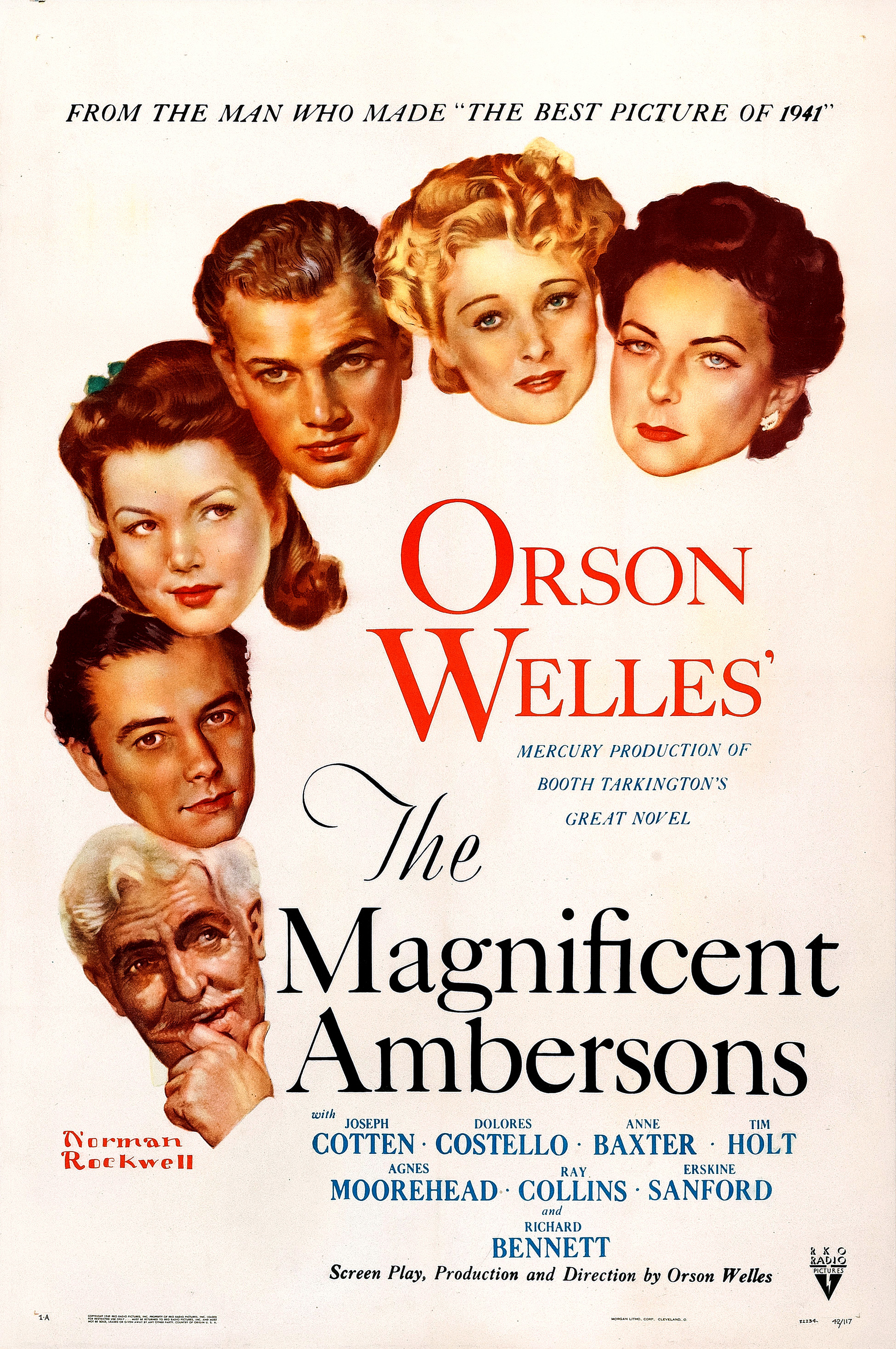
In the storied canon of Orson Welles' oeuvre, The Magnificent Ambersons occupies a unique and complex position. Released in 1942, the film represents Welles' ambitious follow-up to his groundbreaking debut, Citizen Kane, yet it is often tangled in a narrative of artistic struggle and studio interference. This film was deeply personal to Welles, reflecting his vision of familial decline against the backdrop of a rapidly industrializing America. As a tale of aristocracy confronted with the inexorable tide of modernity, it encapsulates the emotional depth and cinematic imagination that were hallmarks of Welles' work. Unfortunately, the final cut suffered from significant edits imposed by RKO Pictures, resulting in an unfinished masterpiece that leaves viewers longing for the fuller expression of Welles' artistry.
Critically, The Magnificent Ambersons has been characterized by themes that weave loss, nostalgia, and the impacts of industrial growth into its narrative. The story follows the Amberson family, formerly a symbol of wealth and privilege, as they grapple with their declining status in a changing social landscape. This decline is not merely personal but reflects broader societal transformations, marking the end of an era for the genteel society depicted in the film. The juxtaposition of personal loss against the backdrop of industrialization exposes the emotional ramifications of progress, positioning Welles as a director deeply invested in exploring the human experience amid societal change.
Moreover, the artistic vision behind The Magnificent Ambersons became a subject of ongoing discussion in film history. Welles' intended narrative was significantly altered, with roughly 40 minutes of footage lost or unaccounted for after the studio's interventions. The impact of this loss was profound, leaving a fragmented film that at times feels hobbled yet still retains flashes of Welles' cinematic brilliance. Restoration efforts over the years have sought to reclaim the lost sequences and offer a glimpse of Welles' original intentions, although the challenge remains to fully realize his vision given the constraints of the surviving materials.
The film stands as a testament to Welles' development as a director, revealing the tension between artistic integrity and the demands of commercial cinema. Critics have noted the stark contrast between the fluidity of Welles' original vision and the constraints imposed by studio executives, who sought to make the film more palatable to audiences of the time. This clash not only highlights the vulnerabilities of a visionary artist working within the limitations of a 1940s Hollywood studio system but also invites discourse on the nature of creative control and the lengths to which a director must go to protect their artistry.
In examining The Magnificent Ambersons, one cannot overlook its significance in historical and artistic contexts. The film is celebrated not only for its poignant themes and emotional gravity but also as a harbinger of the difficulties faced by artists wrestling with commercial production realities. It remains a classic that compels ongoing analysis, serving as a reminder of the impermanence of artistic endeavors and the melancholy beauty of a once proud lineage now crumbling beneath the weight of time.