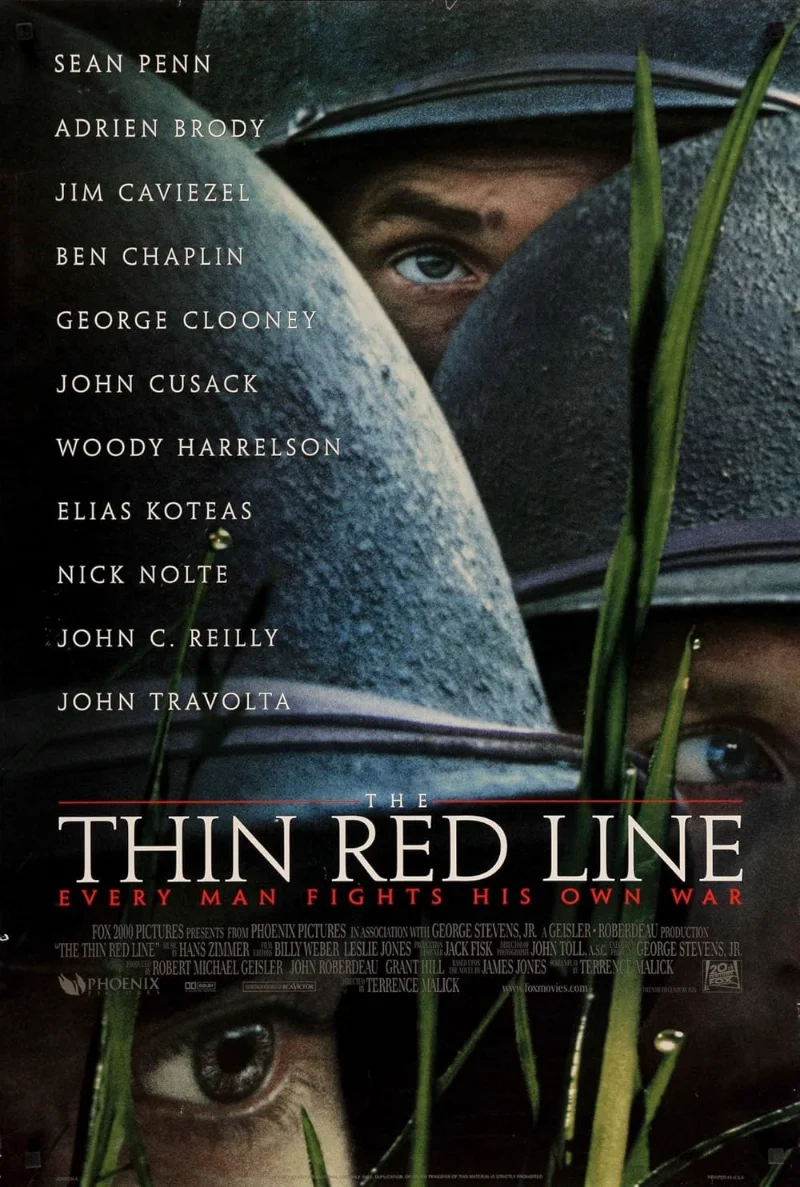
The Thin Red Line, directed by Terrence Malick, serves as a profound meditation on the nature of war, situating itself within the pantheon of anti-war films while simultaneously marking a significant evolution in Malick's artistic vision. Released in 1998, it reestablishes Malick as a masterful storyteller with his unique blend of poetic imagery and philosophical inquiry. This film follows the harrowing experiences of soldiers during the Battle of Guadalcanal in World War II, yet it transcends mere war narrative by delving deeply into the existential dilemmas faced by individuals amidst chaos. In the context of cinema history, it is both an exploration of the human condition and a visceral examination of the absurdity and brutality of conflict, distinctively positioning itself alongside earlier works like Apocalypse Now and Paths of Glory.
Critical consensus surrounding The Thin Red Line often applauds its lyrical and dreamy approach to storytelling, an aesthetic characterized by breathtaking cinematography and fragmented narrative structure, producing a hallucinatory viewing experience. Reviewers generally align on the film's thematic concerns, war's dehumanizing effects, the indifference of nature, human mortality, and the philosophical contemplation of existence itself. Malick invites audiences to reflect on the contrast between nature's beauty and brutality while eliciting feelings of disconnection and absurdity that war engenders. The film's portrayal of these themes aligns seamlessly with Malick's broader oeuvre, which has consistently sought to evoke a spiritual reflection on humanity and the universe.
While The Thin Red Line garnered mixed reactions upon its initial release, met with both adoration and critique, it has since achieved recognition as a singular piece of cinematic artistry that challenges traditional narrative forms. The film’s slow pacing and emphasis on introspective character moments may not resonate with all viewers, but for many, it fosters a contemplative atmosphere rife with existential inquiry. Its dense imagery creates a canvas where the horrors of war clash with moments of beauty and peace, emphasizing the transient nature of life. Critics have celebrated this duality, highlighting how it represents a shift in audience reception toward more nuanced and individualistic portrayals of conflict in film.
In discussing the marketing strategies surrounding The Thin Red Line, one notes the film's positioning as an art-house alternative to more conventional war films, a move that both cultivated a niche audience and sparked broader discussions on the role of spirituality and philosophical inquiry within mainstream cinema. The film eschews the glorification of war often seen in Hollywood productions, instead presenting a somber exploration of the emotional and psychological scars endured by soldiers. This deviation from typical war narratives aligns closely with the rise of both independent cinema and a growing appetite for films that privilege artistic expression over commercial viability during the late 1990s.
Ultimately, The Thin Red Line stands as a timeless work that invites viewers to confront the intricacies of the human experience against the backdrop of historical violence. Malick’s commitment to portraying both the horror and beauty of existence reverberates throughout the film, making it a necessary reflection on the brutality of war, the indifference of nature, and the deep connections that can emerge even in the face of profound suffering. As audiences continue to grapple with the implications of war and its representation in media, this film endures as a poignant reminder of cinema’s potential to evoke a rich tapestry of emotional and existential engagement.