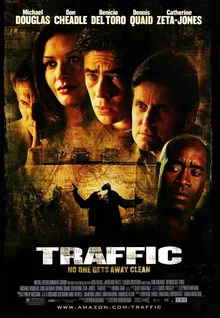
Traffic, directed by Steven Soderbergh, stands out as a pivotal work in the landscape of early 21st-century cinema. Released in 2000, this film arrived during a period marked by increasing public discourse surrounding the drug trade and the U.S. government's war on drugs. Featuring an ensemble cast that includes Michael Douglas, Benicio del Toro, and Catherine Zeta-Jones, the film's interwoven narratives provide a poignant critique of the complex realities of drug policy and the pervasive influence of narcotics. This multifaceted story not only enhances Soderbergh's reputation as an innovative filmmaker but also positions Traffic as a significant commentary on America’s social issues related to drug abuse and policy failures.
The critical reception of Traffic has universally recognized its bold storytelling and unique narrative style. Soderbergh’s decision to use an immersive approach allows viewers to experience contrasting perspectives, from the struggles of desperate addicts to the moral dilemmas faced by law enforcement and policymakers. Critics have praised the film for its honest and intellectual take on a devastatingly complex subject. By focusing on the interconnected lives affected by the drug trade, the film presents a blistering critique of the simplistic narratives often found in Hollywood portrayals of crime and punishment.
Soderbergh's direction in Traffic is marked by a clear vision that emphasizes realism without sacrificing emotional depth. His innovative use of cinematography, including the distinctive color palettes assigned to different narrative threads, adds a visual richness that enhances the storytelling. This stylistic choice reflects a deeper thematic exploration, illustrating the diverse environments and societal impacts of drug trafficking. The film's dynamic and compassionate portrayal of characters living through their circumstances fosters a deep understanding of the human cost in the ongoing drug war.
In terms of accolades, Traffic was well-received at awards shows, ultimately sweeping the Oscars for Best Director for Soderbergh and taking home four Academy Awards in total. These honors not only highlight the film's artistic achievements but also its cultural relevance, signaling a shift in how film could handle complex social issues. The performances, particularly by Benicio del Toro, were highlighted as a testament to the ensemble's commitment to authenticity, earning praise for their nuanced portrayals of characters entrenched in a brutal and unforgiving world.
Overall, Traffic remains a significant entry in Soderbergh's body of work, displaying his capacity to tackle multifaceted social themes with sensitivity and intelligence. Its impact extends beyond its immediate narrative, sparking discussions around drug policy and societal responsibility. As film scholars and audiences continue to revisit this work, Traffic invites reflection on the intricacies of human behavior and government policy in the realm of the narcotics trade, solidifying its status as a seminal film in contemporary cinema.