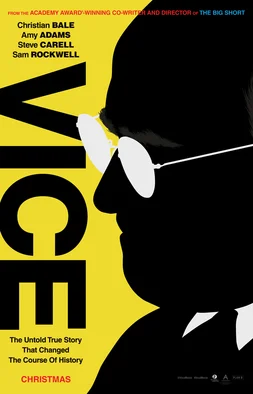
Adam McKay's Vice, released in 2018, stands as a compelling entry within both the director's oeuvre and the genre of political biographical dramas. Known for his penchant for blending incisive commentary with entertainment, McKay weaves a narrative that explores the complexities of power and ambition through the controversial figure of Dick Cheney. Following the critical success of The Big Short, which dissected the 2008 financial crisis, Vice aims to provoke and challenge audiences by illuminating the often opaque machinations of American politics. By adopting a stylized, satirical approach, McKay invites viewers to grapple with the moral and ethical implications of political decision-making in a fast-paced and charged atmosphere.
Critics have noted Vice's ability to entertain while simultaneously delivering a cynical and sometimes nihilistic perspective on the American political landscape. The biographical drama delves deep into the life of Cheney, portraying him as a figure of contradiction, brilliant yet ruthless, influential yet insular. This duality reflects a broader commentary on how political power often operates behind closed doors, leaving the audience to question the integrity of the systems at play. Although McKay's ambition is evident in his audacious choices, such as employing an array of cinematic techniques and narrative structures, some reviews deemed the film opinionated and one-sided, which raises discussions about the responsibilities of filmmakers in representing historical figures and events.
The film's hyper-stylized approach and noisy tonal shifts might alienate some viewers, often oscillating between humor and gravity. This blend aims to mirror the absurdities present in political life, crafting a narrative that feels both brainy and chaotic. However, the execution has drawn criticism as well, with some believing that Vice occasionally succumbs to mediocrity, overshadowed by its commentary rather than enriching it. As a result, while the film succeeds in being interesting and engaging, it sometimes risks losing depth by prioritizing entertainment over a more nuanced exploration of its subjects.
Ultimately, Vice serves as a mirror, reflecting the contradictions and complexities of America’s political apparatus through the lens of one of its most polarizing figures. McKay's film compels audiences to confront uncomfortable truths about the nature of power and governance, utilizing satire not just as a tool for humor but as a means to provoke thought and dialogue. As we grapple with the cynical portrayal of American politics presented in Vice, it becomes clear that the film not only chronicles a personal biography but also serves as a critique of a political system plagued by its own dysfunctions.