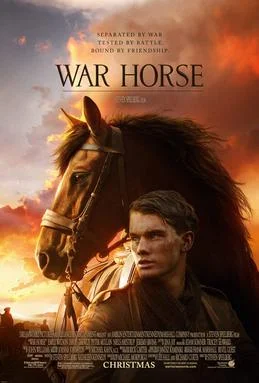
Steven Spielberg's War Horse stands as a poignant entry in his celebrated oeuvre, delving into themes of courage, family bonds, and the savage realities of war. Released in 2011, the film is based on Michael Morpurgo's novel and its subsequent stage adaptation, using the relationship between a young man and his horse, Joey, as a lens through which the audience witnesses the brutality of World War I. Spielberg, known for his mastery of emotional storytelling, exemplified in films like Schindler's List and Saving Private Ryan, approaches the subject matter with a visual grandeur that is both breathtaking and laden with sentimentality. This intricate blend of affecting narrative and sweeping cinematography encompasses a spectrum of experiences during wartime, showcasing the harrowing impact it has on both humans and animals alike.
Critical reception of War Horse highlights its remarkable visuals and articulate direction, reinforcing Spielberg’s reputation as a filmmaker adept at crafting emotional, visually stunning narratives. The film's cinematography captures the vast landscapes of the war-torn setting, with frames that echo the lyrical beauty of nature juxtaposed against the horrors of battle. Nevertheless, it is this very emphasis on sentimentality that has drawn mixed reviews, with some critics arguing that it veers toward the overly orchestrated, at times diluting the raw emotional weight of its central themes. While many celebrate the film’s production values, others find it disappointing in its lack of a more nuanced exploration of conflict and loss, suggesting that Spielberg's touch, although well-crafted, sometimes buries genuine emotional depth under layers of visual grandeur.
At its core, War Horse is an exploration of survival and resilience, not just of Joey the horse, but also of the human characters who become intertwined in his journey. The relationships formed, particularly between Joey and his young owner Albert, are portrayed with an earnestness that resonates with audiences. The film invites viewers to ponder the complexities of family bonds forged through adversity, alongside the brutal consequences of war that disrupt these connections. Spielberg's directorial style, characterized by sweepingly dramatic moments and poignant human interactions, beckons viewers to navigate a spectrum of emotions, from hope to despair, ultimately challenging them to engage with the multifaceted nature of conflict.
Nonetheless, the critical dialogue surrounding War Horse often pivots on its emotional storytelling, raising questions about the effectiveness of nostalgia in conveying the gravity of war. Spielberg's artistic choices, while visually impressive, occasionally detract from the intense realities faced by those within the war. Some commentators note that the narrative occasionally leans towards a romanticized view of war, which can both uplift and disillusion viewers. This sentiment speaks to a broader conversation within cinema about the portrayal of historical events, particularly in relation to the sacrifices made by both people and animals, fostering a dialogue between entertainment and historical representation.
In the broader context of Spielberg's career, War Horse serves as both a continuation of his exploration of wartime narratives and as a reflection of the evolving expectations of film audiences. While many viewers are drawn in by the visceral storytelling and emotional depth, others may find themselves wanting for a more grounded depiction of humanity amidst chaos. Ultimately, War Horse solidifies Spielberg’s legacy as a director who grapples with heart-stirring concepts through a visually compelling lens, even as it invites contrasting interpretations of war's impact and the complexities of survival.