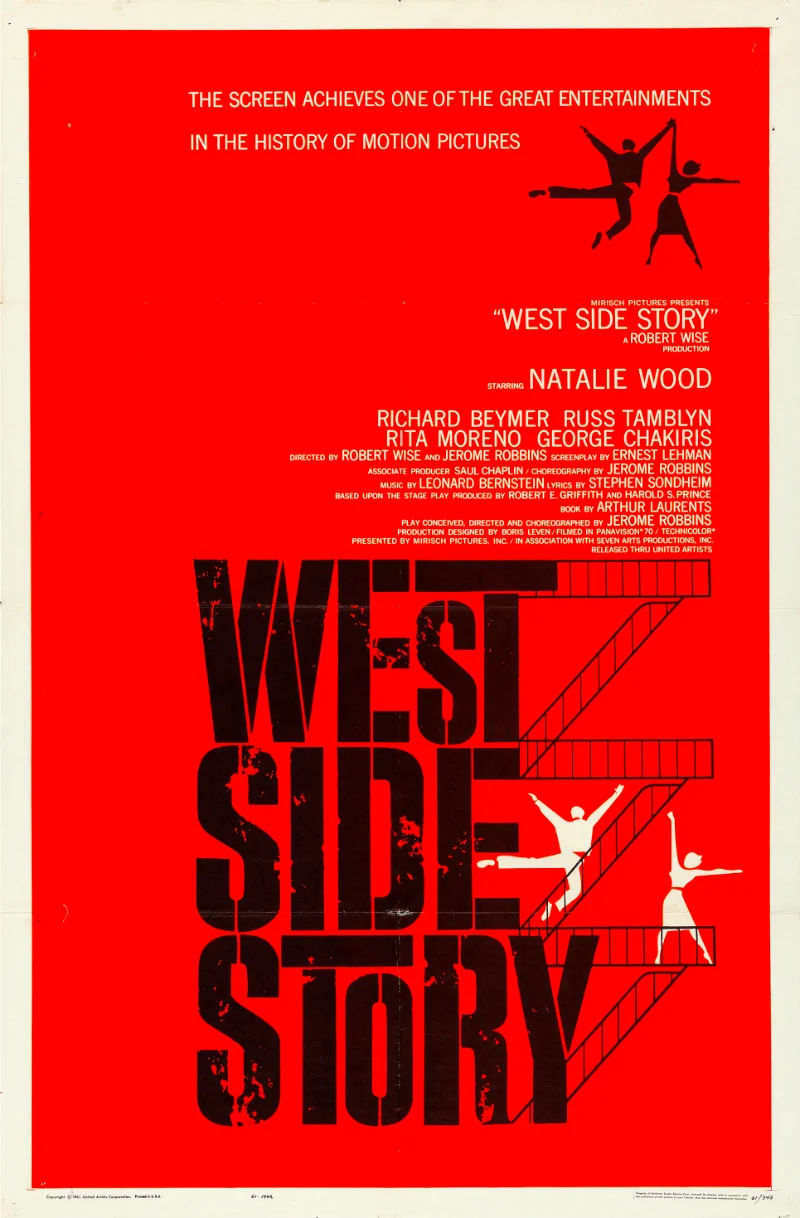
West Side Story, directed by Robert Wise and Jerome Robbins, stands as a monumental work within the annals of American cinema, blending the timeless narrative of star-crossed lovers with a vibrant and innovative musical form. Released in 1961, this film adaptation of the Broadway sensation redefined the landscape of musical storytelling, presenting a hyperreal yet poignant reflection on love and rivalry amid the backdrop of 1950s urban conflict. The directors’ backgrounds, Wise in filmmaking and Robbins in choreography, create a powerful synergy that manifests in the film's dazzling visuals and evocative musical arrangements, making it both a critical and commercial triumph.
Central to West Side Story is the exploration of youth and identity, illustrated through the fierce rivalry between two gangs, the Jets and the Sharks, and the love affair blossoming between Tony and Maria, representing the hopes and struggles of a generation caught in a societal divide. The film's narrative deftly interweaves themes of belonging and alienation, as characters grapple with their desires in an environment that often feels hostile and unforgiving. This sense of urban conflict, underscored by the racial tensions of the time, contributes to the film's enduring relevance, allowing contemporary audiences to resonate with its messages of love and the yearning for connection across cultural divides.
Critics have long hailed West Side Story for its stunning choreography and musical numbers, which elevate the storytelling to breathtaking heights. Songs like "Tonight" and "Somewhere" encapsulate the longing that permeates the film, presenting a sharp juxtaposition between the vibrant energy of the streets and the profound emotional depths of its characters. The choreography, an amalgamation of ballet and jazz, becomes a visual language that speaks volumes about the characters’ internal struggles and desires, embodying the film’s ethos in a way that is both powerful and expressive.
At its core, West Side Story transcends the confines of its romantic narrative, standing as a bold commentary on the broader themes of love and rivalry. The film’s handsome cinematography and meticulous production design create a world that feels both alive and tangible, as if the streets themselves pulsate with the hopes and fears of the characters. This artistic choice enhances the hyperreal experience of the film, making its tragic moments even more impactful.
The critical consensus surrounding West Side Story recognizes its status as a seminal work that not only shaped the musical genre but also offered a lens through which to examine pressing social issues. As a cultural artifact, it encourages reflection on the complexities of identity, community, and the often-painful intersections of love and rivalry. In an era where divisions still echo in our society, the film's messages remain both timely and universally poignant, cementing its legacy as a triumph in cinematic history.