Career Overview
Aaron Sorkin occupies a unique space in contemporary American cinema, having transitioned from one of the most celebrated screenwriters of his generation to a prominent director. His career arc is defined by an unparalleled mastery of dialogue and a relentless focus on the intersection of personal morality and political machinery. While his initial reputation was cemented through theatrical plays and television landmarks like The West Wing, his evolution into a feature film director marks a fascinating chapter in his artistic development. He has leveraged his status as an elite wordsmith to command projects that explore complex historical events through highly structured, character driven narratives.
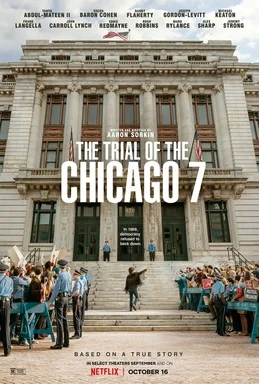
Sorkin made his directorial debut with Molly's Game, a film that displayed his trademark verbal velocity but was sometimes noted for its stylistic restlessness. By the time he directed The Trial of the Chicago 7, Sorkin had refined his approach behind the camera. He shed the needy pyrotechnics that characterized his earlier visual attempts, settling into a more confident and classical mode of storytelling. This progression demonstrates a filmmaker learning to trust his own rhythmic dialogue without feeling the need to overcompensate with flashy camerawork.
In the broader context of cinema history, Sorkin stands as a vital preserver of the American legal drama and the political procedural. His work consistently echoes the grand, socially conscious Hollywood films of the mid twentieth century, updated with a postmodern, rapid pace. He bridges the gap between traditional theatrical storytelling and cinematic historical depiction, creating a distinct niche where intellectual debate serves as the primary engine of cinematic action.
Thematic Preoccupations
The cinematic world of Aaron Sorkin is inherently an ideological battlefield, with the legal drama serving as his most frequently visited arena. Across his work, and particularly visible in The Trial of the Chicago 7, the courtroom functions not merely as a site for criminal justice but as a microcosm for the American soul. Sorkin uses these structured legal confines to explore themes of freedom of speech and the fraught nature of the political trial. His films repeatedly ask how individuals can assert their rights against the overwhelming power of the state, turning legal proceedings into high stakes philosophical debates.
Another recurring preoccupation is the anatomy of protest movements and counterculture. Rather than presenting historical events as distant textbook chapters, Sorkin frames political activism as a matter of urgent, timely importance. His narratives dissect the mechanics of dissent, exploring how idealistic movements often fracture under pressure. He is deeply interested in the behavioral divide within unified causes, showing how different factions navigate the tension between pragmatic compromise and radical purity. This allows his historical films to resonate powerfully with contemporary anxieties surrounding civil rights and institutional corruption.
Ultimately, a profound tension between cynicism and idealism anchors Sorkin's thematic obsessions. He frequently portrays the justice system as flawed, manipulated by political actors, and prone to egregious miscarriages of fairness. Yet, his films consistently build toward moments of requisite soul searching and moral clarity. Even when dealing with provocative content and systemic failure, Sorkin retains a baseline faith in democratic principles and the power of articulate, passionate individuals to bend the arc of history toward justice.
Stylistic Signatures
The most defining stylistic signature of Aaron Sorkin as a director is the absolute primacy of dialogue, which dictates every other formal element of his films. His scripts run like clockwork, characterized by a musical cadence where words function as kinetic action. The editing rhythms in a Sorkin directed film are intimately tied to the rapid exchange of dialogue, resulting in a smoothly entertaining flow that propels the narrative forward. While some critics occasionally find this approach leads to exasperating pacing or bloated storytelling, at its best, it generates an intense engagement that keeps the audience riveted to complex historical and legal arguments.
Visually, Sorkin has moved toward a restrained formalism that serves the text rather than competing with it. After experimenting with more overt visual flair in his directorial debut, he adopted a more classical cinematographic approach. In films like The Trial of the Chicago 7, the camera work is designed to map out the spatial and ideological dynamics of ensemble casts. He frequently utilizes group shots and precise blocking to establish factions and relationships, allowing the natural friction between characters to provide the visual energy. The mise-en-scene often emphasizes institutional environments, such as courtrooms or heavily wood paneled offices, which contrast with the chaotic energy of street protests or youthful rebellion.
Sound design and performance direction further emphasize Sorkin's theatrical roots. He treats his actors as musicians playing in a complex orchestra, demanding precise timing for his trademark zingers and dramatic pauses. The soundscape is dominated by the human voice, with musical scores used primarily to underscore moments of rhetorical triumph or moral reckoning. This intense focus on vocal performance ensures that the sprawling historical events he depicts are grounded in deeply human, well-acted moments.
Recurring Collaborators
While Aaron Sorkin has not yet established a strict, recurring repertory company of actors across his directed features, his casting philosophy reveals a consistent pattern of collaboration. He relies heavily on expansive ensemble cast dynamics, seeking out performers who possess the specific theatrical training and intellectual agility required to navigate his dense, rapid dialogue. His films demand actors who can deliver intricate monologues with the naturalistic ease of everyday conversation, making the casting process one of his most crucial directorial tasks.
In the absence of frequent recurring cast members, Sorkin's most vital creative partnerships exist in the conceptual dialogue with his past work. Critics and audiences alike view his directorial efforts through the prism of his previous collaborations with elite filmmakers, frequently comparing his current projects to the structural brilliance of The Social Network or the narrative pacing of Steve Jobs. Sorkin brings the lessons learned from these heavyweight auteurs into his own directorial practice, attempting to synthesize their visual acumen with his unmistakable authorial voice.
The success of Sorkin's directorial endeavors is ultimately tethered to his ability to manage diverse factions of actors within a single frame. By assembling casts capable of embodying vastly different ideological positions, he creates a collaborative environment where performance elevates the text. Actors are given the space to find nuanced moments amidst the verbiage, transforming historical archetypes into lived in characters. This collaborative synergy between the writer director and a highly skilled ensemble remains the cornerstone of his cinematic production.
Critical Standing
The critical reputation of Aaron Sorkin as a director is inextricably linked to his monumental status as a screenwriter. Reviewers approach his directed films with a mixture of reverence for his prose and skepticism regarding his visual storytelling capabilities. His work is frequently celebrated for its engaging narrative structure and the timely relevance of its political themes. When Sorkin is operating at his peak, critics praise his ability to make historical events feel electrifying and forceful, transforming dry legal procedural details into intensely engaging cinema.
However, Sorkin's directorial efforts are not without their detractors. A common thread in critical discourse points to the occasional ponderous execution and bloated storytelling that can arise when his dense scripts are not reined in by a separate, visually dominant director. Some critics note that while the individual scenes run like clockwork, the overall picture can sometimes become hazy, burdened by an excess of dialogue or an overly neat resolution to complex historical trauma. Terms like exasperating are sometimes deployed when the rapid fire banter feels more performative than authentic.
Despite these critiques, Sorkin maintains a solid standing as a purveyor of high quality prestige cinema. His films are consistently recognized for their well-acted ensembles and their willingness to tackle provocative content with intelligence and wit. By successfully shedding the needy pyrotechnics of his earlier directorial attempts, he has proven his capacity for growth and self correction behind the camera. Sorkin remains a vital, polarizing, and undeniably influential figure in modern American film, commanding attention and rigorous critical debate with every new release.