Career Overview
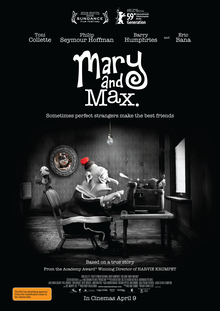
Adam Elliot occupies a highly specialized niche within contemporary animation, standing as one of the preeminent auteurs of stop motion claymation. Coming from an Australian background, his work is deeply rooted in a culturally specific milieu that blends provincial life with universal neuroses. His trajectory from independent short filmmaker to feature director highlights a steadfast commitment to tactile, handcrafted cinema in an era increasingly dominated by digital rendering.\n\nElliot first garnered international critical attention with his short film Harvie Krumpet, which established his penchant for exploring the lives of marginalized, idiosyncratic individuals. This Academy Award winning short functioned as a vital stylistic and narrative blueprint for his subsequent feature length endeavor, Mary and Max. By focusing on meticulous claymation, Elliot positioned himself alongside other stop motion traditionalists, yet he carved out a distinct tonal space characterized by a sardonic, bleak, and ultimately humanist worldview.\n\nThe release of Mary and Max in 2009 cemented Elliot as a formidable voice in international cinema. The film demonstrated his capacity to sustain his uniquely grimly witty tone over a feature duration, exploring complex psychological realities like Asperger's syndrome with remarkable sensitivity. Rather than adapting his idiosyncratic vision for mainstream palates, Elliot doubled down on his singular aesthetic, cementing a legacy built on uncomfortable comedy and profound emotional resonance.
Thematic Preoccupations
At the core of Adam Elliot's filmography is a profound investigation into loneliness and the complexities of human connection. His narratives consistently gravitate toward outcasts and individuals who exist on the peripheries of societal norms. In Mary and Max, this thematic preoccupation is externalized through the literal distances separating the protagonists, as well as the neurological realities of Asperger's syndrome. Elliot uses these barriers not merely as plot devices, but as profound metaphors for the universal difficulty of achieving genuine understanding between disparate souls.\n\nTo counterbalance the pervasive bleakness of his worlds, Elliot frequently constructs narratives around unlikely friendships. These bonds are rarely presented in an idealized manner. Instead, they are fraught with miscommunications, neuroses, and deep seated anxieties. The central pen pal relationship in Mary and Max exemplifies this dynamic, demonstrating how two deeply flawed, isolated individuals can forge a sustaining, if imperfect, lifeline. It is a touching narrative that refuses to shy away from the grotesque or tragic dimensions of human existence.\n\nAnother recurring motif is the integration of Australian culture, often viewed through a sardonic and highly localized lens. Elliot contrasts the mundane, slightly suburban realities of his Australian settings with the overwhelming, alienating scale of international metropolises like New York City. This cultural specificity serves to heighten the whimsical atmosphere while simultaneously grounding the offbeat humor in a recognizable, albeit slightly distorted, reality.\n\nFinally, Elliot exhibits an ongoing obsession with the intersection of tragedy and comedy. His thematic explorations are heavily filtered through an uncomfortably comic lens, forcing audiences to confront sad moments and grotesque elements simultaneously. This dry wit acts as a coping mechanism for his characters, framing their existential despair within a grimly witty context that ultimately affirms their basic humanity.
Stylistic Signatures
The most immediate stylistic signature of Adam Elliot is his unwavering dedication to traditional claymation techniques. His stop motion animation is deliberately unpolished, retaining the literal fingerprints of the creator on the characters and environments. This handmade quality imparts a deeply personal, intimate feel to the work. The tactile nature of the clay serves to amplify the vulnerable, deeply flawed humanity of his protagonists, making their physical imperfections an integral component of the visual storytelling.\n\nElliot employs a highly stylized, almost grotesque approach to character design. His figures are defined by exaggerated features, asymmetrical bodies, and physical ailments that reflect their internal psychological states. This quirky, offbeat visual language operates in stark contrast to the sanitized aesthetics typical of mainstream commercial animation. By populating his films with visually striking, unconventional figures, Elliot constructs an imaginative visual space that demands the viewer grapple with the discomfort of human frailty.\n\nA sophisticated use of color coding further distinguishes Elliot's mise en scene. In Mary and Max, he rigorously separates the geographical and psychological spaces of his protagonists through distinct monochromatic palettes. The Australian sequences are bathed in dreary, sepia toned browns, while the New York scenes are rendered in stark, oppressive grays and blacks. This disciplined color strategy not only clarifies the narrative structure but also reinforces the pervasive themes of isolation and the distinct cultural identities of the characters.\n\nRhythmically, Elliot frequently relies on pervasive, omniscient voiceover narration to guide the viewer through his dense, detailed worlds. This technique contributes to the dry, sardonic tone of his films, providing a detached, almost clinical commentary on the tragicomic events unfolding on screen. While some critics have noted this approach can render the pacing overlong, the meticulous combination of deadpan voiceover and intense visual detail is essential to generating his signature whimsical atmosphere.
Recurring Collaborators
Evaluating the collaborative network of Adam Elliot requires an understanding of his deeply individualized approach to filmmaking. Stop motion animation is inherently labor intensive, often requiring large crews, yet Elliot maintains an unusually tight grip on the creative reins. He typically serves as writer, director, and lead designer, ensuring that his distinct, grimly witty vision remains undiluted. This singular control is largely why his aesthetic remains so consistent from his early shorts like Harvie Krumpet to his feature length endeavors.\n\nBecause Elliot does not rely on a recurring physical cast across multiple films, his primary on screen collaborators are the voice actors who breathe life into his clay creations. Rather than returning to the same performers, Elliot opts to cast highly specific, recognizable voices that perfectly align with his quirky characters. These actors are often tasked with delivering incredibly bleak, sardonic dialogue with total sincerity, a challenging tonal tightrope that requires significant vocal dexterity.\n\nThe vocal performances in Elliot's work are critical for balancing the uncomfortably comic aspects of the scripts. The actors must provide a grounding humanity to the grotesque, highly stylized clay figures. By carefully selecting performers capable of executing his signature dry wit, Elliot ensures that the underlying pathos of the narrative is never entirely overshadowed by the visual eccentricities of the animation. The resulting synthesis of vocal nuance and tactile claymation is a defining element of his cinematic process.
Critical Standing
Adam Elliot occupies a highly respected, albeit specialized, position within the broader landscape of world cinema. Following the Academy Award success of Harvie Krumpet, expectations were high for his transition to feature filmmaking. The subsequent release of Mary and Max solidified his reputation as an uncompromising artist. Critics frequently laud the film as a modern cult classic, praising its unique concept and the audaciousness of producing a deeply adult, philosophically bleak animated feature.\n\nReviewers consistently highlight Elliot's masterful command of tone. Critics at publications like Slant Magazine have commended his pervasive dry wit, while others note the delicate balance he strikes between tragedy and whimsy. The Guardian aptly described his work as sad, whimsical, and uncomfortably comic, a synthesis that sets him apart from traditional animation directors. His ability to render a touching narrative out of deeply depressing subject matter without resorting to cheap sentimentality has earned him significant critical admiration.\n\nDespite widespread acclaim, Elliot's ambitious vision is not without its detractors. Some critics have pointed out that his heavy reliance on epistolary narrative structures and continuous voiceover can make a feature length film feel occasionally overlong or narratively repetitive. Furthermore, the grotesque elements of his character designs and the unrelenting bleakness of his thematic focus can be alienating for viewers expecting the conventional comforts of the animation medium.\n\nUltimately, Adam Elliot is celebrated as a vital voice in independent animation. His commitment to practical, detailed claymation in a digital era positions him as a crucial preservationist of a historic cinematic technique. Moreover, his willingness to explore complex neurodivergence, such as Asperger's syndrome, with empathy and unsentimental honesty ensures that his critical standing remains strong among scholars and cinephiles who value daring, deeply personal auteurist visions.