Career Overview
Alexander Payne has established himself as a quintessential mainstream American auteur, chronicling the quietly desperate lives of middle-aged protagonists grappling with their own obsolescence. Emerging in the 1990s with sharp satires like Citizen Ruth and Election, Payne initially garnered a reputation for his acerbic wit. However, his career arc demonstrates a steady maturation toward profound emotional realism. By the time he released Sideways in 2004, his work had evolved into a more studious examination of melancholy, personal discovery, and the intricate dynamics of interpersonal relationships.
As his filmography expanded into the 2010s, Payne solidified his position in contemporary cinema as a master of the bittersweet tragicomedy. His focus shifted to deeply localized American experiences, capturing the specific cultural textures of regions ranging from California wine country to the Hawaiian islands and the American Midwest. This geographic specificity anchors his narratives, grounding his characters in environments that reflect their internal stagnation and gradual awakenings, ensuring his works serve as true-to-life portrayals of modern existence.
Today, Payne holds a vital place in American film history as a bridge between classic 1970s character studies and modern independent cinema. He continually resists the stylistic excess of his contemporaries, opting instead for authentic and heartfelt storytelling. His trajectory reveals a filmmaker who has refined his voice over decades, seamlessly blending gentle humor with heartbreaking moments to explore the fragile dynamics of family, aging, and the persistent human desire for connection.
Thematic Preoccupations
At the core of Alexander Payne's filmography is a relentless preoccupation with middle age reflections and the crisis of American masculinity. His protagonists are often solitary men forced into difficult personal decisions, navigating the wreckage of their own passivity. Whether dealing with marital betrayal in The Descendants or the unfulfilled dreams of a stubborn patriarch in Nebraska, these men find themselves at an existential crossroads. Payne uses their journeys to dissect broader themes of self-discovery and generational conflict, stripping away the illusions they have built around their lives.
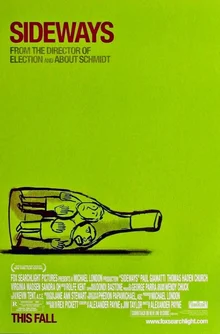
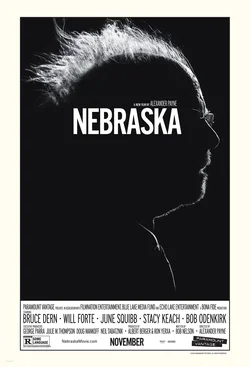
The road trip serves as his most prominent narrative and thematic device, functioning as a physical manifestation of an internal search for meaning. In Sideways, a bachelor party tour through wine country becomes a profound exploration of romance, friendship, and personal failure. Similarly, the central journey in Nebraska operates as an unsentimental exploration of a vanishing past and an illusory future. Movement through space allows Payne to isolate his characters, forcing them into close proximity with their estranged family members and their own moral dilemmas.
Grief and loss also cast long shadows across his emotionally complex narratives. Unlike traditional Hollywood melodramas, Payne approaches sorrow with a bittersweet tone, observing how tragedy is inevitably infused with mundane comedy. The impending death of a comatose spouse in The Descendants prompts a studious examination of familiar relationships, as the protagonist learns when to act and when to yield to grief. Across his work, Payne continually asks how ordinary people reconcile their lingering regrets with the stubborn reality of their daily existence.
Stylistic Signatures
Alexander Payne is widely regarded as a great structuralist filmmaker whose works are polished to an immaculate finish while retaining a deeply organic, true-to-life feel. He favors a conventional narrative structure, meticulously assembling scenes that balance acerbic satire with delicate emotional nuances. This disciplined approach prevents his films from drifting into self-indulgence, allowing the natural humor of out-of-control situations to emerge organically. His pacing is deliberate, establishing an intoxicating narrative rhythm that gives characters the space to breathe and reveal their flaws.
Visually, Payne employs a style characterized by blunt simplicity. He leans away from flashy camera movements, instead utilizing steady compositions that echo the straightforward realism of classic American photography. His camera often leans into the faces of his actors, capturing the unspoken weight of their experiences. In Nebraska, the vast, empty highways and static wide shots emphasize the vanishing points of the Midwestern landscape, visually reinforcing the themes of isolation and memory. The environments are framed not just as backdrops, but as physical reflections of the characters' psychological states.
The tonal signature of a Payne film is its precise calibration of comedy and despair. Critics have noted that while his stories are fundamentally comedic, the situations themselves are rarely inherently funny. Instead, the gentle humor arises from the stubborn, often inappropriate reactions of his characters to their bleak circumstances. This delicate tightrope walk is supported by understated production design and naturalistic soundscapes, creating an immersive, poignant atmosphere where heartbreaking dialogue lands with maximum impact without succumbing to sentimentality.
Recurring Collaborators
The most crucial creative partnership in Alexander Payne's career is his collaboration with his longtime writing partner, Jim Taylor. Together, they have forged a distinct cinematic voice that specializes in achingly true-to-life portrayals of deeply flawed individuals. Taylor's ear for sharp, naturalistic dialogue perfectly complements Payne's visual restraint. Their shared sensibility allows them to tackle mature themes of betrayal and failure with an acerbic wit that never completely abandons empathy for their subjects, turning amusing anecdotes into profound reflections on the human condition.
While Payne does not maintain a traditional repertory company of actors across his filmography, he has developed a clear archetype for his leading men. He consistently casts highly capable actors and strips them of their typical Hollywood glamour, forcing them into states of quiet desperation. George Clooney delivers one of the most celebrated performances of his career in The Descendants by subverting his usual charm to play a passive, grieving father. Similarly, Paul Giamatti became the quintessential Payne protagonist in Sideways, anchoring the film with a deeply sympathetic portrayal of neurotic self-sabotage.
The casting of veteran actors to anchor his narratives is another hallmark of his directorial approach. In Nebraska, Payne tapped Bruce Dern, who communicates a profound lifetime of regret and stubbornness simply through his presence, carriage, and gait, while Will Forte provided the necessary dramatic foil. By rotating his cast to suit the specific regional and emotional demands of each story, Payne ensures that his true-to-life aesthetic remains fresh. Each new protagonist serves as a unique vessel for the director's ongoing exploration of contemporary family narratives and middle-aged malaise.
Critical Standing
Alexander Payne occupies a highly respected position within critical discourse, celebrated as a vital chronicler of contemporary American life. Early in his career, films like Citizen Ruth and Election established him as a premier satirist, drawing occasional comparisons to independent provocateurs like Todd Solondz. However, as his work matured, critics recognized a deepening well of empathy in his storytelling. The release of Sideways marked a critical turning point, earning universal acclaim for its lovable characters and heartbreaking emotional depth, with some critics comparing its unique blend of regional specificity and affectionate teasing to the Coen Brothers' Fargo.
Reviewers frequently situate his later films within a lineage of existential road movies and intimate family dramas. Nebraska drew favorable comparisons to David Lynch's The Straight Story and Wim Wenders' Paris, Texas for its evocative, unsentimental journey across the American heartland. Meanwhile, the intricate family dynamics of The Descendants prompted critics to align his work with the precise, domestic realism of Joanna Hogg's Archipelago. These comparisons highlight Payne's ability to transcend straightforward comedy and operate within a lineage of serious, reflective cinematic artistry.
Today, his critical reputation rests on his unparalleled ability to navigate the tonal tightrope between tragedy and humor. While some early assessments based on About Schmidt questioned his ability to handle profound grief without descending into cynicism, his subsequent masterpieces have definitively proven his capacity for emotionally complex narratives. Critics frequently laud his studious attention to the delicate nuances of human behavior, noting that his films possess a thought-provoking and profound quality beneath their accessible surfaces. Payne remains a cherished figure in modern cinema, respected for his unwavering commitment to authentic, humane storytelling.