Career Overview
Alfonso Cuarón has firmly established himself as a premier auteur of contemporary cinema, a director who effortlessly bridges monumental technical spectacle with deeply intimate personal narratives. His trajectory showcases a filmmaker who refuses to be pigeonholed, navigating seamlessly between monumental studio blockbusters and grounded international features. This evolution marks him as a distinct voice in global cinema, capable of manipulating massive budgets while retaining the exacting vision of an independent artist.
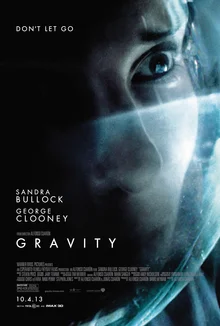
The release of Gravity in 2013 stood as a watershed moment in his career, establishing him as a pioneer in digital filmmaking and immersive cinema. The film solidified his position in Hollywood as a visionary capable of marrying unprecedented technical achievements with profound existential depth. Critics and audiences alike heralded his ability to turn the infinite, terrifying vacuum of space into a canvas for intense psychological exploration.
Following this monumental success, his pivot to Roma in 2018 demonstrated a remarkable artistic elasticity. Returning to Mexico, he stripped away the science fiction grandeur in favor of rigorous historical realism. Transitioning from the boundless cosmos to the meticulously reconstructed streets of 1970s Mexico City, Cuarón proved his mastery over both the macro and the micro, cementing his legacy as a cinematic polymath who commands every scale of storytelling.
Thematic Preoccupations
At the core of his filmography is a profound investigation into the intersection of immense environmental forces and raw human vulnerability. Whether adrift in the hostile cosmos or navigating the socio political upheavals of 1970s Mexico, his protagonists are frequently thrust into unforgiving or rapidly shifting terrains. Gravity literalizes this survival theme through the stark perils of space exploration, while Roma embeds a similar resilience within a domestic sphere fractured by class dynamics and societal unrest.
He continually returns to the exploration of family relationships and psychological endurance in the aftermath of trauma or catastrophe. In Gravity, Dr. Ryan Stone grapples with overwhelming grief and the sheer terror of isolation, transforming a thrilling action narrative into a deeply moving study of the human spirit. Similarly, Roma delves into the quiet dissolution of a middle class family and the enduring bond formed with their Mixtec housekeeper, Cleo, centering female endurance and human connection as bulwarks against despair.
These recurring preoccupations are anchored by a profound commitment to authentic personal storytelling. Critics note how Cuarón confronts his own background and privilege in Roma, examining the complex social structures that shaped his upbringing. The juxtaposition of the mundane and the spectacular allows him to elevate ordinary lives to epic proportions, consistently asking where personal tragedy and intimate quiet moments intersect with broader historical and cosmic currents.
Stylistic Signatures
Cuarón is celebrated for a fluid visual language that seamlessly merges the intimate closeup with the expansive wide shot. His framing consistently captures tellingly observed details against grand, sweeping backdrops, creating engrossing narratives where the camera acts as an omniscient, deeply empathetic observer. This impeccable craftsmanship results in a distinctly immersive experience, whether charting the vastness of orbit or the meticulous geography of a childhood home.
The deployment of breathtaking visuals and technical innovation stands at the forefront of his stylistic approach. In Gravity, he engineered a visually dazzling environment that disintegrated the divide between live action and animation. Critics frequently compared this visual invention to 2001: A Space Odyssey, praising the vigorous action choreography and the meticulous manipulation of spatial geometry required to simulate zero gravity.
Conversely, his stylistic range accommodates extraordinarily quiet and meditative registers. Roma utilizes naturalistic lighting, precise camera tracking, and a meticulously layered soundscape to create a grounded, low key domestic drama tinged with magical realism. Even when shifting from visually mesmerizing cosmic vistas to the stark honesty of a black and white Mexican neighborhood, his cinematic signature remains rooted in spatial continuity and sustained, unbroken takes that immerse the viewer completely.
Recurring Collaborators
While Cuarón does not rely on a recurring stable of on screen cast members across these specific works, his most pivotal partnerships occur strictly behind the camera. These technical and artistic collaborations are essential to executing the monumental cinematic innovations that define his highly ambitious filmography. By surrounding himself with elite artisans, he is able to push the boundaries of visual storytelling and technical achievement.
The most crucial of these partnerships is with cinematographer Emmanuel Lubezki. Their collaboration is the bedrock of the director's visual language, driving the breathtaking visual splendor seen in his most technically demanding projects. In Gravity, Lubezki's pioneering lighting techniques and fluid camera work were instrumental in simulating the disorienting, weightless environment of space, a collaborative effort that successfully tricked the audience into feeling completely stranded alongside the characters.
Additionally, his work relies heavily on cutting edge post production and visual effects teams. Visual effects supervisor Tim Webber played an indispensable role in Gravity, helping to merge physical and digital performances with a level of seamlessness rarely seen in contemporary science fiction. This synergy between director, cinematographer, and visual effects artists enables the realization of cinematic worlds that are simultaneously hyper realistic and visually astonishing.
Critical Standing
Cuarón holds an elite position in contemporary critical discourse, universally lauded as a visionary who consistently expands the technical and emotional possibilities of the medium. The reception of Gravity positioned him as a pioneer of cinematic innovation, earning comparisons to Stanley Kubrick and Philip Kaufman's The Right Stuff for his ability to craft visual spectacles that remain emotionally intense and psychologically grounded.
With the release of Roma, critical admiration evolved to recognize a profound depth of personal storytelling and mature, introspective reflection. Reviewers championed the film as an adjectival pileup of wonder, praising its honest portrayal of class dynamics and family relationships. This stylistic and thematic shift prompted critics to draw parallels between his work and the intimate emotional resonance found in Barry Jenkins' If Beale Street Could Talk, as well as the epic, familial textures of Francis Ford Coppola's 1980s output.
Today, he is revered not merely as a technically dazzling craftsman but as a profoundly humane auteur. Critics frequently highlight how the banal and the sublime walk hand in hand within his meticulously constructed frames. By continually oscillating between colossal blockbuster engineering and intimate, meditative dramas, his reputation remains that of a fearless, multifaceted filmmaker whose work demands both deep emotional investment and rigorous formal analysis.