Career Overview
Annabel Jankel occupies a highly specific, fiercely debated position in the annals of contemporary cinema. As a filmmaker whose legacy is inextricably linked to the dawn of the video game adaptation, she stands at the messy intersection of runaway commercial ambition and transgressive digital aesthetics. Her career trajectory does not resemble the traditional Hollywood ascent but rather serves as a fascinating case study in how visionary directors navigate the treacherous waters of studio mandates and massive intellectual properties.
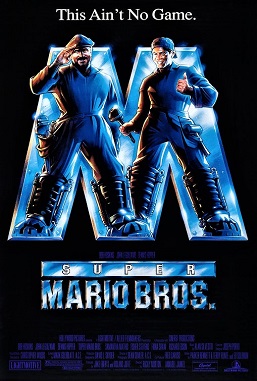
The chronological development of her cinematic identity is best understood through the chaotic birth of Super Mario Bros. in the early nineties. Jankel was tasked with translating an abstract, primary colored digital landscape into a tangible cinematic universe. This endeavor was plagued by notorious production challenges, effectively trapping her in what critics have since characterized as studio hell. Yet, she managed to forge a massive, sprawling artifact out of this turmoil, producing a work that continues to spark intense critical discussion long after its theatrical run.
Contextualizing her background requires acknowledging her deep roots in cybernetic media and experimental television. The frequent critical comparisons to Max Headroom highlight a fundamental obsession with technological dystopias and media saturation. Instead of delivering a safe, sanitized product, Jankel engineered a bizarre and noble failure that inadvertently birthed a new subgenre. Her legacy remains that of an ambitious pioneer who took the ultimate commercial gamble, leaving an idiosyncratic imprint on the landscape of nineties blockbuster cinema.
Thematic Preoccupations
Jankel exhibits a relentless preoccupation with the collision of family friendly intellectual property and grim political subtext. In her vision, the whimsical expectations of the target audience are consistently subverted by a dark, corporate controlled dystopia. She transforms a straightforward rescue mission into an exploration of authoritarianism, rendering parallel universes that feel uncomfortably close to our own reality. This tension between lighthearted source material and bleak thematic execution is the animating force of her cinema.
The struggle against rampant commercialization serves as another philosophical cornerstone. Her work constantly asks whether mainstream entertainment can sustain complex political undertones without alienating its core demographic. By injecting narratives featuring a villainous antagonist seeking interdimensional conquest with heavy sociopolitical allegory, Jankel crafts a queasy jumble of genre tropes. She forces viewers to navigate a space where childlike wonder is constantly threatened by industrial decay and systemic oppression.
Furthermore, Jankel obsessively explores the concept of identity fractured across divergent dimensions. Her characters often find themselves displaced, struggling to maintain their humanity within a sprawling, hostile metropolis. This recurring motif speaks to a broader anxiety about the loss of individuality in a hyper industrialized age. By blending dystopian world building with high concept fantasy, she challenges the audience to find meaning in a chaotic, hostile universe where the rules of reality are constantly rewritten by those in power.
Stylistic Signatures
Jankel constructs her cinematic worlds through bright, clamorous extravaganzas of primary colors and overwhelming visual effects. Her mise en scene deliberately evokes the dystopian grime of Blade Runner and the bureaucratic absurdity of Brazil, filtering these decidedly adult influences through a frantic, overstimulated lens. She fills the frame with breathtaking wonders and massive, towering set pieces, prioritizing intricate production design and aggressive, tactile world building over restrained realism.
The visual language she employs is heavily reliant on sensory overload, mimicking the breathless pace of early digital media and arcade games. Her editing rhythms skew toward the shrill and hectic, creating a sense of perpetual motion that reflects the chaotic environments her characters are forced to navigate. This dense stylistic approach ensures that every frame is packed with visual information, rewarding attentive viewers with a deeply layered, Easter egg filled visual experience.
However, this absolute dedication to aesthetic maximalism often comes at the expense of traditional narrative intimacy. Critics frequently note that her character development feels thin as a razor, as the overwhelming spectacle of her visual effects tends to dwarf the human element. The script quality is often subsumed by the sheer magnitude of the imagery, making her films function more as immersive, architectural mood boards than conventional character studies.
Recurring Collaborators
While Jankel does not boast a firmly established ensemble of recurring cast members across multiple feature films, her creative partnerships are heavily defined by intensive collaborations in visual effects and production design. The sheer scale of her conceptual ambition demands a legion of technical artists capable of rendering massive parallel dimensions and labyrinthine dystopian cityscapes. Her true creative partners are the unseen technicians and production designers who execute her sprawling, visually demanding blueprints.
The absence of a regular stable of actors speaks volumes about the nature of the projects she helmed during this period. Her cinema is driven by conceptual ingenuity and complex franchise demands rather than by actor and director intimacy. Performers in her films are often placed at the mercy of chaotic production schedules, massive practical effects, and overwhelming digital wizardry, serving as functional cogs within a much larger, visually arresting machine.
Critics have observed that for the actors involved, participating in her highly commercialized, politically dense projects often becomes a bizarre but worthy anomaly on their respective resumes. This underscores a collaborative environment where traditional performance craft is necessarily subordinated to an all encompassing vision of corporate hellscapes. The actors must adapt to a highly stylized, almost theatrical register to avoid being completely swallowed by the breathtaking, clamorous sets that define her directorial signature.
Critical Standing
The critical reception of Jankel has undergone a radical and fascinating transformation over the decades, shifting from outright dismissal to fervent scholarly reassessment. Initially, her pioneering effort in the realm of the video game adaptation was met with a brutal critical mauling, with stunned reviewers likening the vitriolic reception to that of universally despised propaganda films. Contemporaneous reviews lambasted her work as a poor imitation of a nineties blockbuster, citing flat wisecracks, obvious plotting, and a lack of clear audience engagement.
During her early career, the critical consensus viewed her most prominent feature as a shrill, tiresome fantasy with no imaginable audience. The bloated, deeply troubled production inevitably drew comparisons to notorious cinematic disasters like Heaven's Gate, framing her ambition as a cautionary tale of studio excess. Mainstream publications dismissed the work as an abject failure, fundamentally misunderstanding the jarring fusion of Batman style urban decay with purely childish source material.
Over time, however, her critical standing has been rehabilitated by an enthusiastic cult following and a generation of critics willing to embrace her subversive choices. Modern evaluators now champion her filmography as an interesting and rich artifact of transitional nineties studio filmmaking. What was once decried as a chaotic failure is now celebrated as a brazenly commercial product packed with unexpected political subtext, cementing Jankel as a fearless visual stylist who dared to push the boundaries of conventional franchise cinema.