Career Overview
Barry Jenkins has firmly established himself as a transformative figure in modern American cinema. His emergence as a defining auteur is deeply tied to his ability to craft highly specific, deeply resonant narratives about marginalized lives. Raised in Miami, Florida, Jenkins draws heavily from his own background to anchor his cinematic explorations in authentic environments. His trajectory from a promising independent filmmaker to an internationally recognized director represents a critical shift in the landscape of contemporary film.
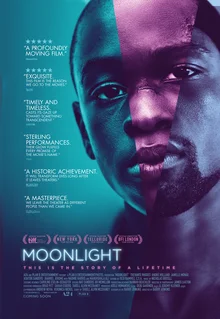
His breakthrough into the critical consciousness occurred with Moonlight, a project that redefined the narrative possibilities for African American storytelling. The film charts a difficult journey through childhood, adolescence, and adulthood in a rough Miami neighborhood. Through this localized lens, Jenkins navigates complex emotional terrain, offering a profound examination of the human condition. His work bridges a crucial gap between the gritty realism of American independent cinema and the lyrical traditions of global arthouse film.
Jenkins occupies a unique position in cinema history as a filmmaker who centers Black queer experiences without compromising their inherent complexity. His films are vital texts that dismantle monolithic representations of Black masculinity. By focusing on the intersection of race, sexuality, and class, he has initiated necessary conversations within the medium. His career arc reflects a steady commitment to elevating the unseen and the unspoken, granting majestic cinematic treatment to communities often relegated to the margins.
Thematic Preoccupations
The exploration of identity sits at the very center of Barry Jenkins’s directorial preoccupations. His work frequently investigates the painful, beautiful journey of self-discovery required to survive in an unforgiving world. In Moonlight, this exploration is specifically tied to Black gay identity and the rigid constructs of Black masculinity. Jenkins asks enduring questions about how individuals forge a sense of self when their environment demands conformity, presenting self-acceptance as a hard-won victory.
Intertwined with his focus on identity is a profound depiction of love and intimate relationships. Jenkins does not treat love merely as romantic fulfillment, but rather as a radical act of resilience. His narratives are driven by the search for connection in places where vulnerability is heavily penalized. The friendship dynamics in his stories often blur into transcendent experiences of unspoken desire, highlighting the life-saving nature of brief, intimate encounters.
Coming-of-age experiences provide the structural framework for these philosophical inquiries. Jenkins is deeply invested in how youth, environment, and trauma intersect to shape the adult soul. He frequently utilizes the transition from childhood to adulthood to expose the heartbreaking moments where innocence is lost and defensive armors are built. His focus on a rough Miami neighborhood illustrates how physical spaces dictate the emotional boundaries of his characters.
Ultimately, Jenkins returns continually to themes of survival and resilience. He avoids simplistic tragedies, instead offering nuanced portrayals of characters who endure profound isolation but still reach for grace. His films present a necessary conversation about the reality of growing up as a gay man in disguise, rendering these highly specific struggles as universally poignant narratives.
Stylistic Signatures
The visual language of Barry Jenkins is defined by lyrical storytelling and a breathtaking sense of poetic realism. He blends a grounded, realistic approach to impoverished communities with moments of magical realism that elevate the narrative. Critics frequently note that his work feels majestic and transcendent. Instead of relying on stark, documentary-style grit to depict rough environments, he utilizes a rich, expressive color palette that transforms mundane settings into vibrant, emotional landscapes.
Intimate storytelling is the hallmark of his camera work. Reviewers have famously described his framing as being so intimate you feel you are trespassing on the characters’ souls. Jenkins frequently utilizes tight close-ups and direct gazes into the lens, collapsing the distance between the audience and the subject. This intense visual proximity demands deep empathy, ensuring that the necessary conversations within the film are felt on a visceral level.
His editing rhythms and approach to pacing further distinguish his stylistic signature. He negotiates a hybrid of patient, real time conversational moments that allow emotions to breathe and evolve naturally on screen. Slant Magazine highlighted that the best scene in Moonlight is also its longest, demonstrating his confidence in holding a shot to capture the microscopic shifts in an actor's performance. This deliberate pacing creates a devastating cumulative emotional impact.
Jenkins synthesizes a wide array of arthouse influences into his uniquely American vernacular. Critics draw direct comparisons between his work and the atmospheric sensuality of Wong Kar-wai, the emotional vibrancy of Pedro Almodóvar, and the conversational patience of Richard Linklater. By merging these varied stylistic signatures, Jenkins crafts poignant narratives that feel both deeply traditional in their cinematic craft and entirely refreshing in their perspective.
Recurring Collaborators
While our database identifies no recurring cast members across multiple films, this absence is indicative of a broader directorial strategy. Jenkins approaches casting not as a method of building an ensemble of recognizable muses, but as a rigorous search for the exact physical and emotional embodiment of his specific characters. His films often blend seasoned professionals with first-time actors to achieve a realistic, grounded texture. This deliberate casting approach allows his nuanced portrayals to remain free from the baggage of celebrity persona.
The true collaborative triumph in Jenkins’s work lies in his ability to foster an environment where actors can achieve unprecedented emotional synchronization. In Moonlight, the narrative demands that multiple actors play a single character at different stages of life. The seamless continuity of soul and posture across these performances speaks to a deeply collaborative, intimate directorial process. He works with performers to ensure that internal monologues and heartbreaking moments are communicated through shared physical vocabularies rather than heavy dialogue.
Behind the camera, Jenkins relies on tight-knit creative partnerships to execute his lyrical storytelling. Although the specific focus remains on the on-screen talent, his profound cinematic achievements are built upon crucial collaborations in cinematography and musical composition. It is through these sustained behind-the-scenes partnerships that his films achieve their magical realism and majestic visual aesthetics.
Ultimately, the environment itself acts as a recurring collaborator in his cinema. The city of Miami is not merely a backdrop but a living, breathing participant in the narrative. Jenkins works with the actual locations, the humidity, and the unique light of the region to inform the performances. This collaborative relationship with the physical world grounds his poetic inclinations in tangible, deeply felt reality.
Critical Standing
Barry Jenkins occupies a rarefied and celebrated space within contemporary film criticism. Upon the release of Moonlight, the critical establishment immediately recognized him as a vital, transformative voice. The Guardian heralded the film as both proudly black and refreshingly queer, signaling a watershed moment in how marginalized narratives are critically evaluated. He is widely praised for bringing unseen lives to the forefront of American cinema with uncompromising dignity.
Within the critical discourse, Jenkins is frequently analyzed alongside international masters of the medium. Reviewers eagerly draw comparisons between his work and the patient conversational cinema of Andrew Haigh and Richard Linklater. Furthermore, his bold visual choices have placed him in the lineage of Wong Kar-wai and Pedro Almodóvar. These comparisons underscore his critical reputation as a director who marries European and Asian arthouse sensibilities with distinctly Black, American experiences.
The reception of his work consistently highlights its profound emotional resonance. Critical vocabulary surrounding his films is dominated by terms such as devastating, vital, heartbreaking, and necessary. Critics are captivated by his intimate storytelling, often noting that his films provide transcendent experiences that linger long after the credits roll. His ability to negotiate complex themes of Black gay identity and Black masculinity representation has made his work essential subject matter for academic and critical analysis.
As his standing has evolved, Jenkins has moved from being viewed as a promising independent voice to an established master of the craft. His films are now considered essential texts for film students and cinephiles alike. By continuously delivering poignant narratives and nuanced portrayals, he has cemented his legacy as a filmmaker who fundamentally expanded the emotional and aesthetic boundaries of twenty-first-century cinema.