Career Overview
Bob Persichetti occupies a fascinating space in modern American cinema, primarily recognized for his pivotal role in revolutionizing studio animation. His career arc reflects a transition from the foundational labor of storyboarding and animation departments into a prominent leadership position. As a co-director, Persichetti helped usher in a new era of visual storytelling that fundamentally challenged the homogeneous aesthetic of computer generated imagery that had dominated the medium for two decades.
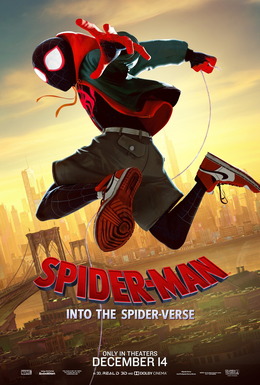
His breakout achievement arrived with the release of Spider-Man: Into the Spider-Verse, a project that cemented his status as a formidable voice in contemporary filmmaking. Prior to this landmark release, mainstream animation often prioritized photorealism or safe, rounded character designs. Persichetti and his colleagues chose to actively disrupt these expectations, creating a cinematic experience that bridged the gap between popular franchise entertainment and avant garde visual experimentation.
In the broader context of cinema history, Persichetti will be remembered as a key figure in the mainstream popularization of stylized, hyperkinetic animation. By treating the medium not merely as a genre but as a limitless canvas for artistic expression, he proved that mass market superhero narratives could accommodate radical artistic risks. His trajectory underscores a significant shift in Hollywood, wherein animation directors are increasingly acknowledged as visionary auteurs who reshape our understanding of visual narratives.
Thematic Preoccupations
At the core of Bob Persichetti's directorial work lies a deep fascination with the hero's journey, though he approaches this classical structure through a distinctly postmodern lens. Rather than presenting a singular, isolated protagonist destined for greatness, his narratives interrogate the nature of heroism itself. He explores how legacy, expectation, and community shape individual identity, suggesting that the mantle of a hero is not an exclusive birthright but a shared responsibility.
This philosophical preoccupation is most evident in his exploration of the multiverse concept. For Persichetti, the multiverse is far more than a convenient plot device or a mechanism for generating fan service. It functions as a profound thematic framework for examining alternate realities, divergent life paths, and the universal anxiety of self actualization. By colliding different iterations of similar archetypes, his storytelling creates a rich tapestry of existential reflection where characters must confront their own flaws through their interdimensional counterparts.
Furthermore, his work operates as a continuous, metatextual comic book homage. Persichetti dissects the very mythology of comic book narratives, utilizing inventive storytelling to deconstruct familiar tropes. He routinely addresses the audience's potential franchise fatigue by weaving themes of necessary character development directly into the text. In doing so, he asks vital questions about why society constantly returns to these mythic figures and how these ubiquitous stories can be revitalized for a contemporary, fragmented world.
Stylistic Signatures
The stylistic signatures of Bob Persichetti are defined by a bold expressionistic approach that aggressively pushes the boundaries of cinematic animation. He rejects the sterile, flawless look of traditional computer animation in favor of a kinetic, textured aesthetic. By blending traditional comic book aesthetics with modern digital techniques, he creates a visual language that feels entirely unprecedented. This involves incorporating Ben-Day dots, misregistered colors, and dynamic paneling directly into the frame, effectively translating the tactile experience of reading a comic book into a fluid cinematic space.
His mise en scene is characterized by kaleidoscopic visuals and a wonderfully trippy visual style. Environments in his films are rarely static, they pulse, fracture, and bend in ways that mirror the internal psychological states of his protagonists. Persichetti employs a rich, saturated color palette and disorienting spatial geometry to plunge the audience into a dreamlike atmosphere. This elasticity of form allows for sequences that are both abstract and intensely emotional, proving that animation can achieve a level of expressionism unavailable to live action filmmaking.
Rhythm and pacing are equally crucial to his directorial signature, often drawing critical comparisons to the hyperactive energy of films like Speed Racer. The editing in his work is ferociously fast yet always legible, generating thrilling animation that captures the giddy adventure of youth. Complementing these visual gymnastics is an eclectic approach to sound design and unique voice acting, where varied vocal performances are layered over bombastic, genre blending scores to create a fully immersive sensory feast.
Recurring Collaborators
The nature of large scale studio animation inherently demands a collaborative framework, and Bob Persichetti's success is deeply intertwined with his creative partnerships. Most notably, his work on Spider-Man: Into the Spider-Verse was executed alongside co-directors Peter Ramsey and Rodney Rothman. This tri-directorial structure is highly unusual in traditional filmmaking but proved essential in managing the dense, multifaceted demands of such an ambitious project. Together, they forged a unified vision out of seemingly disparate artistic sensibilities.
This collaboration allowed for a unique synthesis of storytelling prowess, visual innovation, and comedic timing. The influence of writer producers Phil Lord and Christopher Miller is also palpable in Persichetti's work, drawing frequent critical comparisons to the chaotic, subversive energy of The LEGO Movie. Working within this specific creative brain trust enabled Persichetti to anchor his bold aesthetic swings in genuine emotional stakes and witty humor, ensuring that the visual spectacle never overwhelmed the narrative core.
While Persichetti's filmography does not yet feature a distinct troupe of recurring actors across multiple properties, his approach to casting relies heavily on building diverse, eclectic ensembles. He favors unique voice acting over traditional celebrity stunt casting, seeking out performers who can convey complex emotional nuance while matching the hyperactive frequency of the animation. This reliance on a unified ensemble cast functions as a crucial collaborative element, grounding his dizzying multiverse explorations in recognizable, deeply human performances.
Critical Standing
Bob Persichetti currently holds a highly esteemed position within critical discourse, largely due to the seismic impact of his directorial debut. Upon its release, Spider-Man: Into the Spider-Verse was hailed by critics as a necessary chapter in an increasingly stale franchise landscape. Prominent publications praised his ability to boldly ignore audience fatigue, noting that his inventive disruption of the superhero formula felt both refreshing and deeply vital to the survival of the genre.
Within the realm of art criticism and cinephile circles, Persichetti is celebrated as a formalist innovator. Outlets such as Slant Magazine and RogerEbert.com have positioned his work as definitive proof that the full potential of comic book movies can only be attained through animation. Critics frequently highlight the elastic, dreamlike quality of his filmmaking, elevating his work beyond the confines of commercial entertainment and into the realm of serious artistic achievement. The recurring comparisons to groundbreaking films like Speed Racer and The LEGO Movie underscore his reputation as a director who successfully marries pop sensibilities with avant garde execution.
As his career progresses, Persichetti's critical standing remains tethered to his status as an industry disruptor. He is widely regarded not just as a competent craftsman, but as a visionary who fundamentally expanded the visual vocabulary of American animation. By proving that audiences are hungry for kaleidoscopic, complex, and emotionally resonant animated cinema, his work continues to serve as a benchmark against which all subsequent stylized studio animations are measured.