Career Overview
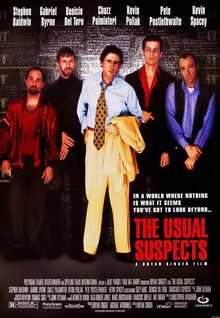
Bryan Singer emerged in the mid-1990s as a prodigiously talented filmmaker whose early work signaled a sharp pivot in American independent cinema toward structurally complex, neo-noir storytelling. His breakthrough came with The Usual Suspects, a film that immediately established him as a director capable of orchestrating labyrinthine narratives with polished precision. Critics recognized his arrival as a major moment, with some contemporary reviewers comparing his cinematic dexterity to classic noir auteurs.
Although preceding works like Public Access hinted at his thematic preoccupations, it was his 1995 crime drama that cemented his reputation. Singer positioned himself within a generation of filmmakers who were actively reinterpreting genre conventions for a more cynical, media-literate audience. By leaning into hard-edged storytelling and featuring unsympathetic characters, he crafted a cinematic identity that prioritized structural ingenuity and psychological manipulation over traditional heroics.
His career trajectory, as evidenced by this defining work, reveals a director fascinated by the mechanics of the cinematic medium itself. The immediate critical reaction to his breakthrough highlighted a filmmaker who was not merely participating in the 1990s crime wave but actively shaping it. Through his meticulous construction of deception, Singer carved out a unique position in cinema history as a master of narrative sleight of hand, setting a high benchmark for the modern thriller.
Thematic Preoccupations
At the core of Singer's directorial vision is a profound fascination with moral ambiguity and the slippery nature of truth. His narratives frequently operate in a murky ethical space where traditional concepts of right and wrong are constantly subverted. In The Usual Suspects, crime and betrayal become the fundamental forces governing human interaction. The characters navigate a world entirely defined by power dynamics, where survival depends entirely on the ability to deceive both allies and adversaries alike.
Deception and manipulation are not merely plot devices for Singer, but they function as the central philosophical inquiries of his cinema. He continually asks the audience to question the reliability of the information presented to them. Unreliable narration becomes a thematic obsession, forcing viewers to actively engage with the narrative construction rather than passively consuming it. The stories he tells suggest that reality itself is a construct, easily molded by those with the most compelling narrative voice and the darkest intentions.
Furthermore, Singer explores the psychological toll of intrigue and suspense within criminal underworlds. His protagonists and antagonists blur together, often emerging as deeply unsympathetic figures driven by selfish motivations. The overarching focus on crime and deception serves as a dark mirror to societal power structures. By focusing on these fatalistic tales of punishment, Singer strips away romanticized notions of criminality, leaving viewers to grapple with the stark, cold realities of human manipulation.
Stylistic Signatures
Singer's visual and structural language is defined by a polished, virtuoso style that emphasizes complexity in storytelling. His primary stylistic signature is the intricate plot, carefully constructed to disorient and eventually surprise the viewer. He employs unpredictable twists not merely for shock value, but as a fundamental architectural component of his films. This approach requires a meticulous control of rhythm and pacing, ensuring that the audience remains perpetually off balance while still feeling anchored by an engaging narrative.
Drawing heavy visual and tonal inspiration from classic noir and modern crime thrillers, Singer's approach to the frame is often described as stylish and clever. Critics frequently cite comparisons to seminal works like Touch of Evil, Kiss Me Deadly, and The Killers. This lineage is evident in his hard-edged storytelling approach, which utilizes precise framing and atmospheric lighting to underscore the pervasive moral rot of his cinematic worlds. The cinematic space in a Singer film is often claustrophobic, reflecting the inescapable webs in which his characters find themselves trapped.
Despite the heavy emphasis on plot mechanics, Singer's style remains resolutely character-driven. The camera acts as an active participant in the deception, selectively revealing and concealing information through careful edits and framing choices. This narrative complexity is heightened by an editing rhythm that builds suspense through deliberate obfuscation. Ultimately, his stylistic choices are entirely subjugated to the goal of narrative manipulation, creating a viewing experience that is as intellectually demanding as it is viscerally thrilling.
Recurring Collaborators
While analyzing the specific dataset of The Usual Suspects, explicit recurring cast members across multiple films are not immediately identified, but the ensemble nature of Singer's work speaks volumes about his collaborative process. Singer relies heavily on assembling tight knit groups of actors capable of handling dense, dialogue-heavy scripts and ambiguous character arcs. The success of his intricate plots depends entirely on performers who can project multiple layers of motivation simultaneously.
The collaborative dynamic in a Singer film requires actors to embrace the challenge of playing deeply unsympathetic characters without alienating the audience. Because his narratives hinge on deception and unreliable narration, the cast must perform a delicate balancing act. They have to play the immediate reality of the scene while also planting the seeds for eventual unpredictable twists. This necessitates a profound level of trust between the director and his ensemble, as the actors are often required to embody conflicting versions of the same character.
Beyond the cast, Singer's work demands precise coordination with screenwriters, cinematographers, and editors to achieve his signature polished exercise in pure virtuoso style. The structural demands of narrative complexity require a script that operates like a finely tuned watch, and an editing team capable of maintaining clarity amidst deliberate narrative obfuscation. Although specific recurring names may fall outside this particular critical snapshot, the seamless execution of his breakthrough film demonstrates a director who excels at orchestrating a highly unified creative vision among his technical and artistic collaborators.
Critical Standing
The critical reception of Bryan Singer's work has been marked by intense debate regarding the balance between stylistic virtuosity and emotional substance. Upon the release of The Usual Suspects, many critics hailed him as a prodigy. Empire Magazine described his work as a dazzlingly proficient piece of filmmaking, cementing his status as a truly remarkable talent. Enthusiastic reviewers drew lofty comparisons to Orson Welles, with The Guardian labeling his breakthrough as the best thriller since 1958, effectively elevating Singer into the pantheon of masterful thriller directors.
However, this enthusiastic praise is counterbalanced by significant critical skepticism regarding the depth of his narrative tricks. Dissenting voices, most notably Roger Ebert, argued that Singer's reliance on unreliable narration prioritizes manipulation over genuine character motivation. For these critics, the intricate plots and twist endings are ultimately hollow exercises. As Ebert noted, a solution that solves little suggests a structural emptiness, a sentiment echoed by Slant Magazine, which characterized the film as a tale told by an idiot, full of sound and fury, signifying nothing.
This polarization has defined Singer's place within critical discourse. He is simultaneously celebrated as an architect of the modern puzzle film and critiqued as a purveyor of superficial cleverness. His work is frequently compared to contemporaries who emerged during the same era, with films like Reservoir Dogs and Jagged Edge serving as touchstones for his brand of hard-edged, crime-driven cinema. Ultimately, Singer remains a fascinating figure in modern film criticism, a director whose polished, virtuoso style continues to invite rigorous analysis and passionate disagreement over the true value of narrative deception.