Career Overview
Chloé Zhao has established herself as one of the most vital observers of the contemporary American landscape. Born in Beijing and educated in the United Kingdom and the United States, she brings a uniquely perceptive outsider perspective to the mythologies of the American West. Her career arc demonstrates a fascinating progression from intimate independent features to major cinematic milestones, firmly positioning her as a central figure in modern realist cinema.
Her artistic breakthrough came into sharp focus with works like The Rider, which laid the groundwork for the thematic obsessions that would fully blossom in her later achievements. By the time she released Nomadland, Zhao had perfected a signature blend of documentary realism and poetic fiction. This hybrid approach allowed her to capture the stark realities of 21st-century America while maintaining a deeply compassionate lens on marginalized communities.
Today, Zhao occupies a singular space in cinema history. She bridges the gap between classic American road movies and contemporary economic critiques. Her cinematic trajectory reveals a filmmaker who is constantly interrogating the American dream, choosing to look past traditional Hollywood heroism in favor of the quiet resilience of ordinary people navigating profound societal shifts.
Thematic Preoccupations
At the core of Zhao's filmography is a profound exploration of resilience in the face of economic collapse and personal tragedy. Her films frequently center on individuals who have been marginalized by systemic failures, notably the fallout of the Great Recession. Through her focus on economic struggles and hardships, Zhao asks urgent questions about survival, dignity, and the harsh realities of the contemporary American dream.
Coupled with this economic critique is an enduring fascination with the nomadic lifestyle and the duality of freedom and self-reliance. Characters in her films often embark on a self-discovery journey across the vast American landscape, seeking a new way of living outside the confines of traditional capitalist structures. This physical journey invariably mirrors a deep psychological exploration of emotional grief and loss, as protagonists attempt to heal in the open spaces of the West.
Yet despite the inherent isolation of these transient lives, Zhao emphasizes the paramount importance of community and connection. Her narratives frequently highlight the makeshift families and temporary alliances formed among outcasts. By contrasting the vastness of the natural world with intimate moments of human solidarity, Zhao underscores how shared vulnerability becomes a powerful catalyst for survival and identity formation in an otherwise unforgiving world.
Stylistic Signatures
Zhao possesses a refined artistic vision that translates into a distinctly visual poem aesthetic. Her elegantly filmed scenes juxtapose the immense, dreamlike beauty of the natural world with the grounded, gritty realities of her subjects. Critics frequently note the influence of Terrence Malick, specifically his work on Days of Heaven, in her reliance on magic hour lighting, fluid camera movements, and lyrical interpretations of the American landscape.
Her direction is characterized by an inventive cinematic technique that generates a gradually swelling tension underneath a seemingly placid surface. Zhao favors a grounded storytelling approach that blurs the line between documentary and fiction. By placing nonprofessional actors alongside seasoned performers, she achieves a stark authenticity. This stylistic choice echoes the verite realism of Barbara Loden in Wanda, capturing guarded character portrayals with uncompromising honesty.
Sound and pacing play equally critical roles in her stylistic repertoire. Zhao avoids melodramatic musical cues, favoring naturalistic soundscapes that mirror the rhythmic cadences of the road. The pacing of her films is deliberately measured, allowing for sharp emotional depth to emerge organically from quiet observations. A wry smile or a lingering glance carries the weight of a traditional monologue, showcasing a marvel of directorial restraint and grace.
Recurring Collaborators
While the database highlights no recurring cast members across multiple films in this specific index, Zhao is renowned for a collaborative process that relies heavily on merging professional talent with nonprofessional locals. Her method requires actors who can seamlessly integrate into real communities, serving as diplomats for her creative vision rather than traditional leading stars.
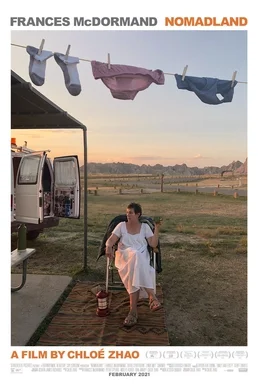
In Nomadland, Frances McDormand acts as the ultimate vessel for this inventive approach. McDormand brings a marvel of restraint and grace to the screen, anchoring the narrative with a performance that conveys immense history through subtle gestures. Critics recognize McDormand as a marvelous diplomat for Zhao's hybrid filmmaking, allowing the director to embed a fictional narrative within a factual world without breaking the illusion of reality.
Behind the camera, Zhao typically maintains a tightly knit crew to preserve the intimate, unobtrusive environment necessary for her naturalistic style. This small footprint enables her to capture fleeting moments of atmospheric beauty and spontaneous human interaction. The synergy between her guarded character portrayals and the stark realism of her chosen environments is a direct result of this carefully cultivated collaborative ecosystem.
Critical Standing
Critical reception of Zhao's work is overwhelmingly celebratory, placing her at the forefront of contemporary art cinema. Reviewers consistently praise her sharp emotional depth and her ability to craft elegantly filmed epics about individuals seeking alternative ways of living. Her reputation is built on an unwavering commitment to authentic storytelling, with critics marveling at how she balances gorgeous, dreamlike vistas with a fundamentally grounded reality.
Within critical discourse, Zhao is frequently situated within a lineage of great American chroniclers. Comparisons to Terrence Malick's Days of Heaven highlight her lyrical visual style, while references to Barbara Loden's Wanda underscore her empathetic framing of female drifters and societal outsiders. Some critics have even noted structural parallels to post-apocalyptic survival narratives like Mad Max, given her focus on nomadic tribes navigating a fractured world.
Her standing has evolved from a promising independent voice to an authoritative cinematic auteur. By reinventing the Western and the road movie for the 21st century, Zhao has sparked crucial conversations about class, economy, and the changing face of the American landscape. Critics view her filmography not merely as a collection of beautiful images, but as a vital, profoundly empathetic record of a modern society in transition.