Career Overview
Damian McCarthy has steadily carved out a unique position within the landscape of contemporary horror cinema. Emerging from the independent scene with a meticulous eye for the macabre, McCarthy has cultivated a reputation as an architect of deeply unsettling cinematic experiences. His trajectory reveals a filmmaker who meticulously hones his craft with each project, prioritizing atmospheric dread over cheap jump scares. This dedication to mood has earned him comparisons to legendary directors of psychological terror, signaling his arrival as a major voice in the genre.
The director first gained significant attention with his earlier claustrophobic efforts, particularly Caveat, which established his penchant for locking flawed characters in decaying, isolated environments. These formative works laid the groundwork for his evolving cinematic vocabulary. McCarthy proved himself adept at maximizing the potential of limited locations, turning physical boundaries into psychological prisons. His background suggests a deep immersion in both gothic traditions and modern cinematic techniques, allowing him to bridge the gap between classical ghost stories and contemporary trauma narratives.
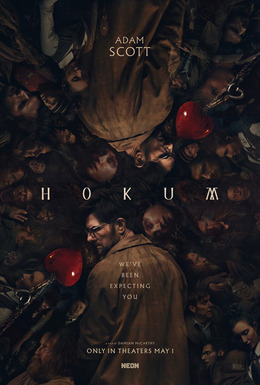
With the release of the 2026 gothic horror Hokum, McCarthy solidified his standing as an auteur capable of sophisticated, character-driven terror. By bringing an American author to a remote, haunted hotel in rural Ireland, the director expanded his geographical and narrative scope while maintaining his signature intimacy. His career arc demonstrates a clear progression toward more complex interrogations of guilt and memory, positioning him not merely as a master of scares but as a serious storyteller dedicated to exploring the darkest corners of the human psyche.
Thematic Preoccupations
At the core of Damian McCarthy's filmography is a profound obsession with isolation and the inescapable weight of the past. His characters are frequently thrust into extreme physical solitude that mirrors their internal desolation. This is most vividly realized in Hokum, where the remote Irish hotel serves as a physical manifestation of the protagonist's personal demons. McCarthy uses geographical remoteness to strip away the distractions of modern life, forcing his misanthropic antiheroes to confront their supernatural reckonings without any hope of external rescue.
Guilt and unresolved trauma function as the primary engines of McCarthy's narratives. His films suggest that the past is never truly dead but rather a malignant force waiting to exact its toll. The hauntings in his work are rarely random acts of malevolence. Instead, they are deeply tethered to the protagonist's own historical transgressions or inherited sins. In Hokum, the simple act of scattering a parent's ashes becomes a catalyst for unearthing dark, localized secrets, illustrating the director's belief that geographical spaces hold memories that demand a bloody accounting.
Furthermore, McCarthy frequently weaves folk horror elements into his gothic frameworks, creating a rich tapestry of rural terror. He interrogates the clash between arrogant modernity (often represented by outsiders like the American author Ohm Bauman) and ancient, localized forces. This tension is further complicated by his meditation on storytelling and authorship. By centering a horror writer in Hokum, McCarthy reflexively examines the nature of creating narratives, questioning whether authors can ever truly control the demons they conjure or if they are doomed to be consumed by them.
Stylistic Signatures
The visual language of Damian McCarthy is defined by an oppressive, terrifying atmosphere that seeps into every frame. He favors slow, suspenseful narrative pacing over frenetic action, allowing a creeping dread to accumulate organically. This methodical approach to tension builds a claustrophobic cinematic environment, drawing direct visual and tonal comparisons to masterpieces like The Shining and The Innocents. His cinematography frequently highlights the decaying textures of rundown environments, framing his isolated subjects against vast, unforgiving rural landscapes or confining them within the tight, rotting corridors of haunted settings.
Aural design and carefully orchestrated mise-en-scène work in tandem to amplify the eerie surroundings. McCarthy is a master of weaponizing silence and ambient noise, ensuring that every creaking floorboard or whistling wind contributes to the psychological unraveling of his characters. When violence or supernatural manifestations do occur, they are often punctuated by gruesome imagery that feels both shocking and inevitable. These moments of visceral horror are never gratuitous but are precisely calibrated to rupture the carefully maintained tension he spends so long cultivating.
What truly distinguishes McCarthy's style, however, is his deft injection of black-comic elements into otherwise bleak narratives. Reviewers have noted the impish, haunting delight present in his work, a tonal balancing act that makes the descent into madness unexpectedly engaging. By allowing moments of dark humor to pierce the terrifying atmosphere, McCarthy lulls the audience into a false sense of security before delivering his most devastating blows. This deceptively simple piece of storytelling masks a highly sophisticated control over tone, rendering his cinematic world both delightfully macabre and inescapably terrifying.
Recurring Collaborators
Unlike many auteurs who build a dedicated repertory company of actors across their filmography, Damian McCarthy treats casting as a bespoke process tailored to the specific needs of each isolated narrative. Without a stable of recurring cast members to rely upon, the director approaches every project as a fresh opportunity to forge new creative partnerships. This rotating approach to his ensembles perfectly mirrors his thematic preoccupations with alienation and displacement, as both the characters and the performers are placed in unfamiliar, unsettling environments without the comfort of historical safety nets.
While he may not reuse lead actors, McCarthy exhibits a remarkable ability to elicit career-defining performances from his chosen protagonists. His collaboration with Adam Scott on Hokum serves as a prime example of this directorial strength. Critics widely celebrated the performance, noting that the actor delivered his best film work to date under McCarthy's guidance. The director knows exactly how to strip away an actor's familiar persona, transforming recognized talent into unexpectedly dark and unsympathetic characters.
Behind the camera, McCarthy's work suggests a highly unified creative vision that thrives on tight, localized crew collaborations. The meticulous construction of his atmospheric settings and the seamless integration of folk horror elements indicate a director who works in lockstep with his production designers and cinematographers. Even without a publicly celebrated list of recurring departmental heads, the cohesive aesthetic of his gothic horrors reveals a filmmaker who demands and receives absolute alignment from his technical collaborators, ensuring that every sonic and visual detail serves the overarching sense of dread.
Critical Standing
Damian McCarthy occupies a highly respected position within the critical discourse of modern horror, frequently heralded as one of contemporary cinema's most distinctive voices. Early in his career, his work was embraced by genre aficionados who recognized his potent command of suspense and eerie surroundings. As his filmography has expanded, so too has his critical reputation, moving from cult appreciation to mainstream critical acclaim. Outlets like Slant Magazine and The Los Angeles Times have championed his films as fabulous horror for all tastes, praising his ability to transcend niche genre boundaries.
Critics frequently contextualize McCarthy's films within a lineage of prestige psychological horror. The persistent comparisons to benchmark films such as The Shining, The Innocents, and The Witch underscore the high regard in which his atmospheric execution is held. Reviewers are quick to note that McCarthy does not merely mimic these classics. Instead, he shatters familiar narrative paradigms to make them entirely his own. This critical consensus points to a director who deeply understands the architecture of classic terror but possesses the impish creativity required to subvert audience expectations.
Today, McCarthy is celebrated not just as a mechanic of fear but as a thoughtful cinematic storyteller. Critics applaud the deceptively simple nature of his narratives, which routinely mask profound meditations on guilt, isolation, and the very act of storytelling. The reception of Hokum proved that he could handle unsympathetic protagonists and pitch-black comedy without sacrificing the terrifying atmosphere that defines his brand. Consequently, his standing remains that of a rigorous, visionary auteur whose meticulous approach to supernatural reckoning ensures his place at the forefront of the twenty-first-century horror renaissance.