Career Overview
Damien Chazelle emerged as a vital and urgent voice in contemporary American cinema with a singular focus on the agonizing intersection of ambition and suffering. Rooted deeply in his own background as a jazz musician, his directorial approach bridges the gap between classic Hollywood traditions and rigorous, modernist psychological thrillers. His arrival in the cinematic landscape signaled the introduction of a filmmaker who views art not as a gentle, romantic pursuit but as a brutal, high stakes contact sport.
Critics have frequently positioned his trajectory as a rapid and explosive ascent, noting how he redefined the narrative of artistic triumph for a modern audience. By mapping the punishing terrain of a music conservatory in Whiplash, Chazelle moved beyond the conventional tropes of independent cinema. He demonstrated an uncommon ability to wring massive, terrifying spectacle from deeply internal, psychological conflicts.
Today, his position in cinema history is intimately tied to this reinvention of the thriller format. Reviewers note that the ancestor to his breakout work is not the typical quiet independent drama but rather massive survival spectacles like Gravity. Chazelle has secured a reputation as an auteur who dissects the cost of greatness with unflinching precision, establishing a canon of work that interrogates the very foundations of the American dream and the mythology of the tortured genius.
Thematic Preoccupations
The core of the directorial preoccupations found in Chazelle's work revolves around musical obsession and the perilous pursuit of excellence. He consistently interrogates the toxic lengths to which artists will go to achieve greatness, presenting the drive for perfection not as a joyful passion but as a destructive, consuming force. His protagonists are often isolated figures who willingly subject themselves to physical and emotional torment in order to transcend mediocrity.
Central to this exploration of ambition is the complex, often abusive nature of teacher and student dynamics. Chazelle frames pedagogical relationships as intense, adversarial power struggles that resemble psychological warfare. The traditional mentorship narrative is subverted, asking the audience to question whether extreme cruelty is a necessary catalyst for producing true artistic brilliance or merely an exercise in sadistic dominance.
Critics frequently draw comparisons to films like Black Swan and traditional sports dramas when analyzing these themes. By applying the grueling, body breaking tropes of the sports genre to the refined world of a jazz conservatory, Chazelle strips away the romanticization of the creative process. The resulting narrative is a bruising, visceral examination of human endurance, revealing the dark, obsessive underbelly of artistic creation.
Stylistic Signatures
Chazelle's visual and rhythmic language is defined by a kinetic, propulsive pacing that matches the frantic energy of his subjects. His editing patterns are notoriously tight and percussive, often cutting precisely to the beat of a snare drum or the crash of a cymbal. This rhythmic editing transforms musical performance scenes from standard concert footage into sequences of cinematic adrenalin, creating an environment defined by intense suspense.
His approach to sound design operates as a narrative weapon rather than mere background accompaniment. The sonic landscape in his films is routinely described as both exquisite and excruciating, weaponizing jazz standards to emphasize the psychological strain of the characters. Every metronome click, page turn, and screamed instruction is amplified to create a claustrophobic auditory experience that makes the film something the audience feels as much as they see.
Visually, Chazelle employs a rigorous mise en scene that traps his characters in their own ambitions. His camera often focuses intimately on the physical toll of creation, capturing blood on drumsticks, sweat pouring over cymbals, and blistered hands in tight closeups. This framing ensures the conservatory functions less like a sanctuary for art and more like a gladiatorial arena, reinforcing his gripping storyline with striking, visceral imagery.
Recurring Collaborators
While Chazelle's filmography features a diverse array of performers, his foundational works established a specific template for the type of creative partnerships he demands. He requires actors capable of conveying both deep psychological vulnerability and extreme physical dedication. The intense demands of his scripts mean his collaborators must commit to exhaustive, specialized training to bring authenticity to the screen.
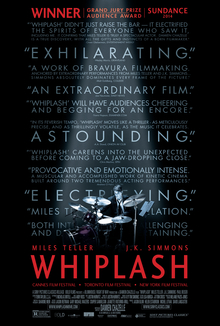
Miles Teller serves as the prototypical Chazelle protagonist, offering a wholly convincing performance that anchors the gripping storyline of Whiplash. Teller's willingness to endure grueling physical labor at the drum kit allows the director to push the boundaries of the sports drama genre. His ability to embody raw, unfiltered ambition makes him a crucial vessel for the director's thematic obsessions regarding the pursuit of perfection.
Equally important to the director's cinematic universe is the terrifying, commanding presence of actors like J.K. Simmons. Simmons sets the tempo for the narrative, offering an electric performance that provides the necessary friction for the story to function. The hostile interplay between a dedicated student and a demanding instructor creates the core dialectic of Chazelle's work, setting a standard for all future adversarial pairings in his subsequent films.
Critical Standing
The critical canonization of Damien Chazelle began almost immediately following the release of his bruising music thriller, Whiplash. Critics celebrated the film as a monumental achievement, praising its daring screenplay and incredibly tight editing. The overwhelmingly positive response, particularly from prominent outlets, established him instantly as a prodigious talent capable of revitalizing tired cinematic formulas.
Within critical discourse, reviewers astutely observed his unique mastery of genre hybridity. Analysts frequently highlighted how his work functions simultaneously as a psychological thriller and a rigorous sports drama, comparing his ability to generate suspense to massive survival epics like Gravity. His films are widely recognized for their thrilling narrative structures, proving that high stakes cinema does not require grand settings, only deeply invested characters.
As his reputation has evolved, Chazelle is consistently praised for his uncompromising vision and his refusal to offer easy, comforting resolutions. By eliciting reviews that describe his art as a visceral, physical experience, he has cemented a permanent place in modern film history. He remains highly regarded as a master manipulator of tension and one of the foremost cinematic chroniclers of human ambition.