Career Overview
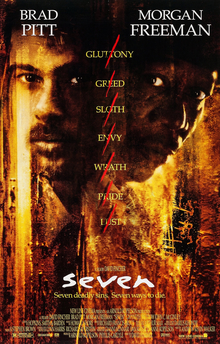
David Fincher emerged in the 1990s as a defining auteur of modern American cinema. He built his initial critical breakthrough with Seven in 1995. This film established his reputation for uncompromising and dark narratives. Fincher moved away from traditional Hollywood formulas to craft grim, meticulously constructed worlds. His early focus on urban decay and serial murder signaled the arrival of a director willing to confront the ugliest facets of society.
By the turn of the millennium, Fincher transitioned from a director with distinct visual flair to a provocative cultural critic. His release of Fight Club in 1999 marked a significant evolution in his career arc. The film dissected American malaise, consumerism, and the crisis of masculinity. Through this era, Fincher proved he could merge dazzling visual style with intelligent storytelling, taking audiences inside the skull of disturbed protagonists and challenging the boundaries of mainstream cinema.
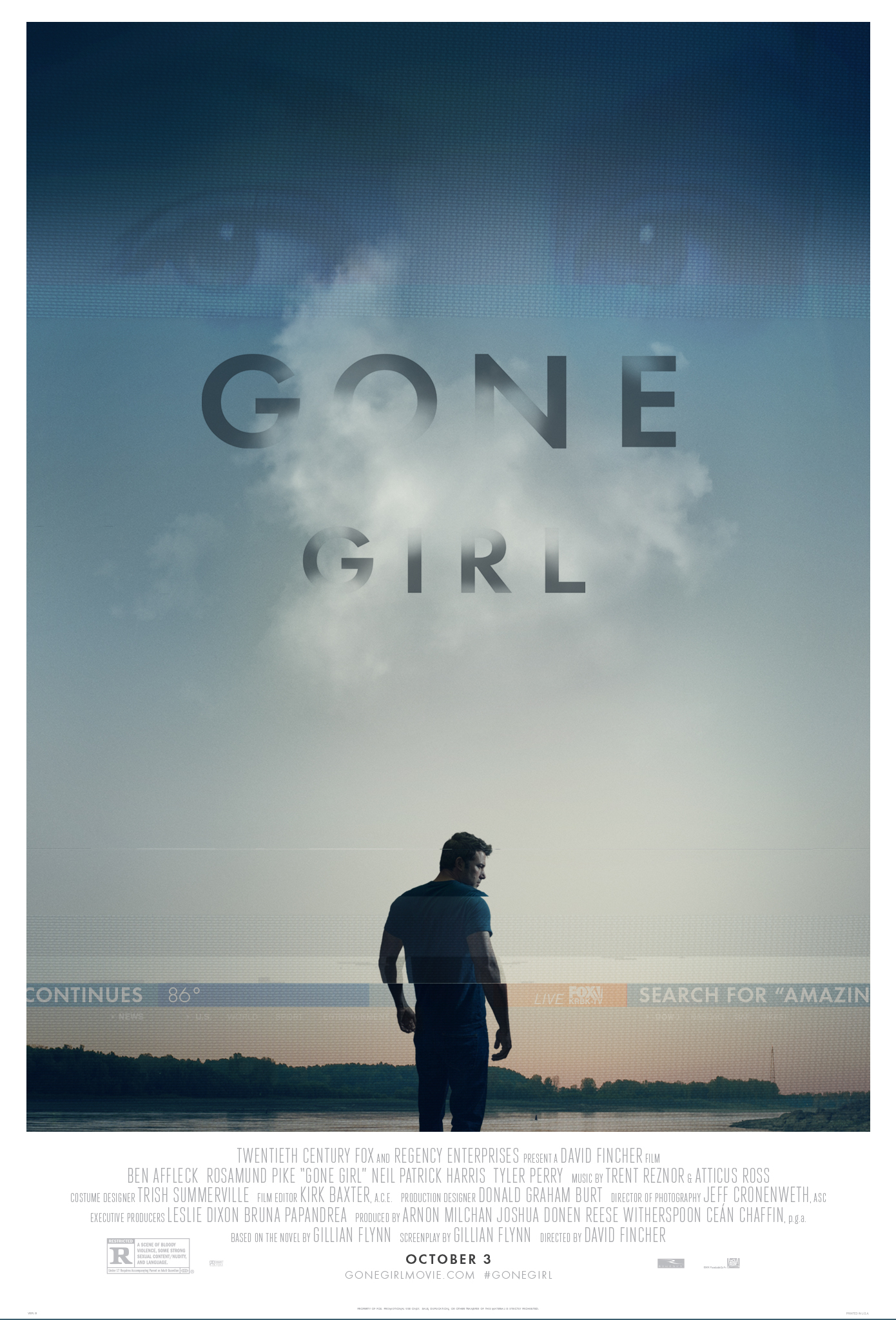
As his career progressed into the 2010s, Fincher demonstrated a profound maturation in his subject matter. With Gone Girl in 2014, he shifted his lens from the overt physical violence of his early work to the psychological battlegrounds of domestic life. His trajectory reveals a sustained movement from external horrors to the internal complexities of human behavior. Fincher remains a master of the psychological thriller, consistently evolving his craft while maintaining his signature pessimistic outlook.
Thematic Preoccupations
At the core of David Fincher's filmography is a relentless exploration of nihilism and moral decay. Critics frequently note how Seven established a rotten world where hopelessness prevails. His urban hellscapes serve as reflections of broader societal rot, presenting environments where morality is completely compromised. This dark atmosphere underscores a pervasive worldview where institutions and individuals are equally tainted by corruption and violence.
Fincher is equally obsessed with the crisis of masculinity and the emptiness of consumerism. Fight Club explicitly tackles the discontent of men at the end of the century, serving as a dark satire on society. The film exposes the disastrous consequences of searching for primal meaning in a heavily commodified world. Fincher interrogates how modern men attempt to reclaim their agency through violent undertones, ultimately revealing the futility and psychological horror of their actions.
The facade of human relationships and the power of media manipulation constitute another major thematic pillar. Gone Girl shifts the narrative focus to marriage dynamics and moral ambiguity, dissecting how individuals craft artificial personas. Fincher uses the conventions of the psychological thriller to explore how both partners and the public are easily manipulated by carefully curated narratives. His characters are deeply flawed, illustrating a continuous fascination with psychological depth and the deceptive nature of intimacy.
Stylistic Signatures
Fincher is celebrated for a dazzling, precise visual style characterized by a dark and unsettling tone. His cinematographic approach often relies on gritty realism and shadow. As noted in critical reviews of Seven, the pervasive gloom is often penetrated only by the flashlights of detectives. This impeccable cinematography relies on meticulous camera movements and a controlled color palette, creating a creepy atmosphere that physically manifests the psychological weight of the narrative.
His editing rhythms and narrative structures are designed to build tantalizing tension. Fincher employs layered storytelling that occasionally embraces a messy narrative structure to reflect the psychological fragmentation of his characters. The pacing of a Fincher film often shifts from slow, creeping dread to bracing intensity. He utilizes twisted narrative techniques to disorient the audience, effectively mirroring the subjective and often unreliable perspectives of his disturbed protagonists.
Sound and music further elevate the disturbing atmosphere of his films. Fincher avoids traditional melodic scores in favor of industrial, pulsing soundscapes that enhance the eerie atmosphere. This sonic strategy complements the shocking imagery and grisly details present in his visual compositions. The combination of gruesome imagery and oppressive auditory design creates an exhilarating yet chilling viewer experience, solidifying his mastery over audience engagement.
Recurring Collaborators
A crucial element of Fincher's creative success is his repeated collaboration with actor Brad Pitt. Pitt stars in both Seven and Fight Club, acting as a primary vessel for the director to explore complex character dynamics and cynical takes on masculinity. Pitt's evolution from the eager and naive Detective Mills to the chaotic, hypermasculine Tyler Durden mirrors Fincher's own thematic explorations. This partnership allows Fincher to subvert traditional leading man tropes, using Pitt's charisma to mask deep psychological complexities.
Beyond actors, Fincher frequently collaborates with prominent novelists to ensure intelligent storytelling. His work adapting Chuck Palahniuk's novel and Gillian Flynn's novel demonstrates a keen ability to translate literary psychological depth into cinema. By working closely with the original authors or honoring their texts, Fincher crafts faithful adaptations that elevate the source material. These literary partnerships provide the rich, character driven storytelling necessary to ground his dazzling visual style in substantive narrative frameworks.
Fincher also utilizes specific casting choices to amplify the thematic resonance of his work. His casting of Ben Affleck and Rosamund Pike in Gone Girl is a prime example of using actors to deconstruct public personas. Affleck's real life experience with media scrutiny fuels the thematic engine of the film, adding a layer of metatextual brilliance. This careful collaboration with performers ensures that the chilling moments and suspenseful storytelling are always rooted in authentic, albeit deeply flawed, human behavior.
Critical Standing
David Fincher's critical reception has evolved from initial polarization to widespread acclaim as a definitive master of the psychological thriller. Early reactions to Seven noted its status as a benchmark of film nihilism, with some critics finding it hard to take pleasure in its oppressively dark atmosphere. Yet, the film earned high praise for its gritty realism, inviting favorable comparisons to postwar noir and seminal horror classics like The Silence of the Lambs and The Exorcist.
His reputation for provocation was cemented by Fight Club, which remains one of his most heavily debated works. While some reviewers initially found the last act a complete disaster with a messy narrative structure, others championed the film as a dazzling and disturbing fable. Over time, its scalding critique of consumerism and comparisons to The Graduate and Pulp Fiction have solidified its legacy. Critics now widely recognize the film as a sharp, prescient cultural satire rather than a mere exercise in violence.
By the time Gone Girl premiered, critics universally praised Fincher's impeccable direction and bracing sketch of a marriage in meltdown. The film reaffirmed his standing as an auteur capable of crafting deliciously twisted, layered narratives. Today, Fincher is regarded within critical discourse as an exacting visionary. His dark, apocalyptic visions and rigorous technical perfection have left an indelible mark on cinema, securing his place as one of the most influential directors of his generation.