Career Overview
Denzel Washington occupies a unique position in contemporary American cinema, bridging the gap between an iconic acting career and a rigorous, textually faithful directorial approach. His transition behind the camera represents a fascinating evolution, moving from a celebrated leading man to a filmmaker deeply invested in the legacy of personal dreams and domestic struggle. By choosing to direct material that requires intense psychological excavation, Washington proves himself to be a classical auteur in the making.
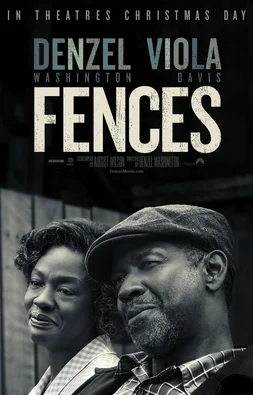
His directorial effort in Fences stands as a definitive moment in his career arc, showcasing his dedication to African American theatrical traditions. Instead of imposing a flashy visual style, Washington adopts a measured, disciplined approach that allows the raw power of the narrative to flourish. He operates with a distinct reverence for the spoken word, creating cinematic spaces where complex family dynamics can be dissected with surgical precision.
Within the broader context of film history, Washington aligns himself with a tradition of actor-directors who prioritize human behavior over mechanical spectacle. Critics have rightly drawn comparisons between his work and Sidney Lumet's cinematic approach, noting a shared ability to generate immense tension within confined environments. Like Lumet, Washington understands that the human face is the most compelling landscape in cinema, utilizing it to explore profound interactions in storytelling.
Ultimately, Washington's background as a performer informs every frame of his directorial output. He demonstrates an extraordinary willingness to subvert his own star persona, deliberately stripping away his innate appeal to reveal the flawed, sometimes grotesque humanity underneath. This fearless approach has solidified his standing not merely as a famous actor trying his hand at directing, but as an essential, uncompromising voice in modern film.
Thematic Preoccupations
At the core of Washington's directorial project is an obsession with the suffocating weight of history and the legacy of personal dreams. He continually returns to the domestic sphere as a battleground where generational traumas are inherited, fought over, and sometimes transcended. In Fences, this takes the form of thwarted ambitions that curdle into resentment, illustrating how the failures of the past infect the possibilities of the future. The home becomes a crucible where characters must confront the ghosts of their unfulfilled potential.
The recurring themes of sacrifice and betrayal serve as the emotional engine for his narratives. Washington interrogates the concept of heartfelt sacrifice, questioning the fine line between providing for a family and emotionally destroying it. He constructs complex family dynamics where duty often metastasizes into cruelty. The patriarchs in his work demand absolute obedience in exchange for their labor, creating a volatile environment where financial support is weaponized against emotional intimacy.
Father-son relationships are subjected to particularly intense scrutiny under Washington's directorial lens. He explores the bitter rivalries and the desperate need for approval that define masculine bonds within the household. These relationships are portrayed as cyclical tragedies, where sons inevitably collide with the hardened boundaries established by their fathers. Through this intimate exploration of family roles, Washington maps the emotional resilience required to survive the very people who are supposed to offer protection.
Equally significant is his exploration of gender dynamics in storytelling, particularly regarding the burdens placed upon women in traditional patriarchal structures. Washington highlights the uncelebrated bravery of wives and mothers who must navigate the destructive egos of their husbands. By focusing on intimate and poignant relationships, he elevates domestic servitude to a state of profound tragedy, emphasizing the sheer depth of emotional experiences that occur entirely behind closed doors.
Stylistic Signatures
Washington favors a classical, unobtrusive visual language that deliberately avoids ostentatious camera movements, allowing the emotional impact of character dynamics to take center stage. His mise-en-scène is characterized by a claustrophobic intimacy, utilizing the architecture of a modest home to physically trap his characters in their circumstances. He frames his subjects tightly within doorways and cramped backyards, creating a visual manifestation of their limited social mobility and suffocating family roles.
This spatial discipline frequently draws comparisons to Billy Wilder's directorial techniques, particularly in the way Washington blocks his actors and respects the natural rhythm of the dialogue. Rather than relying on rapid editing to generate momentum, he employs long, unbroken takes that demand sustained emotional concentration from his cast. This patient editing rhythm ensures that the audience must sit with the discomfort of the characters, forcing viewers to witness the exact moment a facade crumbles.
A crucial element of Washington's stylistic signature is his strategic use of visual motifs and symbolic repetition. As noted by critical appraisals of Fences, he incorporates the visual repetition of crosses throughout the environment, subtly framing his narratives within the context of the greatest father-son story ever told. This religious iconography adds a layer of mythic weight to the domestic squalor, suggesting that the petty cruelties of everyday life carry cosmic significance.
Furthermore, his approach to lighting and sound design strips away Hollywood glamour in favor of stark realism. Shadows are allowed to consume the edges of the frame, reflecting the internal darkness of his protagonists. The soundscapes are dominated by the naturalistic noises of working-class neighborhoods, devoid of manipulative musical cues. This ascetic auditory environment forces the audience to focus entirely on the dialogue, rendering every whispered betrayal and sudden outburst with genuine emotional weight.
Recurring Collaborators
While his directorial filmography is highly focused, Washington's most vital collaboration is undoubtedly his posthumous creative partnership with playwright August Wilson. Washington positions himself as a cinematic translator of August Wilson's dramatic style, demonstrating a profound respect for the musicality and density of the original text. Rather than breaking the play apart to make it conventionally cinematic, Washington trusts the material, allowing Wilson's poetry to dictate the visual pacing of the film.
On screen, his partnership with Viola Davis represents one of the most powerful actor-director synergies in contemporary cinema. Washington recognizes Davis as the emotional anchor of his narrative, structuring the film to highlight her extraordinary capacity for expressing uncelebrated bravery. He provides her with the cinematic space necessary to explore a portrait of servitude that is both agonizing and deeply dignified, trusting her to navigate the complex gender dynamics of the script without descending into melodrama.
The dynamic between Washington as a director and his own performance is also a crucial collaborative element. He directs himself with ruthless objectivity, pushing his character to become weak and pitiful when required. By surrounding himself with actors of Davis's caliber, Washington creates a repertory theater atmosphere where profound interactions in storytelling can flourish. He relies on his co-stars to challenge his own dominant screen presence, resulting in a balanced, volatile ensemble.
Critics have explicitly noted the emotional arsenal of tricks that his collaborators bring to the frame, particularly the observation that nobody cries onscreen like Davis. Washington utilizes this profound emotional resilience in film as a fundamental building block of his directorial vision. The result is a collaborative environment where every performer is pushed to their absolute limits, ensuring that the thematic connections across the narrative are grounded in devastatingly authentic human behavior.
Critical Standing
The critical reputation of Denzel Washington the director is deeply intertwined with his willingness to embrace uncomfortable psychological truths. Reviewers have lauded his ability to take what might seem like a flawless if inessential piece of work and transform it into an experience of terrible force and portent. His films are celebrated not for their visual extravagance, but for the powerful emotional narrative and the sheer gravity of the performances he orchestrates.
His place within critical discourse is frequently debated along the lines of cinematic adaptation versus theatrical preservation. Some critical voices, such as Slant Magazine, have categorized Fences as a weird mix of the banal and the extraordinary, pointing to the tension between his pedestrian visual choices and the monumental emotional peaks of the acting. However, even his detractors concede that the profound depth of the performances makes his work impossible to dismiss, securing his status as a formidable director of actors.
A significant aspect of Washington's critical standing involves the praise he receives for deconstructing his own legendary charisma. Critics are fascinated by his directorial choice to allow his on-screen charm to crumble before the audience's eyes, rendering his character as a grotesque rather than an aspiration. This willingness to expose the ugly, pitiful underbelly of American masculinity has earned him immense respect from analytical circles that value artistic bravery over vanity.
Ultimately, Washington has carved out a unique and highly respected niche in modern cinema. By merging August Wilson's dramatic style with Sidney Lumet's intense cinematic approach, he has crafted intimate narratives that resonate deeply with audiences and scholars alike. His ongoing commitment to exploring the intimate and poignant relationships of Black Americans ensures that his directorial filmography will remain a vital subject of critical inquiry for generations to come.