Career Overview
Gillo Pontecorvo occupies a rarefied position in the history of world cinema. His filmography is notably brief, yet it contains works of such immense geopolitical resonance that his legacy is secure among the most vital political filmmakers of the twentieth century. Operating primarily within the traditions of Italian Neorealism, Pontecorvo evolved the movement into a more aggressively political arena. He viewed the camera as an instrument for dissecting historical dialectics, preferring rigorous observation over melodramatic artifice.
Born into a secular Jewish family in Pisa, Pontecorvo was shaped by the ideological ferment of mid-century Europe. His background in journalism and documentary filmmaking instilled in him a deep commitment to factual inquiry, while his active participation in the Italian anti-fascist resistance provided firsthand experience with the mechanics of insurgency. These formative experiences cultivated the fierce intellect and political commitment that would eventually define his approach to narrative cinema.
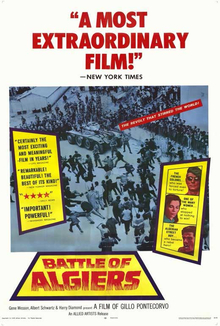
The pinnacle of his career arrived with The Battle of Algiers, a film that single-handedly established his reputation as a master of political cinema. Rather than retreating into historical abstraction, Pontecorvo confronted contemporary anti-colonial struggles with immediacy and urgency. By synthesizing documentary techniques with highly structured narrative frameworks, he created a new paradigm for how filmmakers could address the bitter realities of modern conflict.
Pontecorvo never sought to be a prolific director within the commercial studio system. He was a deeply engaged intellectual who initiated projects only when he felt a profound political imperative. Consequently, his standing relies less on volume than on the staggering density and impact of his completed works. He remains a model for filmmakers who wish to merge uncompromised ideological inquiry with masterful cinematic execution.
Thematic Preoccupations
At the absolute center of Pontecorvo's cinematic universe lies the exhaustive examination of colonialism and the inevitable resistance it breeds. He is not merely interested in the moral binary of oppressor and oppressed. Instead, he meticulously diagrams the systemic mechanisms of colonial power and the brutal necessities of anti-colonial rebellion. In The Battle of Algiers, this thematic obsession manifests as an intricate study of urban warfare, where the city itself becomes a contested ideological battleground.
A recurring preoccupation in his work is the nature of violence and warfare. Pontecorvo strips away the romanticism often associated with cinematic rebellion, presenting violence as a cold, transactional tool employed by both sides of a conflict. His analysis of counter-terrorism tactics and insurgent bombings is noted for its brilliant insights into the cyclical nature of bloodshed. By focusing on the bitter realities of this struggle, he forces audiences to confront the heavy human cost of historical change.
Despite his openly partisan sympathies with liberation movements, Pontecorvo is consistently praised for his fair-minded perspective. He constructs a dialectical narrative space where the strategies, rationalizations, and vulnerabilities of the colonizers are articulated with chilling clarity. This refusal to resort to caricature elevates his work from mere propaganda to a profoundly illuminating analysis of geopolitical conflict. The colonizer and the colonized are locked in a fatal embrace, driven by historical forces larger than any individual.
Consequently, Pontecorvo frequently abandons the traditional individual protagonist in favor of a collective hero. The driving force of history in his films is the masses. The true subject of his inquiry is the awakening of collective political consciousness. Through riveting storytelling, he illustrates how isolated individuals coalesce into an unstoppable revolutionary force, making his explorations of historical change deeply relevant to contemporary global politics.
Stylistic Signatures
Pontecorvo's visual language is defined by a commitment to unflinching realism. He famously employed highly textured, high-contrast black and white cinematography to replicate the urgent aesthetics of mid-century newsreels. This pseudo-documentary approach strips the image of glossy Hollywood artifice, grounding the narrative in a gritty, palpable reality. The resulting visual texture tricks the eye into accepting the staged events as authentic historical footage.
His cinematographic strategies rely heavily on dynamic, handheld camerawork. By plunging the camera into crowded alleyways and chaotic demonstrations, Pontecorvo creates an incredibly intense experience for the viewer. This technique captures the kinetic energy of urban warfare, producing penetrating compositions that convey both the claustrophobia of the Casbah and the regimented order of the European quarters. The restless camera becomes a participant in the struggle, vibrating with the same tension that animates the characters.
The mise-en-scene is further authenticated by Pontecorvo's radical casting choices. He frequently populated his films with non-professional actors, utilizing their unpolished, lived-in faces to enhance the accurate depiction of the milieu. In The Battle of Algiers, this strategy reached its zenith when he cast real-life veterans of the Algerian conflict. These individuals brought an innate, unfeigned gravitas to the screen, anchoring the gripping narrative in genuine historical trauma.
Auditory design plays an equally crucial role in his stylistic arsenal. Pontecorvo utilizes propulsive, rhythmic musical scores and aggressive soundscapes to heighten the emotional stakes of the narrative. The percussive sounds of the city, the haunting calls to prayer, and the staccato bursts of gunfire are woven together to create a symphony of urban conflict. This masterful integration of sound and image ensures that his political tracts also succeed as thrilling cinematic exercises.
Recurring Collaborators
Because Pontecorvo's filmography is extraordinarily selective, traditional patterns of recurring casts and crews are less pronounced than those of studio auteurs. The provided database identifies no recurring actors across multiple films. However, his collaborative philosophy is defined by deep, often unconventional partnerships with individuals who brought historical authenticity and political weight to his projects.
The most significant of these collaborations was his partnership with Yacef Saadi. A prominent leader of the National Liberation Front, Saadi did not merely act in The Battle of Algiers. He was the catalyst who initiated the project, drawing upon his own memoirs and experiences in the resistance. This extraordinary dynamic blurred the boundaries between historical subject, primary source, and creative collaborator, infusing the production with an unparalleled level of authenticity.
Pontecorvo also engaged in a profound collaboration with the populace of Algiers itself. By casting thousands of local citizens as extras and relying on their collective memory of the trauma, the city became a massive, living collaborator. This method of filmmaking required the director to act as both a cinematic auteur and a community organizer, marshaling the emotional resonance of a traumatized population to achieve his vision.
On the technical side, his alliances with key cinematographers and composers were essential in crafting the intense, gripping atmosphere of his work. While specific names outside of the central historical figures might vary or remain uncredited in broader databases, the collective effort to synthesize political theory with gripping narrative relied heavily on a unified crew dedicated to his rigorous, realistic aesthetic. These behind-the-scenes partnerships allowed Pontecorvo to maintain his scrupulously fair yet passionate directorial voice.
Critical Standing
The critical reception of Gillo Pontecorvo is almost entirely anchored by the monolithic success of The Battle of Algiers. Upon its release, the film was hailed as a masterpiece of historical accuracy and awarded the Golden Lion at the Venice Film Festival. Critics immediately recognized Pontecorvo's masterful direction, praising his ability to craft a powerful and compelling film that functioned simultaneously as a political document and a cinematic triumph.
However, the film's openly partisan views generated significant controversy. In France, the film was initially banned, reflecting the raw, lingering wounds of the Algerian War. Yet, even among its detractors, the film was acknowledged for its scrupulously fair treatment of both sides. Film scholars and critics have consistently highlighted how Pontecorvo afforded the French military commanders a logical, articulate defense of their brutal tactics, a choice that elevated the film above standard revolutionary agitprop.
Over the decades, Pontecorvo's standing has evolved from that of a controversial political provocateur to a universally respected cinematic master. His rigorous, realistic portrayal of urban warfare has become a required text for filmmakers and historians alike. Reviewers frequently note that his work feels more contemporary than almost anything else around, as the themes of terrorism, insurgency, and state violence remain perpetually relevant in modern global politics.
Today, Pontecorvo is firmly entrenched in the pantheon of great international directors. Publications continually point to his penetrating compositions and riveting storytelling as the gold standard for historical cinema. Although his output was scarce, the overwhelming consensus is that his brilliant insights and unflinching dedication to the bitter realities of political struggle have secured his reputation as a visionary who forever altered the landscape of political filmmaking.