Career Overview
Henri-Georges Clouzot occupies a complex and formidable position in the history of international cinema. Emerging as a prominent voice in French filmmaking, he carved out a reputation as a relentless chronicler of human frailty. His career trajectory is defined by a consistent drift toward the darker aspects of the human condition, setting him apart from the more romantic or poetic realism favored by many of his contemporaries. Clouzot approached the medium with a cynical, highly analytical eye, creating works that dissect morality with clinical precision.
The post-World War II era profoundly shaped Clouzot and his artistic sensibilities. As critics have noted, his work often functions as a callous post-World War II flipside to films like Casablanca. Instead of noble sacrifices and ideological purity, Clouzot presented audiences with compromised individuals navigating a ruined, deeply corrupted world. This historical trauma permeates his narratives, framing his characters as survivors who are stripped of their idealism and left only with their basest instincts.
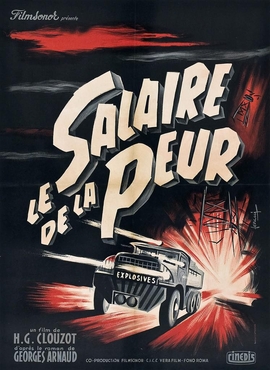
His international breakthrough and enduring legacy are perhaps best encapsulated by his 1953 masterpiece, The Wages of Fear. This film solidified his status as a cinematic heavyweight and demonstrated his unparalleled ability to merge physical action with psychological torment. By placing characters in extreme, inescapable situations, Clouzot moved beyond traditional genre boundaries. He cemented his position not merely as a director of thrillers, but as an uncompromising auteur whose work serves as a punishing reflection of twentieth-century anxieties.
Thematic Preoccupations
The exploration of human nature under extreme duress remains the central philosophical preoccupation of Clouzot. His narratives consistently strip away the veneer of civilized behavior to reveal the raw, unvarnished survival instinct beneath. He is fascinated by what happens when societal structures collapse and men are reduced to their most primal drives. This is evident in his relentless focus on desperation as a driving narrative force, where characters are pushed to their absolute physical and psychological limits.
Critics frequently draw comparisons between Clouzot and American filmmakers who explored similar existential terrain, most notably likening his thematic concerns to John Huston and his work on The Treasure of the Sierra Madre. Both directors share a cynical view of greed, camaraderie, and the ultimate futility of human endeavor. However, Clouzot amplifies the theme of desperation to an almost suffocating degree. His characters are not merely seeking fortune, they are often fleeing past sins, trapped in purgatorial environments where the only escape involves a potentially fatal gamble.
The intense emotional experience generated by his films stems directly from this pessimistic worldview. Clouzot does not offer redemption or easy moral victories. Instead, he forces the audience to confront the grim reality of compromised ethics. His characters in The Wages of Fear, for instance, are hired by an American oil company to transport nitroglycerin, turning them into disposable cogs in a capitalist machine. This dynamic allows Clouzot to critique the exploitation of marginalized individuals while simultaneously interrogating the lengths to which a person will go simply to survive another day.
Ultimately, the gripping narrative structures he employs are merely vehicles for his bleak philosophical inquiries. The suspense he generates is never entirely rooted in the physical danger itself, but rather in the unpredictable, often treacherous nature of the men facing that danger. The tension arises from the ever-present possibility of betrayal, cowardice, or a sudden loss of nerve, cementing Clouzot as a master of psychological excavation.
Stylistic Signatures
The visual language of Henri-Georges Clouzot is characterized by a taut, relentless realism that serves to heighten the suspenseful atmosphere of his narratives. He favors a gritty, tactile approach to mise-en-scène, grounding his characters in environments that feel genuinely oppressive and lived-in. Whether depicting a dilapidated South American village or a treacherous mountain pass, Clouzot ensures that the setting itself functions as a hostile antagonist. The physical textures of sweat, dirt, and decaying infrastructure are captured with documentary-like precision, emphasizing the grueling reality of the characters and their struggles.
Clouzot constructs his gripping narratives through meticulous, almost mathematical editing rhythms. He understands that true cinematic tension is born from duration and the deliberate withholding of release. By drawing out sequences of impending doom, such as the agonizing transport of volatile explosives over uneven terrain, he creates a nail-biting drama that physically affects the viewer. His camera movements are highly controlled, often utilizing extreme close-ups to capture the minute details of fear and concentration on the faces of his actors.
The manipulation of sound is another crucial element in his stylistic arsenal. Clouzot often eschews traditional, sweeping musical scores in favor of diegetic noise to build his suspenseful atmosphere. The grinding of gears, the crunch of rocks beneath tires, and the ambient sounds of a hostile environment are amplified to unnerving effect. This minimalist approach to audio forces the audience to fixate on the immediate, tangible dangers, making every bump in the road feel like a potential catalyst for disaster.
Reviewers consistently praise his technical execution, frequently noting that his direction is masterful in its ability to sustain an intense emotional experience over extended runtimes. Clouzot demonstrates a total command of cinematic grammar, utilizing every tool at his disposal to manipulate the emotional state of the audience. His stylistic signatures are never deployed for mere aesthetic flourish, they are deeply integrated into the thematic fabric of the work, serving to trap the viewer in the same crucible of tension as the characters on screen.
Recurring Collaborators
While the available critical database identifies no specific recurring cast members across multiple films, this absence highlights a crucial aspect of the directorial methodology of Clouzot. Rather than relying on a familiar stock company of actors to carry his narratives, Clouzot prioritized the specific, often grueling demands of each individual project. His casting choices were driven by the need for performers who could embody the deep desperation and rugged survival instincts required by his grueling scenarios.
This approach necessitated a unique relationship with his performers, one that was often characterized by intense psychological pressure. Clouzot viewed actors not as comfortable collaborators, but as raw material to be molded and pushed to their limits in service of a gripping narrative. The lack of a consistent ensemble underscores his reputation as an isolated, demanding auteur who maintained absolute control over every aspect of production. He required actors who could withstand the physically and emotionally exhausting environments he created on set.
The creation of his taut action films also required deep partnerships with specialized technical crews. The suspenseful atmosphere of a film like The Wages of Fear relies heavily on the expertise of cinematographers, sound designers, and stunt coordinators who could safely capture extremely hazardous practical effects. Though specific names may not recur in the broader critical database, the seamless integration of visual grit and auditory tension speaks to a director who commanded the utmost precision from his behind-the-camera collaborators.
Ultimately, the most prominent recurring collaborator in the cinema of Clouzot is arguably the hostile environment itself. He consistently partnered with harsh landscapes, dilapidated sets, and treacherous conditions to force authentic reactions from his cast and crew. By isolating his production teams in demanding circumstances, Clouzot ensured that the survival instinct depicted on screen was mirrored by the actual experience of making the film.
Critical Standing
The critical reputation of Henri-Georges Clouzot has long been defined by his unparalleled mastery of tension and suspense. Contemporary reviewers and modern critics alike consistently marvel at his technical prowess and his unflinching narrative focus. Outlets such as Slant Magazine have famously described his work as a callous post-World War II flipside to Casablanca, recognizing his deliberate departure from romanticized wartime heroism in favor of a bleak, uncompromising realism. This assessment positions him as a crucial figure in the transition toward a more cynical, psychologically complex era of global cinema.
His standing within the critical establishment is perhaps most forcefully articulated by The Guardian, which stated that he has no superior in the field of action-suspense. This high praise reflects his ability to elevate genre mechanics into profound art. Publications like Empire Magazine frequently cite The Wages of Fear as a nail-biting drama that is a must-see, underscoring its enduring status as a cornerstone of the thriller genre. The critical consensus points to a filmmaker whose visceral impact remains undiminished by the passage of time.
Variety magazine and other trade publications have historically echoed this sentiment, repeatedly categorizing his output as taut, suspenseful thriller cinema at its absolute finest. Across the board, critics highlight that his direction is masterful, a phrase that recurs with striking frequency in reviews of his work. This repetition speaks to a unified critical appreciation for his exacting control over framing, pacing, and psychological manipulation.
While he is frequently compared to contemporaries like John Huston (particularly regarding The Treasure of the Sierra Madre), Clouzot is ultimately recognized as a singular cinematic voice. His legacy is that of a brilliant, if pessimistic, architect of anxiety. He remains a highly studied figure among film students and critics, revered for his ability to translate the darkest aspects of human nature into overwhelmingly gripping, masterful cinematic experiences.