Career Overview
James Mangold has established himself as a distinct anomaly in twenty first century Hollywood, operating as an old school studio craftsman navigating the complex machinery of modern blockbuster filmmaking. Over his career, he has moved fluidly across genres, bringing a classical sensibility to contemporary projects. His work frequently revitalizes tired tropes by injecting them with grounded human stakes and rigorous formal discipline. This approach has positioned him as a director capable of satisfying both commercial mandates and critical expectations. Mangold matured into a filmmaker who excels at mapping the internal exhaustion of traditional American archetypes. The director has built a reliable reputation for tackling stories of men out of time. Films like Logan and Ford v Ferrari reflect his evolution into a director who uses large canvases to tell surprisingly intimate stories. Rather than succumbing to the escalating scale of computer generated spectacle, he anchors his narratives in physical reality and character driven drama. In the landscape of modern cinema, Mangold is often viewed as a bridge between past and present. He borrows heavily from the midcentury American cinematic tradition, applying its structural rigor to contemporary franchise pictures and historical biopics. By consistently elevating standard genre material into prestige territory, he has carved out a unique space for himself among his generation of directors, proving that character studies can survive within the framework of massive studio releases.
Thematic Preoccupations
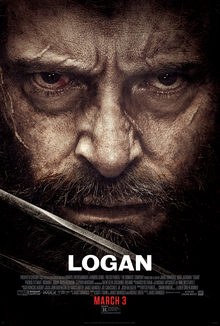
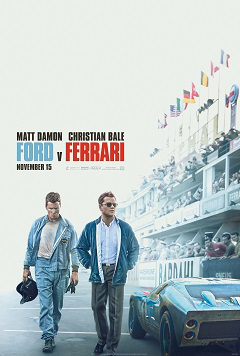
The thematic core of Mangold's recent filmography rests heavily on concepts of aging, physical decline, and the heavy burden of legacy. His protagonists are frequently introduced at the twilight of their careers or lives, struggling to reconcile their past exploits with their diminished present realities. In Logan, the titular mutant is an aging, boozing former hero whose healing abilities are failing, a stark departure from standard comic book invulnerability. Similarly, Ford v Ferrari focuses on Carroll Shelby, a champion racer forced into retirement by a heart condition, alongside his volatile partner Ken Miles, a man grappling with his own obsolescence in a rapidly corporatizing world. Heroism and sacrifice are continually interrogated throughout his narratives, often stripped of their romantic sheen. Mangold presents heroism not as a grand, aspirational destiny, but as a grueling, painful obligation. His troubled protagonists operate from a place of deep loneliness and solitude, acting upon feral instincts or deeply ingrained codes of honor. The individualistic nature of these characters inevitably clashes with overarching systemic forces, a dynamic that drives much of the dramatic tension. This conflict between the individual and the system frequently manifests through explorations of corporate culture and institutional oversight. The corporate intrigue elements in Ford v Ferrari serve as the primary antagonist, pitting the raw, instinctual genius of drivers against the sanitized, formulaic demands of Ford executives. Similarly, Logan frames its villains as corporate scientists attempting to commodify and control genetic anomalies. Through these conflicts, Mangold critiques the sanitization of modern endeavors, contrasting authentic, messy human effort against the cold calculation of modern industry.
Stylistic Signatures
Mangold approaches visual storytelling with a commitment to tactile realism and spatial coherence, rejecting the hyperkinetic fragmentation popular in contemporary action cinema. His stylistic signatures are rooted in classical Hollywood techniques, prioritizing clear geography and grounded camera movement. In Ford v Ferrari, the thrilling racing sequences are visceral and visually impressive precisely because they emphasize practical effects, mechanical weight, and the terrifying physics of high speed competition. The action is thrilling because the audience understands exactly where the vehicles are in relation to one another. This emphasis on physical weight extends to his depiction of violence and bodily trauma, which is often framed with unflinching brutality. Logan features fluid fight choreography that remains deliberately ugly and painful, reflecting the feral instincts of its protagonist. The violence is never sanitized for mass consumption. Instead, it carries dangerous undertones and immediate physical consequences, reinforcing the overarching themes of mortality and vulnerability. Every punch and claw strike registers with bone crunching impact, setting a groundbreaking standard for maturity in superhero adaptations. While frequently praised for these exhilarating experiences, Mangold occasionally faces criticism for lethargic pacing issues, particularly when managing expansive historical or franchise narratives. However, his deliberate pacing often serves to amplify the authentic drama and emotional resonance of his character arcs. The editing rhythms allow scenes to breathe, giving the actors space to explore the quiet, melancholy moments between set pieces. His use of nostalgic references, coupled with a soundscape that highlights roaring engines or the quiet hum of desert winds, creates immersive worlds that feel deeply lived in and worn out.
Recurring Collaborators
While the database identifies no recurring cast members across multiple films, Mangold relies on a distinct casting philosophy that favors deeply established leading men capable of conveying immense internal weariness. He frequently partners with actors who bring decades of audience goodwill and screen history to their roles. By casting Hugh Jackman and Patrick Stewart in Logan, Mangold weaponized their nearly two decades of franchise history, using the audience's familiarity with the actors to deepen the tragedy of their aging and decline. In a similar vein, his collaboration with Matt Damon and Christian Bale in Ford v Ferrari taps into their respective personas to create a compelling study of traditional masculine roles and rivalry. Damon brings a pragmatic, grounded weariness to the role of Carroll Shelby, while Bale utilizes his signature elastic physicality to embody the hotheaded, individualistic Ken Miles. Mangold provides these actors with the space to deliver deeply engaging character arcs, prioritizing performance over visual effects. Behind the camera, Mangold relies on artisan collaborators who share his dedication to classical craftsmanship. Though specific cinematographers and editors rotate, the resulting aesthetic consistency points to a director with a firm, uncompromising vision. He partners with crews capable of executing complex, practical action sequences while maintaining the intimate, reflective atmosphere required for his character studies. This synergy between performance and technical execution allows Mangold to consistently produce films that look handsomely produced while feeling grounded and authentic.
Critical Standing
Mangold occupies a fascinating and sometimes polarized space within contemporary film criticism. Many critics champion him as a savior of traditional storytelling, lauding his ability to deliver robust, adult oriented studio pictures. Reviews frequently describe his work as a glorious throwback that merges a smart modern sensibility with the best of traditional narrative structures. Logan was widely hailed as a game changer by outlets like RogerEbert.com, earning praise for its groundbreaking deconstruction of the superhero genre and its ambition to be taken seriously as authentic drama. Comparisons to foundational Westerns like Shane, The Shootist, and Unforgiven underscore the immense critical respect for his thematic weight. Conversely, some critics view his reliance on classical structures as a limitation, pointing out instances of predictable storytelling and formulaic tropes. Publications like Slant Magazine and The Guardian have occasionally characterized his broader epics as standard issue smorgasbords of period echoes or inert sports dramas cramped with factory built male characters. These detractors argue that his narratives can sometimes feel emotionally shallow despite their impressive visual polish, viewing his nostalgic homage to past eras as a retreat into safe, traditional masculine archetypes rather than a progressive innovation in filmmaking. Despite these critiques, Mangold's overarching reputation remains highly formidable. He is widely respected for his ability to elevate cultural touchstones, whether by interrogating the racing film tradition seen in comparisons to Rush or Le Mans, or by subverting blockbuster expectations. His critical standing rests on his dual identity as a reliable studio mechanic and a thoughtful auteur of American masculinity in decline. Whether celebrated for exhilarating action or critiqued for lethargic pacing, Mangold undeniably commands attention as a vital, stabilizing force in modern Hollywood cinema.