Career Overview
Jean-Pierre Jeunet occupies a unique and often polarizing position within modern cinema. His career arc demonstrates a fascinating evolution from underground surrealism to international blockbuster success. He operates at the intersection of popular entertainment and high-concept art cinema. His work frequently divides audiences and academics alike, serving as a testament to his uncompromising, idiosyncratic vision.
Following a period of collaborative filmmaking, Jeunet briefly transitioned into the Hollywood studio system. This era included his directorial work on Alien Resurrection, a project that introduced his distinct visual sensibilities to a massive global audience. While the Hollywood machinery tested his authorial control, the experience undoubtedly sharpened his technical proficiency and paved the way for a triumphant return to his native France.
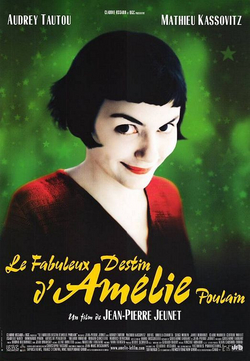
The release of Amélie marked the defining moment of his career. The film became a massive art cinema hit and solidified his international reputation as a master of whimsical storytelling. By pivoting away from the darker, more grotesque elements of his earlier work, he embraced a lighter, more romanticized vision of the world that resonated deeply with global audiences.
Today, Jeunet is remembered as a filmmaker who defined a very specific era of millennial French cinema. His chronological development reflects a director constantly refining a highly subjective lens. Whether navigating science fiction franchises or Parisian romances, he maintains a rigorous commitment to his distinctive cinematic universe.
Thematic Preoccupations
The cinematic universe of Jean-Pierre Jeunet is defined by an obsessive preoccupation with the concept of the modern fairytale. His narratives frequently center on isolated individuals who navigate a world brimming with hidden magic and serendipity. In Amélie, this theme manifests through a young woman who decides to anonymously improve the lives of her neighbors. The director asks how small, seemingly insignificant actions can ripple outward to transform the human experience.
A prominent thematic pillar in his work is the romanticization of Parisian life. Jeunet does not aim for social realism or documentary authenticity. Instead, he constructs a mythic, nostalgic version of the city. This environment serves as a playground for whimsy and romance, where the mundane realities of urban existence are replaced by hyper-real, beautifully orchestrated encounters.
However, this dedication to a seductive narrative of joy is not without its critical detractors. The focus on whimsical intervention often gives rise to self-infatuated themes. Critics note that his protagonists sometimes operate with a smug characterization, treating the world around them as a personal dollhouse. The tension between genuine human connection and manipulative, self-indulgent plotting is a recurring philosophical concern.
Despite the lighthearted tone, his modern fairytales often grapple with the legacy of childhood trauma and existential loneliness. Characters frequently harbor sad childhoods, using their eccentric obsessions as coping mechanisms. This juxtaposition of candy-colored optimism and underlying melancholy provides a complex thematic bedrock for his visually dazzling explorations of the human condition.
Stylistic Signatures
The visual language of Jean-Pierre Jeunet is instantly recognizable, characterized by dazzling visuals and an unapologetic embrace of artifice. He employs a candy-colored aesthetic that utilizes heavy digital color grading, pushing warm yellows, rich greens, and vibrant reds to the forefront of the frame. This chromatic intensity actively rejects naturalism, demanding that the audience engage with the film as a purely constructed fantasy.
His cinematographic approach heavily relies on wide-angle lenses and extreme, distorted close-ups. This technique forces a profound, sometimes uncomfortable intimacy with his characters. By thrusting the viewer directly into the personal space of his subjects, Jeunet crafts a deeply subjective visual experience that amplifies both the winsome charm and the eccentricities of his cast.
The meticulous nature of his mise-en-scene is another defining stylistic signature. Every prop, costume, and background element is placed with exact precision, creating a world that feels incredibly dense and curated. Reviewers frequently describe his frames as a delicious pastry of visual information, offering audiences a layered, tactile viewing experience that rewards multiple viewings.
Finally, his editing rhythms and narrative pacing contribute to what critics term a seductive narrative. Jeunet utilizes rapid montages, voiceover narration, and kinetic camera movements to catalog the quirks of his characters. This highly energetic, self-indulgent style draws comparisons to the maximalist aesthetics found in films like Moulin Rouge, resulting in a kinetic energy that propels his whimsical fairytales forward.
Recurring Collaborators
While comprehensive critical databases may not identify a vast ensemble of recurring actors across multiple projects, the collaborative ethos of Jean-Pierre Jeunet is evident in his highly specific casting choices. He favors performers who possess striking, unorthodox facial features and a capacity for intense physical comedy. His actors must operate within a highly stylized register, functioning almost as kinetic props within his meticulous visual compositions.
The paramount example of this collaborative dynamic is his work with Audrey Tautou in Amélie. Tautou delivered a star-making performance that perfectly synchronized with the director's vision. Critics noted that she fit the film like a glove, embodying the fresh-faced waif archetype with a nuanced balance of innocence and mischievousness.
Tautou's ability to project the internal life of a heroine who looks like she knows a secret and cannot keep it demonstrates Jeunet's skill in directing actors. He requires his performers to communicate profound whimsicality through subtle glances and micro-expressions, recalling the grand tradition of silent cinema. The actor becomes a vital collaborator in selling the lighthearted fantasy to the audience.
Beyond the cast, the realization of his candy-colored aesthetic necessitates a profound synergy with his behind-the-scenes crew. The dazzling visuals and complex world-building require intensive collaboration with cinematographers and production designers. Together, they execute a unified creative vision, ensuring that every element on screen serves the overarching modern fairytale.
Critical Standing
The critical reputation of Jean-Pierre Jeunet is marked by a deep and enduring polarization. Throughout his career, he has provoked wildly divergent reactions from the critical establishment. While some reviewers champion his films as visionary masterpieces of contemporary cinema, others dismiss them as superficial exercises in stylistic excess. This divide makes him a fascinating subject of ongoing cinematic discourse.
Advocates of his work, such as the late Roger Ebert, have frequently praised his ability to craft lighthearted fantasy. These critics celebrate the winsome charm of his narratives, viewing his films as a delicious pastry that provides necessary escapism. From this perspective, Jeunet is a master of visual joy, a director whose dazzling visuals and romanticized vision of Parisian life offer a profound cinematic delight.
Conversely, a vocal contingent of critics views his aesthetic with extreme skepticism. Publications like Slant Magazine have offered scathing assessments, famously characterizing Amélie as a dribbling lump of caramel taffy. These detractors argue that his work suffers from smug characterization and a self-indulgent style, suggesting that the relentless whimsy becomes cloying and self-infatuated over time.
To contextualize his polarizing nature, critics frequently draw comparisons between his work and other formally audacious films. His tonal and visual ambition has been contrasted with the bleakness of Requiem for a Dream, the dark regional quirk of Fargo, the sprawling emotional tapestry of Magnolia, and the hyper-kinetic theatricality of Moulin Rouge. Regardless of where individual critics fall on the spectrum, Jeunet remains a pivotal figure whose candy-colored creations continue to ignite passionate debate.