Career Overview
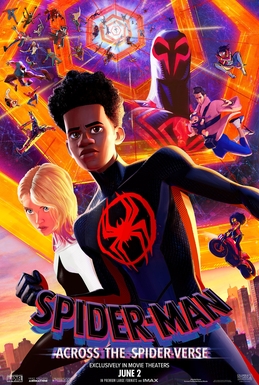
Joaquim Dos Santos occupies a vital position in the modern evolution of animated cinema. While much of his early career was defined by influential work in serialized television animation, his transition to blockbuster feature filmmaking marks a significant turning point in the medium. His most prominent directorial achievement to date, Spider-Man: Across the Spider-Verse, cemented his status as a visionary capable of redefining visual storytelling for a global audience.
In the contemporary landscape of franchise filmmaking, Dos Santos represents a rare breed of director who treats animation not as a genre, but as a boundless cinematic canvas. His approach challenges the traditional constraints of studio animation, blending rigorous narrative construction with profound aesthetic audacity. By stepping into a highly anticipated sequel framework, he navigated the immense pressure of expectation while simultaneously breaking new artistic ground.
His cinematic footprint is currently defined by a willingness to completely dismantle established lore and reassemble it in unprecedented ways. As a filmmaker, he has proven that mainstream comic book adaptations can possess the same level of auteurist ambition and stylistic rigor as traditional live action cinema. The sheer scale and success of his theatrical work have permanently elevated the expectations for animated superhero narratives, ensuring his ongoing influence over the next generation of visual storytellers.
Thematic Preoccupations
The thematic nucleus of Joaquim Dos Santos's directorial work centers on profound identity exploration and the rejection of predetermined narratives. In Spider-Man: Across the Spider-Verse, he dissects the very concept of the superhero origin story, questioning the notion that trauma and sacrifice are mandatory prerequisites for greatness. His storytelling interrogates the tenets of what makes a hero, framing empowerment as a conscious choice rather than a scripted destiny.
A recurring preoccupation in his narrative approach is the tension between individual agency and systemic control. His characters frequently grapple with institutional forces that seek to dictate their fate. This conflict is often mirrored in the intimate struggles of adolescence, specifically the fraught dynamics of parental relationships. By grounding vast multiversal conflicts in the relatable frustrations of teen superhero struggles, Dos Santos ensures that his massive conceptual frameworks remain emotionally resonant.
Furthermore, his work exhibits a deep interest in challenging established mythology. Rather than simply repeating the tropes of the comic book genre, he actively deconstructs them on screen. The heroes in his films are forced to confront the validity of the canon that governs their lives, creating a metatextual commentary on franchise storytelling itself. This multidimensional storytelling approach yields complex themes that elevate the material far beyond standard action fare, asking philosophical questions about autonomy, legacy, and the true cost of heroism.
Stylistic Signatures
The visual language of Joaquim Dos Santos is characterized by spectacular visual innovation and an almost relentless hyperkinetic movement. He employs a kaleidoscopic approach to color and form, utilizing shapeshifting animation styles to reflect the shifting psychological states of his characters and the fractured nature of his narrative worlds. This results in breathlessly beautiful scenes that constantly push the boundaries of what is possible within the medium.
One of his most defining stylistic signatures is the complete rejection of a unified visual aesthetic. In Spider-Man: Across the Spider-Verse, different environments and characters are rendered in entirely distinct artistic techniques, ranging from watercolor washes to aggressive comic book halftones. This stylistic experimentation serves a crucial narrative purpose, visually reinforcing the multidimensionality of the story while creating an eye-sizzling cinematic experience that overwhelms the senses in the most effective way.
The pacing and editing rhythms in his work are equally kinetic, often described by critics as an endless maelstrom of action and emotion. However, within this chaotic and animated brilliance, Dos Santos demonstrates a careful control over visual information. He frequently balances splashy, overwhelming action sequences with quiet, visually intimate moments. Even when incorporating rapid-fire visual humor, such as internet meme references, he integrates these elements so seamlessly into the visual fabric that they enhance rather than distract from the emotionally powerful core of the scene.
Recurring Collaborators
Because the nature of large-scale animated filmmaking requires immense coordination, the directorial structure for Joaquim Dos Santos often involves intense, synergistic partnerships. His defining cinematic achievement was co-directed alongside Kemp Powers and Justin K. Thompson. This triune leadership model was essential for managing the narrative ambition and staggering aesthetic demands of Spider-Man: Across the Spider-Verse.
The collaboration between Dos Santos, Powers, and Thompson allowed for a unique synthesis of storytelling expertise, dramatic staging, and production design. While traditional live action auteurs might rely on a singular vision, this directing team operated as a collective brain trust. Their combined efforts resulted in a film that perfectly matched stylistic experimentation with a multi-tiered narrative of equal ambition, proving that deeply collaborative directing can yield highly cohesive, critically acclaimed art.
Although the database identifies no recurring cast members across multiple feature films, the vocal performances elicited under his co-direction are universally recognized as unforgettable. The ensemble casts he works with are pushed to deliver emotionally complex performances that anchor the visually astonishing animation. The collaborative environment fostered by Dos Santos and his co-directors ensures that the human element of the story is never lost within the spectacular visual innovation, maintaining a delicate balance between technical wizardry and pure emotional resonance.
Critical Standing
The critical reputation of Joaquim Dos Santos is intrinsically tied to his ability to elevate the comic book adaptation into the realm of high cinematic art. Reviewers frequently draw comparisons between his work and legendary franchise milestones like The Empire Strikes Back and The Dark Knight. Such comparisons underscore his success in crafting sequels that not only match but actively expand upon the artistic foundations of their predecessors.
Critics have widely praised his work as a forceful reminder of the aesthetic and narrative possibilities of animation. His films are consistently celebrated for their storytelling evolution, with prominent outlets highlighting his willingness to shred existing lore from top to bottom. The critical consensus points to a filmmaker who fearlessly blends artistic innovation with massive commercial appeal, a rare feat that has earned him profound respect within both cinephile circles and mainstream reviewing communities.
As his career continues to develop, his standing in the critical discourse remains remarkably strong. He is viewed not merely as a competent director of animated action, but as a pioneer of multidimensional storytelling. Even when critics note the occasionally overwhelming nature of his hyperkinetic visuals, they readily acknowledge the sheer eye-sizzling excellence of his craft. Ultimately, Dos Santos is heralded as a vanguard of modern animation, proving that animated cinema can tackle complex themes with unmatched visual splendor.